

Summary
NASA in recent months has been refining plans for returning humans to the lunar surface and building a sustainable presence there. The agency’s roadmap—focused on the Artemis campaign, the Human Landing System (HLS), and partnerships with commercial and international partners—lays out a sequence of test flights, technology demonstrations, and missions that aim to put astronauts back on the Moon and establish capabilities for longer stays. Below we summarize the latest public steps from NASA, explain the technical and programmatic challenges, and highlight the political and commercial dynamics that will shape whether the timetable holds.
What NASA announced and why it matters
NASA’s Artemis effort has moved from an initial demonstration (uncrewed Artemis I) toward crewed missions and, ultimately, surface operations. Key elements in the plan include:
- Flight tests and crewed missions using the Space Launch System (SLS) and Orion spacecraft to validate deep-space crewed operations.
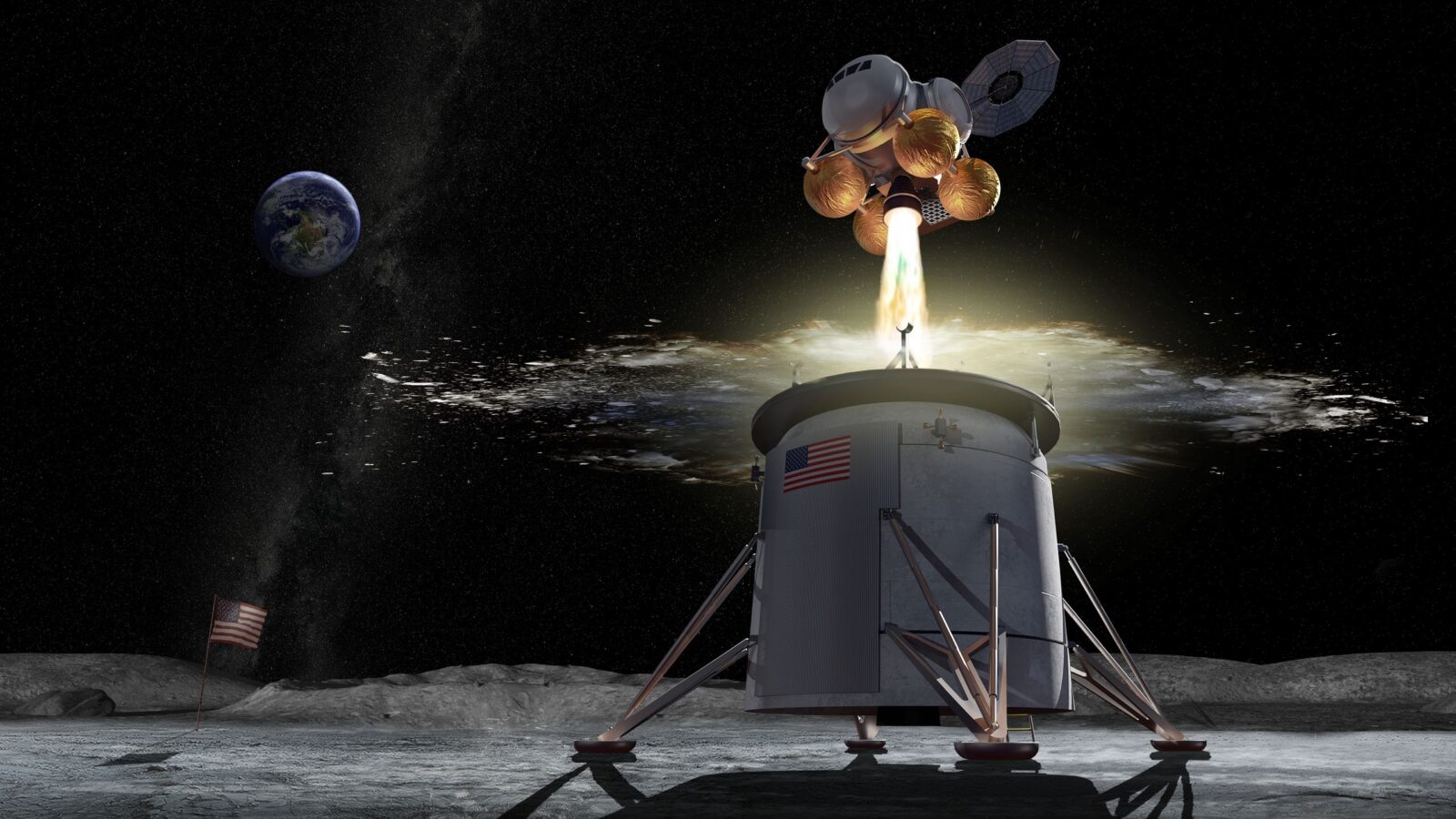
- Use of a commercial Human Landing System (HLS) to ferry astronauts from lunar orbit to the surface and back.
- Development of logistics, surface mobility, and power systems needed for longer stays—together often described as the path to a sustainable lunar presence.
These steps are significant because they move the program from a series of demonstrations toward an architecture that supports repeated human missions, science, and eventual use of lunar resources.
Timeline and near-term milestones
The agency’s public planning emphasizes a phased approach:
- Near-term demonstration flights to validate launch, crewed deep-space operations, and HLS capabilities.
- Follow-on crewed missions that will test orbital rendezvous and crew transfer between Orion and a commercially provided HLS in lunar orbit.
- Surface landing missions focused on targeted science objectives, testing of surface systems, and laying groundwork for longer stays.
Specific dates have shifted across program revisions as testing and regulatory reviews proceed. NASA has been careful to identify key technical milestones—successful Starship/other HLS flight testing, Orion and SLS readiness, and surface system demonstrations—that must be achieved before committing to firm launch dates for crewed landings.
Technical challenges and program risks
Several technical and programmatic hurdles will determine how quickly NASA can reach its goals:
- Human Landing System testing: The HLS design chosen for crewed lunar landings requires rigorous flight tests and certification. For the current architecture, Starship-derived or commercial landers must demonstrate reliable ascent, descent, and rendezvous capabilities.
- Launch systems and schedule risk: SLS production cadence, ground processing, and the reliability of heavy-lift integrations remain schedule drivers that are sensitive to single-point failures and test outcomes.
- Integration in lunar orbit: Complex orbital rendezvous and crew transfer activities around the Moon—often involving Orion, a commercial lander, and the planned Gateway elements—add operational complexity and risk.
- Logistics and surface systems: Habitation, power, mobility, and life-support systems for extended surface stays will require additional development and demonstrations, including commercial and international contributions.
Commercial and international partnerships
NASA’s strategy leans heavily on commercial partners for technology and services. That approach is intended to reduce cost and accelerate innovation but creates interdependencies on commercial test schedules and private-sector engineering readiness. International partners—working through bilateral agreements and the planned Lunar Gateway—are expected to contribute science payloads, habitat modules, and logistics support, broadening the mission’s scientific return and geopolitical reach.
Budget and political considerations
Long-term success depends on stable funding and clear congressional support. NASA’s lunar plans require multi-year appropriations to sustain SLS production, commercial procurements, and investments in surface systems. Political shifts, budget constraints, or re-prioritization in Congress could push timelines or force programmatic tradeoffs. NASA has emphasized flexibility in schedules to accommodate testing outcomes and funding realities.
What to watch next
- Upcoming flight tests (SLS/Orion milestones and any announced HLS demonstration flights) and NASA’s evaluation of those results.
- Commercial partner test progress, especially heavy-lift vehicles and lunar lander demonstrations.
- Congressional budget decisions and any policy guidance that could alter scope or timing.
- International partner commitments for Gateway and surface science objectives—these shape mission payloads and crew timelines.
Analysis: Why the “how” matters as much as the “when”
Ambitious dates attract attention, but the long-term strategic value of returning to the Moon lies in the capabilities built during the process: robust in-space logistics, reliable commercial services, surface systems for power and habitation, and international partnerships that distribute cost and enable broader science goals. A measured approach that prioritizes validated systems, incremental risk reduction, and international coordination is likelier to produce lasting infrastructure than a schedule driven mainly by milestone dates.
Sources and further reading
- NASA Artemis Program overview — NASA’s central hub for the Artemis campaign and mission planning.
- What is the Human Landing System? — NASA summary of the HLS concept and procurement approach.
- SpaceX Starship — Technical and program information from SpaceX on a vehicle that is central to current HLS plans.
- NASA: Lays out its next steps toward a moon landing — NASA feature describing the agency’s recent public steps and objectives.
If you plan to publish this in WordPress, the HTML above is ready to paste into the post editor. For mission dates and test outcomes, check the NASA Artemis hub and agency press releases regularly—those are the most reliable sources for schedule updates and program decisions.