
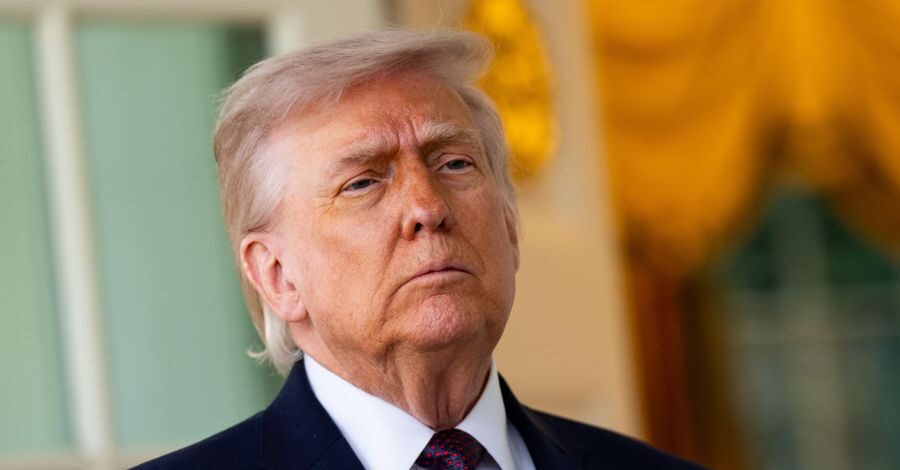
Donald Trump’s claim that the United States is effectively blockading the Strait of Hormuz points squarely to the World category, because the issue sits at the intersection of global security, Middle East geopolitics, energy flows, and international maritime law.
The Strait of Hormuz is one of the most strategically important waterways on earth. Roughly a fifth of the world’s oil consumption passes through this narrow passage linking the Persian Gulf to the Arabian Sea. Any suggestion that the US could interfere with shipping there is not just a bilateral US-Iran dispute. It instantly becomes a global story, with consequences for Europe, Asia, energy markets, insurers, shipping firms, and governments across the world.
Why the Strait of Hormuz is such a flashpoint
The strait has long been viewed as a geopolitical pressure point. Iran borders its northern edge, while Oman and the United Arab Emirates sit to the south. For decades, Western officials, Gulf states, and energy analysts have warned that any military confrontation in or around the waterway could disrupt commercial shipping and send oil prices sharply higher.
According to the US Energy Information Administration, the Strait of Hormuz remains one of the world’s most critical oil transit chokepoints. That explains why even rhetorical escalation from Washington or Tehran can have immediate global effects, including jitters in crude markets, concern among import-dependent economies, and renewed diplomatic scrambling among major powers.
The bigger question is what a so-called blockade would mean in practice. Under international law and naval doctrine, a blockade is not simply a political talking point. It implies the use or threat of force to prevent vessels from entering or leaving a coastline or waterway. In a place as crowded and economically vital as Hormuz, that would represent a dramatic escalation with implications far beyond the United States and Iran.
What the latest reporting suggests
Recent reporting from BBC News has focused on Trump’s language around Iranian ports and the practical implications of any US move in the Strait of Hormuz. The significance of this framing is that it shifts the conversation from sanctions and deterrence toward direct maritime restriction. That is a major difference. Sanctions target commerce through financial and legal mechanisms; blockades imply physical enforcement.
Meanwhile, wider regional coverage from Reuters’ Middle East desk and analysis from outlets such as Al Jazeera continue to show how fragile Gulf security remains, especially when tensions between Iran, the US, Israel, and Arab Gulf states rise simultaneously. The region is already dealing with overlapping crises involving shipping security, proxy conflict, sanctions pressure, and military signaling.
That context matters. A blockade threat does not happen in a vacuum. It lands in an environment where commercial vessels have previously faced seizure, harassment, and drone or missile risks in nearby waters. It also arrives at a time when global markets remain sensitive to supply disruptions, especially after years of inflation shocks, war-related energy volatility, and supply chain strain.
The global economic stakes
If the US were to attempt any sustained interdiction of Iranian-linked shipping through Hormuz, the immediate effect would likely be uncertainty rather than total closure. Even that uncertainty could be expensive. Tanker insurance premiums could rise, shipping routes could be altered, and traders could price in the risk of interrupted supply. Importing countries in Asia, especially those highly dependent on Gulf energy, would watch developments closely.
The International Energy Agency has repeatedly emphasized the importance of stable energy transit routes to the world economy. While global energy markets are more diversified than they once were, Hormuz still matters enormously. A sharp disruption there would not remain a regional issue for long. It would ripple into fuel prices, inflation expectations, freight costs, and central bank calculations around the world.
There is also a legal and diplomatic dimension. Any move described as a blockade would likely trigger debate over freedom of navigation, proportionality, and whether such an action had international backing. US allies might support pressure on Iran in principle while hesitating to endorse a step that could be interpreted as widening conflict. That gap between strategic sympathy and operational support is often where diplomatic friction begins.
Why this is really a world story, not just a US-Iran story
The reason this belongs in the World category is simple: the Strait of Hormuz is one of the few places where a single policy threat can touch nearly every major international theme at once. Security, trade, law, diplomacy, commodity prices, and military deterrence all converge there.
Trump’s rhetoric also matters because it can influence real-world calculations even before policy changes occur. Shipping companies, military planners, oil traders, and foreign ministries pay close attention to signals from Washington. In tense regions, words can shift behavior almost as fast as deployments can.
What happens next will depend on whether the claim remains rhetorical, becomes part of a broader sanctions push, or is matched by naval action. But even at the level of political messaging, the implications are significant. If the world’s most powerful military openly signals a willingness to restrict traffic tied to Iran in one of the busiest energy corridors on earth, the rest of the world has no choice but to pay attention.
The bigger takeaway
The latest developments are a reminder that global chokepoints still have the power to reshape headlines and markets overnight. The Strait of Hormuz is not just a map label in the Gulf. It is a live fault line in the international system.
For readers trying to make sense of Trump’s claim, the core point is this: a blockade in Hormuz would not merely be another episode of US-Iran brinkmanship. It would be a test of how much disruption the global economy, the regional security order, and international diplomacy can absorb at once.
Sources: