
The claim and the context
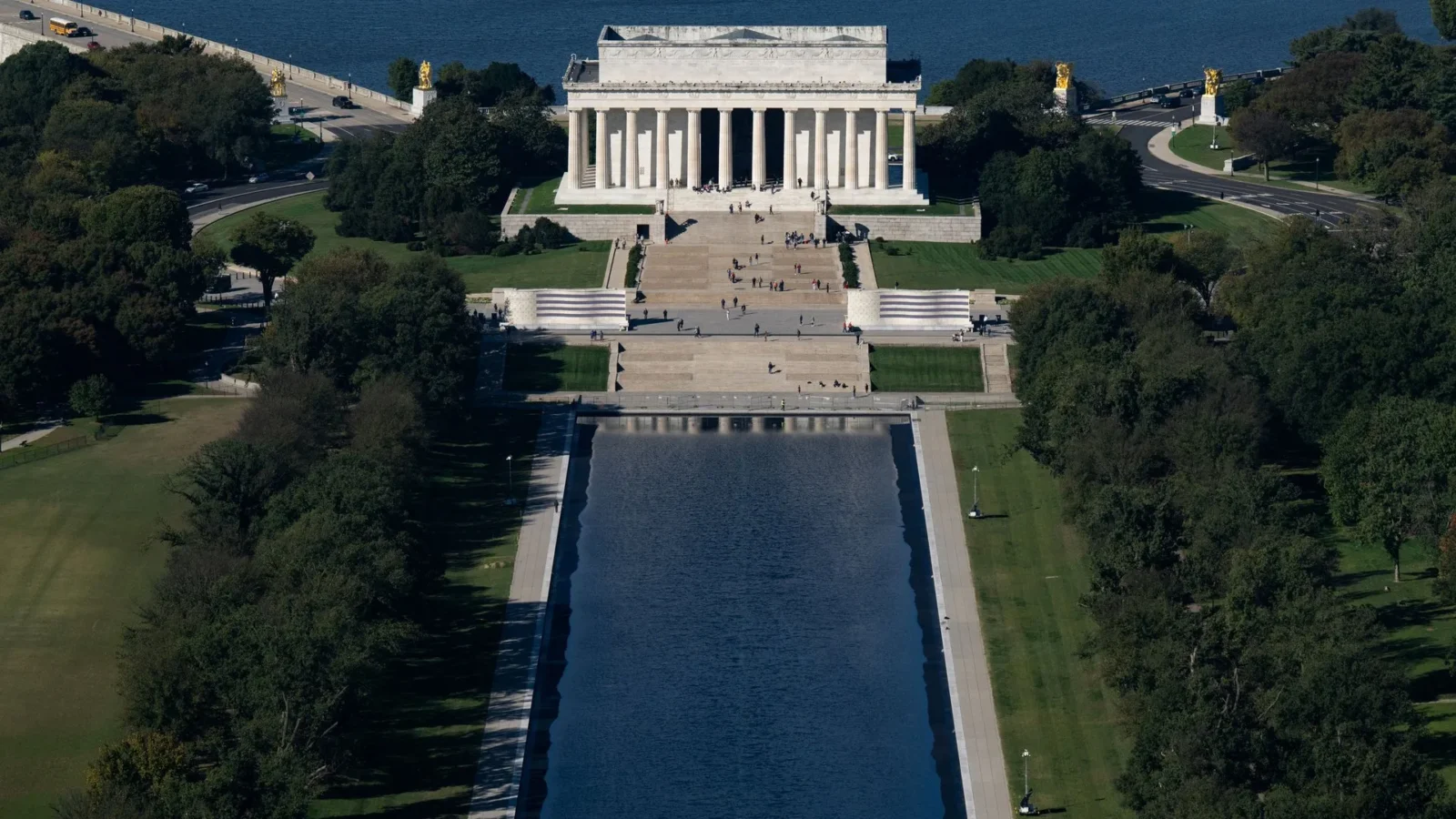
President Donald Trump recently said the Lincoln Memorial Reflecting Pool was “85% filled” and “looking great” following months of repairs and setbacks. Whether measured as a literal percentage of water volume or as a shorthand description, the comment landed in the middle of a larger conversation about responsibility for public monuments, how federal repairs are funded and executed, and how political leaders use visible public spaces to send messages.
Who manages the pool and how repairs happen
The Lincoln Memorial Reflecting Pool and the broader National Mall and memorial areas are managed by the National Park Service (NPS), an agency of the Department of the Interior. Routine maintenance, larger restoration projects and emergency repairs are coordinated by NPS staff, sometimes supported by other federal entities and supplemented by private donations and non-profit partners. The NPS regularly publishes project updates for the National Mall and Memorial Parks, including information about closures and construction phasing (National Park Service — National Mall & Memorial Parks).
Deferred maintenance and funding pressures
One enduring challenge for the NPS and many federal land managers is deferred maintenance — a backlog of repairs that have accumulated because demand for capital investment outpaces available funding. The federal deferred-maintenance backlog across agencies has been documented repeatedly by auditors, and the Park Service’s infrastructure needs have been a frequent focus in oversight reports. That backlog helps explain why a highly visible repair project on the National Mall can take months and become politically charged (U.S. Government Accountability Office: reports on federal deferred maintenance).
Why public statements about repairs matter
When prominent politicians comment on the status of public spaces, the statements do three things:
- Signal priorities: A high-visibility comment can signal that a leader is prioritizing a site and may accelerate interagency attention or funding requests.
- Shape public perception: Phrases like “85% filled” can be interpreted as technical updates or as rhetorical points intended to convey progress.
- Invite scrutiny: Because federal maintenance is documented in public records and managed by expert staff, such statements are often checked against on-the-ground conditions and official updates by journalists and watchdogs.
How to interpret short, public-facing metrics
Percentages or short-character assessments of status are easy to communicate but can obscure nuance. For example, a project may be “85% complete” in contract terms while remaining closed for safety reasons, or a water feature may be mostly refilled yet still require system testing, filtration adjustments, and final landscaping before reopening. Journalists and the public should look for corroborating details in project updates from the NPS, notices to stakeholders, contract closeout documents, or photos and eyewitness reporting.
Political implications
Public spaces like the Lincoln Memorial carry deep symbolic weight in American civic life. Statements by political leaders about those spaces can be read as attempts to assert stewardship, claim credit for repairs, or reassure constituents about government competence. At the same time, the technical work of repair — plumbing, filtration, structural stabilization, site drainage, and landscaping — is carried out by engineers, conservators and contractors who follow professional standards regardless of political messaging.
What to watch next
- Official project updates from the NPS or the Department of the Interior, which typically list scope, contractor status, and anticipated reopening timelines (NPS: National Mall & Memorial Parks).
- Congressional budget language or appropriations affecting NPS capital projects, which can accelerate or delay work.
- Independent on-the-ground reporting and photo documentation from credible news organizations or local journalists that verify current conditions.
Bottom line
President Trump’s remark about the Reflecting Pool — that it was “85% filled” and “looking great” — is a succinct, public-friendly update on a highly visible site. To turn that claim into a reliable status update, readers should check NPS project pages and recent reporting, and assess whether the quoted figure refers to water volume, percent completion of repairs, or an informal description of progress. In the bigger picture, the moment points to enduring challenges: federal agencies’ maintenance backlogs, the complexity of restoring historic public spaces, and the political salience of landmarks that are both working infrastructure and potent civic symbols.
Selected references and further reading (representative):
- National Park Service — National Mall & Memorial Parks (project updates and official notices)
- U.S. Government Accountability Office (reports on federal deferred maintenance and infrastructure backlogs)
- FactCheck.org (for verification of high-profile public statements)
- Congressional records and appropriations (for funding decisions affecting repairs)
Note: For live links to the most recent project status, photo updates and official reopening timelines, consult the National Park Service and recent reporting from major news outlets and local D.C. press.