
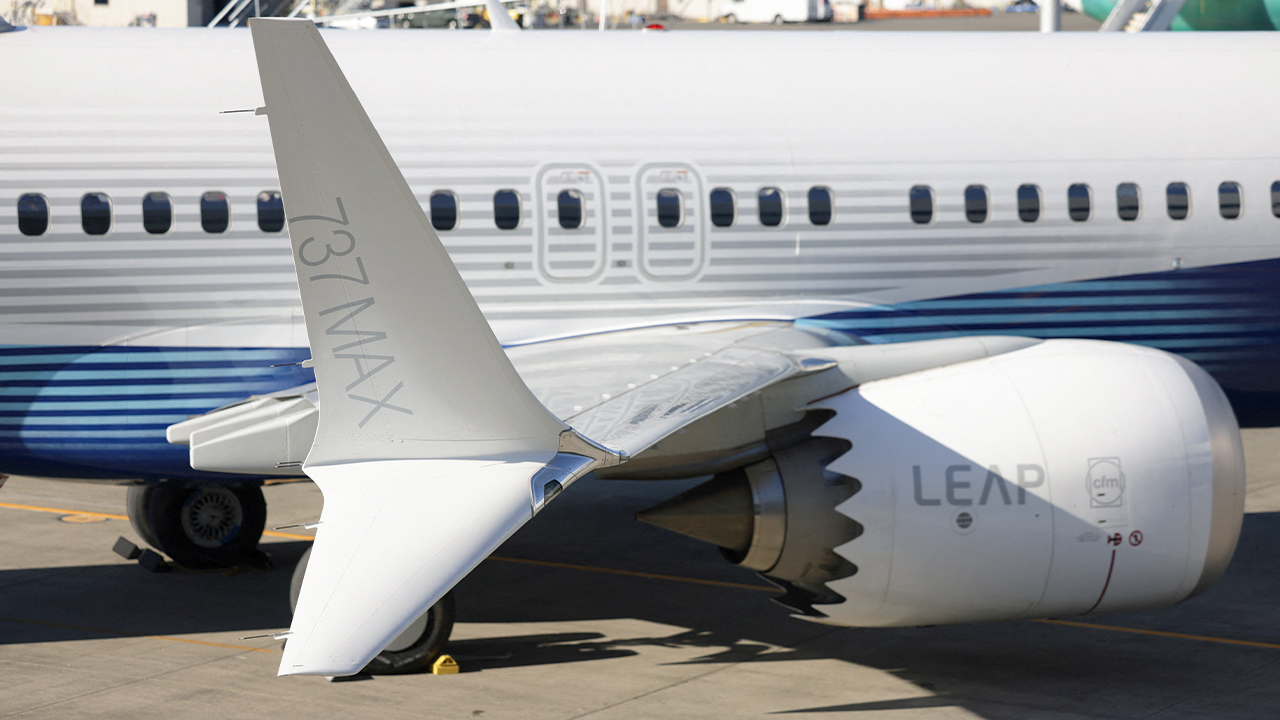
The Federal Aviation Administration has granted certification to Boeing’s 737 MAX 10, the largest variant in the 737 MAX single-aisle family, clearing a major regulatory hurdle and allowing Boeing to begin deliveries to customers in the coming months. The approval follows an extended safety review and testing program and marks the final FAA certification for the entire MAX family.
Key details from the certification
- The 737 MAX 10 can seat up to 230 passengers in a high-density layout, though airlines will typically configure it for roughly 185–210 passengers in a two-class arrangement.
- Boeing said the MAX 10 has amassed about 1,555 orders from more than 30 customers worldwide — roughly a third of Boeing’s outstanding 737 MAX backlog.
- Certification followed extensive testing that Boeing reports included nearly 1,000 test flights, more than 2,000 flight hours and roughly 1,000 hours of ground testing.
- FAA and Boeing both highlighted updated safety features on the MAX 10, including enhancements to the flight-control system and improvements to angle-of-attack sensing that Boeing plans to standardize across the MAX family.
Why this matters: fleet strategy and market impact
The MAX 10 is Boeing’s response to airlines’ demand for higher-capacity single-aisle aircraft on trunk and thin long-haul routes. With a range of roughly 3,100 nautical miles and improved seat-mile economics, the MAX 10 targets the same high-capacity market segment dominated by the Airbus A321neo family. For carriers focused on reducing per-seat costs while maintaining route flexibility, the MAX 10 is built to be a workhorse.
For Boeing, the approval helps unlock deliveries that will materially affect commercial production and backlog figures. The company has said the MAX family has attracted thousands of orders across variants — the MAX 10 certification means all four MAX variants now hold FAA approval, simplifying airline fleet planning and lease/financing arrangements tied to certified types.
Regulatory context and safety posture
The MAX 10 was subject to prolonged regulatory scrutiny amid the broader regulatory and public attention focused on Boeing since earlier MAX incidents and the subsequent recertification work for the MAX family. The FAA emphasized that its review met statutory safety standards and that it would continue oversight as Boeing ramps production and deliveries.
Boeing has highlighted system updates and additional sensors as part of the MAX 10 qualification package; the FAA cited a thorough review of design and safety requirements in issuing certification. Continued transparency around production quality and post-delivery monitoring will likely be a focus for regulators, airlines and lessors as deliveries begin.
What airlines and lessors can expect next
Boeing and customers typically move from certification to initial deliveries on a staged schedule that includes crew training, simulator validations, and early operational acceptance flights. With more than 30 customers on the MAX 10 order list, airlines with high-frequency, medium-haul routes stand to benefit quickly from the type’s capacity and range mix.
However, timing for first deliveries will vary by airline depending on configuration, pilot/crew training schedules, regulatory acceptance in markets outside the U.S., and supply-chain readiness. Global regulatory approvals beyond the FAA (for example, from EASA and other civil aviation authorities) will also be important for international operations.
Wider industry implications
Beyond the immediate delivery ramp, certification of the MAX 10 is likely to intensify competition in the single-aisle, high-capacity segment. Airbus’ A321neo family has been a strong seller in that market; Boeing’s certified MAX 10 gives carriers another option that promises favorable seat-mile costs and range for many route profiles.
For the U.S. aerospace manufacturing base, Transportation Secretary and industry officials framed the certification as a positive for domestic aerospace jobs and industrial output. For investors and market watchers, the event reduces a key regulatory overhang and focuses attention on Boeing’s ability to scale production while maintaining quality and safety standards.
Bottom line
The FAA’s certification of the 737 MAX 10 closes a long chapter of regulatory review for Boeing’s MAX family and opens a new operational phase for airlines that bet on larger single-aisle capacity. The near-term emphasis will be on safe, steady deliveries, regulatory alignment across major markets, and the aircraft’s commercial performance against entrenched competitors in the high-capacity single-aisle market.
Sources
- Federal Aviation Administration (FAA) newsroom
- Boeing News Releases
- Reuters — Aerospace & Defense coverage
- CNBC — Business News (Aerospace)
- Airbus — Commercial Aircraft (for market comparison)
Note: figures and program details cited above are drawn from official Boeing and FAA statements and contemporaneous reporting by major business and aviation news outlets.