
Diplomatic pressure is building on Washington as several countries push the United States to ease its blockade of the Strait of Hormuz and keep negotiations with Iran alive. The dispute has quickly become one of the most closely watched international flashpoints because it touches three issues at once: regional security, Iran’s nuclear program, and global energy prices.
The immediate development is a widening international effort to restart or strengthen negotiations. According to the original feed item from Straight Arrow News, China, Pakistan, and Saudi Arabia are all pressing for diplomacy as the U.S. blockade continues. China publicly criticized the blockade as “dangerous and irresponsible,” while President Xi Jinping said Beijing would play a “constructive role” in promoting talks. Pakistan is reportedly trying to host another round of U.S.-Iran discussions, and Saudi Arabia has also urged Washington to keep negotiating.
Nuclear negotiations remain the central obstacle
At the heart of the standoff is Iran’s nuclear program. The latest reporting cited in the feed points to a major gap between the two sides: the U.S. wants a far longer halt to uranium enrichment, while Iran appears willing to accept only a temporary suspension. That leaves negotiators stuck between the political need for a deal and the strategic distrust that has defined U.S.-Iran relations for decades.
The issue matters well beyond the negotiating room. Western officials have long argued that uranium enrichment capacity can shorten the path to a nuclear weapon if a state decides to weaponize its program. Iran, meanwhile, has repeatedly insisted that its nuclear activities are for civilian purposes and that it has a sovereign right to pursue them under international rules. That legal and political tension has shaped nearly every major diplomatic confrontation over Iran in recent years.
For broader context, the International Atomic Energy Agency remains the key global body monitoring Iran’s nuclear activity, and its assessments frequently shape the diplomatic language used by Washington, Tehran, and European governments. Meanwhile, the U.S. State Department continues to frame the issue as one of regional security and nonproliferation.
Why the Strait of Hormuz matters so much
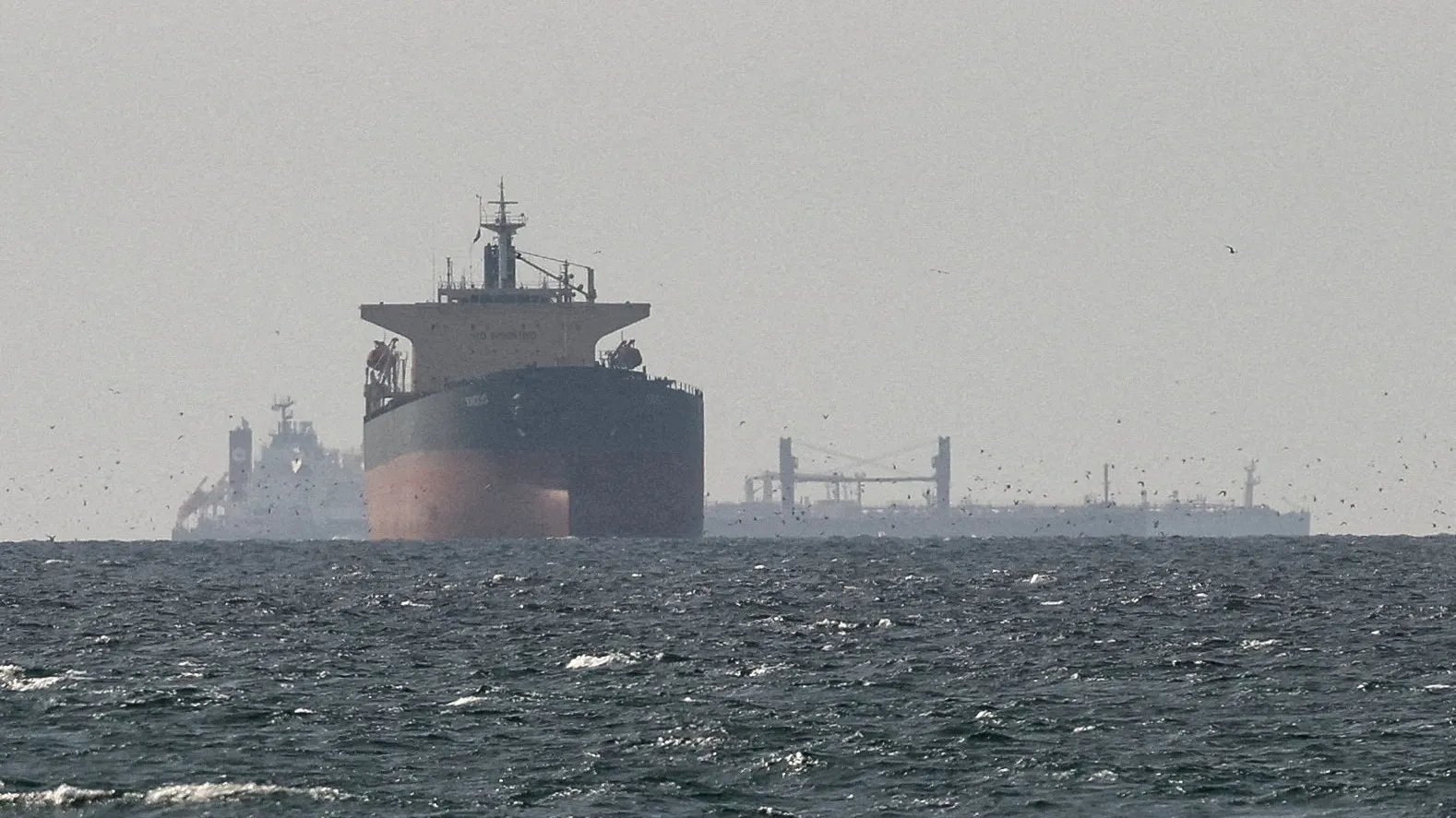
The location of this crisis explains why the story has gained global urgency. The Strait of Hormuz is one of the world’s most important maritime chokepoints, carrying a significant share of global oil shipments. Any military disruption there can immediately rattle financial markets and raise fears of supply shocks.
That concern is already visible in energy trading. The feed report noted that crude prices eased slightly as markets watched for signs of diplomatic progress, but prices remained elevated. Investors are effectively betting on two competing scenarios: one in which negotiations reduce the risk of a prolonged supply disruption, and another in which diplomacy fails and the region moves closer to a broader conflict.
For energy-market background, the U.S. Energy Information Administration regularly tracks the strategic importance of the Strait of Hormuz and global oil flows. Market participants also rely heavily on benchmarks such as Brent and WTI crude, which react sharply to threats involving Gulf shipping lanes.
China, Pakistan and Saudi Arabia are signaling a larger shift
One of the more important developments in this story is not just the pressure on the U.S., but who is applying it. China’s involvement reflects its growing willingness to position itself as a diplomatic player in the Middle East, especially where trade routes and energy supplies are at stake. Pakistan’s role suggests that regional and near-regional powers still see value in backchannel or hosted diplomacy. Saudi Arabia’s intervention is especially notable because it signals that even states with deep concerns about Iran may now see de-escalation as the more urgent priority.
This is where the story moves beyond a narrow U.S.-Iran dispute. It increasingly looks like a test of whether middle powers and global rivals can shape the terms of a crisis that directly affects commerce, shipping, and regional stability. In that sense, the blockade is not only a military or sanctions story; it is also a measure of how influence is shifting in global diplomacy.
The bigger picture
The most recent reporting suggests that no side wants to appear weak, but nearly every major player wants to avoid a wider war. That contradiction often defines high-stakes diplomacy: governments escalate to improve leverage, then search for a face-saving exit before economic or military costs spiral.
For now, the talks appear to be trapped between limited progress and deep mistrust. If negotiators can find a temporary formula on enrichment, monitoring, and maritime security, the current crisis may cool. If not, the Strait of Hormuz will remain a pressure point not only for the Middle East, but for the global economy.
Sources
Straight Arrow News – Multiple countries call on US to end Strait of Hormuz blockade, keep negotiating with Iran
International Atomic Energy Agency
U.S. Energy Information Administration
U.S. State Department