
Summary
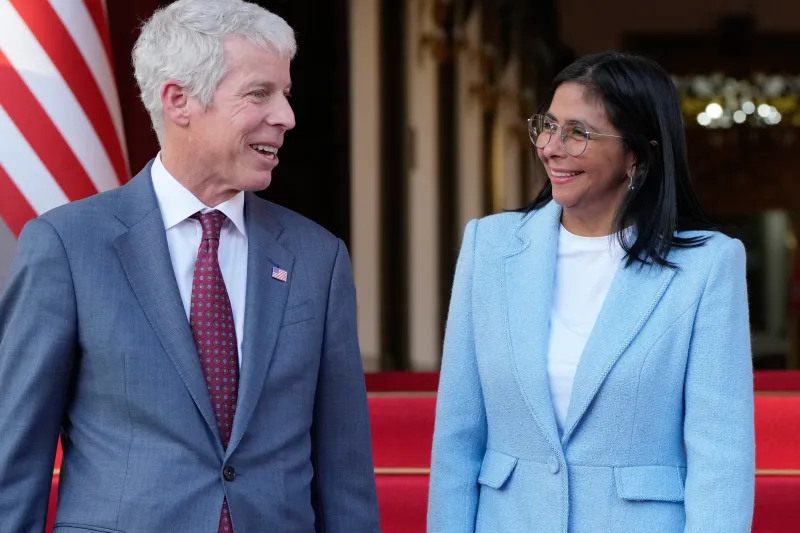
The U.S. Department of Justice has directed federal prosecutors in Miami to pause criminal scrutiny of Venezuela’s acting President Delcy Rodríguez, according to reporting by the Associated Press. The move—described by current and former U.S. law-enforcement officials—comes amid a broader thaw between Washington and the oil-rich nation and follows steps by the Trump administration to lift sanctions and recognize Rodríguez as Venezuela’s head of state. The Associated Press reporting indicates the Drug Enforcement Administration (DEA) had long flagged Rodríguez in intelligence records dating back to at least 2018, though she has not been charged in U.S. courts.
Key developments
- Federal prosecutors in Miami were told to avoid pursuing investigations into Delcy Rodríguez, according to current and former officials cited by the AP. The Justice Department said in a statement there was “never an investigation into her to shut down.” (AP reporting).
- DEA records obtained by the AP show Rodríguez has repeatedly appeared on U.S. law-enforcement radar since 2018 in connection with allegations ranging from drug trafficking to money laundering, though she has not been criminally charged in the U.S.
- The administration has simultaneously moved to lift some sanctions on Rodríguez, re-establish banking ties for Venezuela’s interim authorities and encourage U.S. investment in Venezuelan oil production.
- Some U.S. lawmakers and former prosecutors have criticized the apparent stand-down, warning it risks politicizing law enforcement decisions that are supposed to be guided by evidence and rule-of-law standards.
Why this matters
The decision touches on three overlapping policy areas: the independence of U.S. criminal enforcement, the strategic use of sanctions and diplomacy, and energy and commercial interests.
First, any directive to deprioritize or suspend criminal probes of a foreign official raises concerns about DOJ independence. Charging decisions involving foreign leaders have special legal considerations—foreign heads of state can have immunity in some circumstances, and departmental policies require senior approval for cases that implicate foreign leaders—but critics say such decisions should be evidence-driven, not transactional or purely diplomatic.
Second, the move aligns with a diplomatic strategy that appears focused on stabilizing Venezuela and reopening its oil sector to U.S. companies. Officials and commentators quoted in coverage suggest Washington is trading legal pressure for cooperation that could ease energy access, commercial opportunities, and a smoother political transition in Caracas.
Third, the episode demonstrates how law enforcement tools—sanctions, indictments, and public designations—can be leveraged as instruments of foreign policy. That can offer short-term leverage but also risks undermining long-term credibility if perceived as selectively applied.
Political reactions and legal context
Senators including Jeanne Shaheen and Elizabeth Warren have publicly sought explanations for the administration’s treatment of Rodríguez, saying sanctions relief should be tied to demonstrable steps toward restoring democratic norms. For their statements and inquiries, see the senators’ public offices. (Shaheen office search; Warren office search).
Legal experts quoted in reporting warn that if prosecutorial decisions are influenced primarily by political objectives, it can erode public trust in the impartial administration of justice. At the same time, the Justice Department must balance legal rules—such as immunity and international law—with national security and foreign-policy imperatives.
Broader regional implications
The pause on probes is not unique to Venezuela: reporting indicates similar de-escalatory signals were given regarding investigations into other Latin American leaders, including Colombia’s president in related cases, reflecting a pattern where diplomatic priorities sometimes reshape enforcement posture.
For regional governments and investors, the U.S. approach sends signals about where Washington may prioritize cooperation—particularly on energy and commercial matters—over litigative pressure. That can accelerate investment and re-engagement, but it may also complicate accountability efforts for corruption or transnational crime.
What to watch next
- Official statements from the Department of Justice and the White House clarifying the scope and rationale for any stand-down.
- Whether the DEA or federal prosecutors resume active investigations or whether any formal charges are pursued in other jurisdictions.
- How U.S. lawmakers respond, including oversight hearings or letters demanding documentation of any policy shift.
- Actions by U.S. companies and foreign investors in Venezuela’s oil sector that could indicate whether the diplomatic opening translates into commercial on-the-ground change.
Analysis
The pause on investigations into Delcy Rodríguez underscores a calculated trade-off: the administration appears willing to reduce legal pressure to secure stability in Venezuela and to rebuild energy ties. That strategy can yield immediate geopolitical and economic returns, but it also carries legal and reputational costs if it is perceived to place political expediency above the impartial enforcement of U.S. law. The long-term effects will depend on whether this opening produces verifiable democratic reforms and a transparent path toward accountability, or whether it simply enables short-term commercial access without substantive institutional change.
Sources
- Associated Press reporting on U.S. directives to Miami prosecutors and DEA records. (AP: Delcy Rodríguez search results).
- Coverage and context on related U.S. assurance to Colombia and other reporting about regional probes. (The New York Times: search).
- DEA and Justice Department public records and searches for background on enforcement and policy. (DEA search; DOJ search).
- Senators’ inquiries and public statements regarding sanctions relief and scrutiny. (Sen. Jeanne Shaheen office search; Sen. Elizabeth Warren office search).
- Related international and regional reporting. (Reuters search).