
Overview
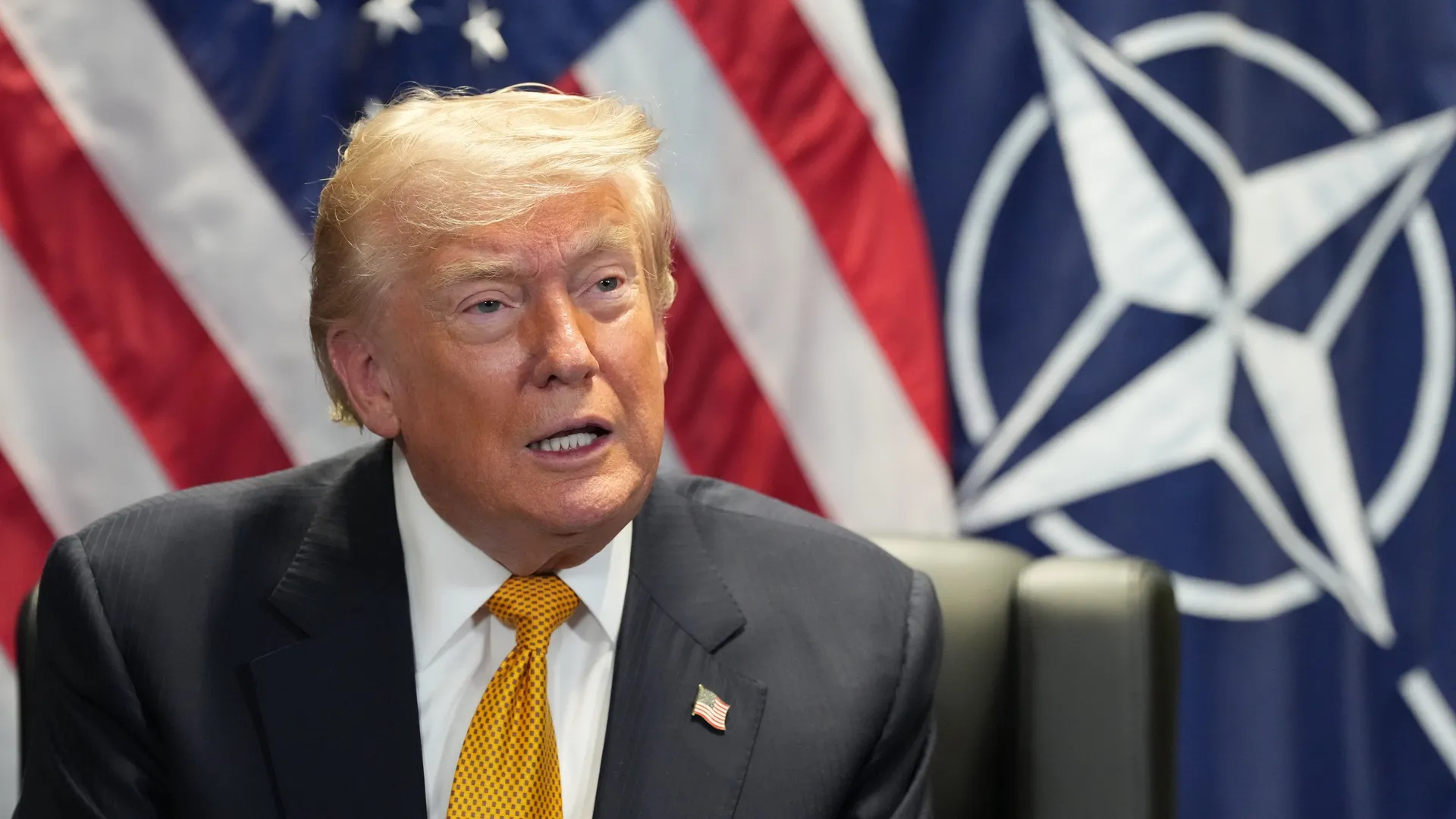
At the NATO summit in Ankara, President Donald Trump intensified public pressure on several U.S. allies, criticizing their defense spending and positions during the Iran crisis, renewing a controversial claim that Greenland should be under U.S. control, and announcing the lifting of sanctions on Turkey. He is scheduled to meet with Ukrainian President Volodymyr Zelenskyy amid fresh appeals from Kyiv for more support and a path toward NATO membership.
Key developments
Trump criticized NATO partners for what he called inadequate support and singled out Denmark and Spain by name. He argued that Greenland — a Danish territory with strategic Arctic importance — should be controlled by the United States, repeating a proposal that drew international ridicule and a firm rebuttal from Danish Prime Minister Mette Frederiksen, who emphasized that “Greenland is not for sale” and reaffirmed NATO solidarity.
Trump also called Spain a “terrible partner,” accusing it of refusing to back U.S. measures related to Iran and suggesting cutting off trade. Spanish officials pushed back, defending the bilateral relationship and accusing the president of bullying.
In a bilateral meeting with Turkish President Recep Tayyip Erdoğan, Trump announced the U.S. would lift sanctions on Turkey and signaled openness to resuming F-35 fighter sales—moves that have sparked concern among other NATO members, including Greece, which warned of regional sensitivities and unresolved tensions between Athens and Ankara.
Ukraine on the agenda
Trump is set to hold separate talks with Ukrainian President Volodymyr Zelenskyy. Zelenskyy has reiterated Ukraine’s desire for a clearer path to NATO membership and more military support in its war with Russia. According to the reporting around the summit, Trump said he had discussed a path to ending the war with both Zelenskyy and Russia’s Vladimir Putin, framing the effort in terms of deal-making he says defines his presidency.
What this means for NATO cohesion
Public criticisms from the U.S. president toward key allies risk deepening fractures within NATO at a time when unity is particularly consequential. NATO’s collective defense promise rests on allied trust that commitments are mutual and reciprocal; public threats to reduce troop presence or sever trade ties can undermine that trust.
For smaller NATO members such as Denmark, and for frontline states like Poland and the Baltic countries, U.S. credibility is crucial to deterrence. Repeated public questioning of allies’ contributions, coupled with bargaining over strategic assets like Greenland, injects transactional politics into alliance management and could encourage divergent security postures among European capitals.
Turkey’s sanctions and NATO interoperability
Lifting sanctions and reconsidering F-35 restrictions for Turkey would alter NATO interoperability dynamics. Turkey’s past purchase of the Russian S-400 system prompted the original F-35 exclusion; reversing that decision may be seen by some NATO partners as normalizing a problematic defense relationship with Russia, even as Ankara positions itself as a strategic pivot in the Eastern Mediterranean and Black Sea.
Implications for U.S. domestic politics and foreign policy
Domestically, the president’s confrontational tone toward allies plays to a constituency that favors assertive, deal-oriented diplomacy and prioritizes U.S. strategic advantage. Internationally, however, such rhetoric complicates coalition-building, a cornerstone of current Western approaches to challenges from Russia, Iran, and a rising China in the Arctic and beyond.
Bottom line
The Ankara summit highlights an enduring tension in U.S. foreign policy between transactional, leader-driven negotiations and the long-term institutional commitments underpinning alliances. Moves such as threatening troop withdrawals, reasserting claims on strategic territories, and lifting sanctions signal a willingness to recalibrate long-standing policies — a recalibration that could lead to short-term gains but also long-term uncertainty about American commitments.
Sources and further reading
- Reuters — ongoing coverage of the NATO summit and bilateral meetings
- Associated Press (AP) — reporting and photo coverage from Ankara
- BBC News — analysis of NATO unity and regional reactions
- The New York Times — coverage of U.S. foreign-policy implications
- NATO (official site) — summit statements and alliance background
Note: This article synthesizes on-site reporting from major outlets and official statements released during the NATO summit in Ankara to provide context and analysis for readers following the evolving diplomatic developments.