


What happened at the summit
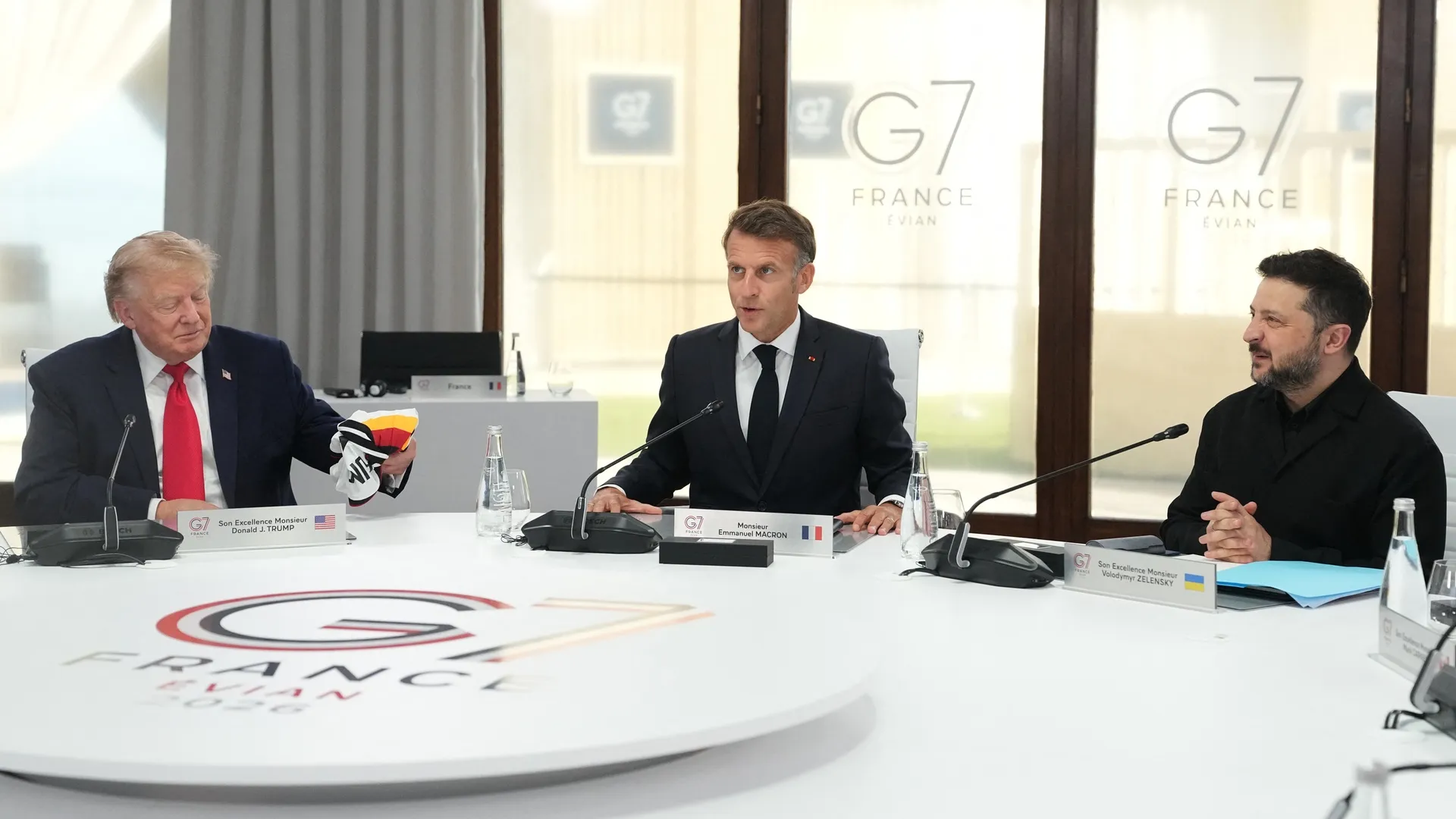
At the G7 meeting, U.S. President Donald Trump met with fellow leaders and Ukrainian President Volodymyr Zelenskyy. According to the supplied feed, Trump said he has announced a deal that he described as ending a fragile conflict with Iran and reopening the Strait of Hormuz. He also told world leaders he plans to focus on ending the war in Ukraine and met with Zelenskyy for a little over an hour. Britain unveiled another round of sanctions aimed at Russia’s so-called “shadow fleet,” the network of vessels used to move oil around western restrictions.
Key claims and caveats
- President Trump said the Strait of Hormuz is “already partially opened” and that Iran has agreed to never develop a nuclear weapon. The RSS feed also reports that Iran’s foreign minister framed talks with the U.S. as a two‑phase process — an initial phase focused on ending hostilities, reopening the Strait, accessing frozen funds and reconstruction, and a later phase addressing nuclear questions and sanctions relief.
- Those two descriptions are not fully aligned. Major diplomatic breakthroughs, especially on issues as consequential as Iran’s nuclear ambitions and sanctions relief, normally require multilateral verification and follow-up, and rarely are fully resolved in a single announcement.
Why the Strait of Hormuz matters
The Strait of Hormuz is a strategic chokepoint for global energy flows: a significant share of the world’s seaborne oil transits the strait. Any disruptions can spike energy prices and complicate logistics for countries dependent on oil and gas shipments. Reopening or guaranteeing safe passage through the strait is therefore a high diplomatic priority and typically involves verification measures and assurances from multiple parties.
Context on Iran negotiations
Negotiations with Iran historically have multiple, interlocking elements — normalization of relations, sanctions relief, nuclear constraints overseen by the International Atomic Energy Agency (IAEA), and regional security assurances. The RSS text’s description of a two‑phase Iranian approach (first ending hostilities and economic access; later nuclear and sanctions questions) lines up with how protracted talks often proceed: practical confidence‑building steps first, then negotiation on the more technically complex and politically fraught nuclear and sanctions issues.
Ukraine, the G7, and the ‘shadow fleet’
Ukraine’s war with Russia remains the central security priority for many G7 members. The meeting between G7 leaders and President Zelenskyy, paired with Britain’s reported new sanctions on the shadow fleet, reinforces the coalition’s continued focus on constraining Russia’s ability to export energy and finance its war effort. The “shadow fleet” — tankers and associated shipping services that help move oil in ways that evade sanctions or price caps — has been a target of Western efforts to limit Russia’s energy revenues.
Possible implications
- If the reported Iran steps are genuine and verified, they could reduce immediate pressure in the Persian Gulf and lower the risk of energy market shocks. However, verification mechanisms and international buy‑in will be essential to turn an announcement into durable change.
- For Ukraine, Western unity on sanctions, maritime interdiction and continued military and economic support will remain critical. Any U.S. diplomatic shift that prioritizes direct deals with regional actors while sidelining allies could create friction in transatlantic coordination unless carefully managed.
- Trust and credibility matter: unilateral announcements by any leader about complex international agreements are typically followed by a period of diplomatic clarification, document exchange, and technical verification. Observers and partners will look for details on timelines, verification, and what concessions (if any) were conceded to secure immediate results.
What to watch next
- Official documentation or joint statements from G7 partners and Iran clarifying the content and status of any deal.
- Statements from the IAEA or other verification bodies about inspections, access and monitoring in Iran.
- Follow‑on meetings between the U.S., Ukraine and European partners to assess whether reported progress on Iran affects collective policy on sanctions or support for Kyiv.
- Enforcement actions and legal steps tied to new UK sanctions on the shadow fleet — whether they slow or deter shadow shipping activities.
Bottom line
The RSS feed reports a potentially significant diplomatic development: a Trump‑announced deal to ease tensions with Iran accompanied by an immediate shift of emphasis toward resolving the war in Ukraine. Such announcements merit close scrutiny: durable outcomes depend on multilateral verification, the technical details of agreements, and the willingness of partners to align behind any negotiated terms. In the coming days and weeks, observers should look for formal joint statements, technical verification steps, and how allied capitals respond.
Sources and further reading
- Text supplied in the RSS feed (provided by user)
- International Atomic Energy Agency (IAEA) — https://www.iaea.org/
- Reuters (general coverage) — https://www.reuters.com/
- Associated Press (general coverage) — https://apnews.com/
- BBC News (background on Iran and international diplomacy) — https://www.bbc.com/news
Note: This article synthesizes the supplied feed and established background information. For live verification of developing diplomatic agreements, consult primary statements from involved governments and multilateral institutions listed above.