


Overview
Overnight drone attacks and conflicting statements from Washington and Tehran have cast doubt on whether informal talks between the United States and Iran are actually underway. President Donald Trump told reporters aboard Air Force One that “we’re having good talks,” but added that he is prepared to resume military pressure if diplomacy fails. Iranian officials, meanwhile, publicly denied accepting a U.S. proposal to meet and emphasized separate engagement with Oman over security in the Strait of Hormuz.
What happened overnight
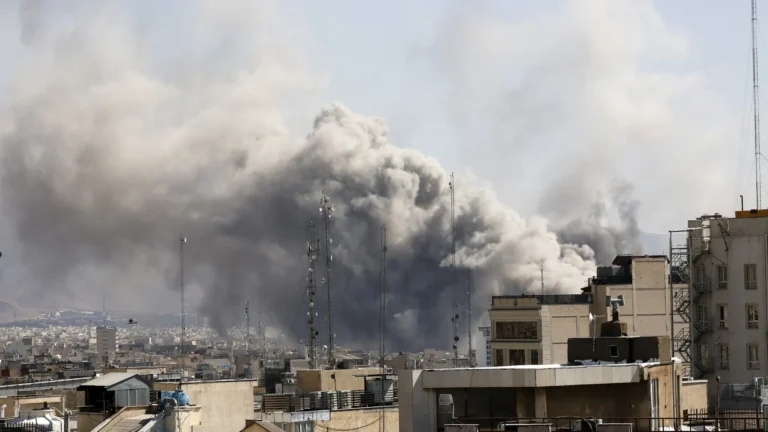
Multiple sources reported attempted unmanned aerial attacks in the region. The Jerusalem Post reported that Iranian-backed armed factions attempted drone strikes targeting a U.S. base known as Tower 22 near the Syrian–Jordanian border. Jordanian state media said its military shot down a drone that breached Jordanian airspace, and Israeli authorities reported intercepting an unmanned aircraft near the Jordanian border and launched an investigation into its origin.
These incidents come amid an uptick in unmanned and proxy attacks in the Levant and Gulf regions, raising concern that lower-cost, harder-to-attribute drone strikes will continue to complicate diplomacy and deterrence efforts.
Official statements and diplomatic threads
President Trump told reporters he believed talks were ongoing and said there was “a good chance that something could happen,” but warned that the U.S. would resume tougher measures if negotiations collapse. A social-media clip of the president’s remarks circulated widely.
On the Iranian side, a deputy foreign minister publicly denied accepting a U.S. proposal to meet. Iranian state media and officials have emphasized separate, ongoing discussions with Oman focused on arrangements for the Strait of Hormuz — a strategically critical shipping chokepoint for global oil flows. Iran’s foreign ministry framed those contacts as bilateral or mediated talks with Gulf states rather than direct U.S.–Iran negotiations.
Why the Strait of Hormuz matters
The Strait of Hormuz is one of the world’s most important maritime chokepoints: a significant share of global crude oil and liquefied natural gas transits the waterway. Any sustained disruption raises immediate concerns for energy markets and shipping insurance costs, and can quickly ripple into global oil prices and economic forecasts.
Possible implications
- Escalation vs. de-escalation: Drone attacks offer plausible deniability to state and non-state actors, increasing the risk of miscalculation. The U.S. faces a choice between retaliatory strikes — which could spark broader confrontation — and calibrated diplomatic pressure to isolate actors carrying out attacks.
- Diplomacy through third parties: Oman’s continued role as an interlocutor reflects a longer history of Omani mediation between Tehran and Western capitals. Gulf-state and European mediation could be crucial in shaping outcomes if direct U.S.–Iran channels remain constrained.
- Energy markets: Renewed instability around the Strait could push oil prices higher in the near term, prompting market volatility and nervousness among energy-importing economies.
- Regional alignments: The involvement of actors operating from Syria, Jordanian airspace violations, and Israeli interceptions underline how multiple theaters — Levant, Gulf, and Arabian Peninsula — are interconnected and could be drawn into any wider confrontation.
What to watch next
- Signals from U.S. decision-makers on whether they will respond militarily to the drone attacks or emphasize diplomacy.
- Any confirmation of direct U.S.–Iran meetings or concrete proposals exchanged through intermediaries such as Oman or European mediators.
- Developments at the Strait of Hormuz, including naval escorts, increased patrols, or new security arrangements proposed by Gulf states.
- Market reactions, particularly in oil prices and shipping insurance premiums for Gulf transit routes.
Context and background
Low-intensity attacks using drones, missiles and maritime harassment have been a recurring feature of tensions between Tehran and U.S. forces and partners across the region. The use of proxies and deniable platforms complicates attribution and response choices for the United States and its allies.
Sources and further reading
- Report on Tower 22 and the attempted strikes: The Jerusalem Post – https://www.jpost.com/
- Statements by Iranian officials on Oman-mediated talks and the Strait of Hormuz: Iran International – https://www.iranintl.com/
- Comments by President Trump reported from Air Force One: White House press briefings and pool reports – https://www.whitehouse.gov/
- Background on the strategic importance of the Strait of Hormuz and energy implications: U.S. Energy Information Administration – https://www.eia.gov/
- Regional security and U.S. military posture in the Middle East (overview): U.S. Central Command – https://www.centcom.mil/
- General reporting on recent regional drone and proxy activity: Reuters – https://www.reuters.com/, Associated Press – https://apnews.com/
Takeaway
The latest drone incidents have made the status of U.S.–Iran talks uncertain and underscored the fragility of security in the region. Even if back-channel or third-party diplomacy continues, the persistence of low-cost drone and proxy attacks increases the risk of miscalculation and sudden escalation. Close monitoring of both diplomatic signals and military movements — alongside contingency planning for energy-market disruption — will be essential in the days ahead.
Note: This article synthesizes reporting from regional outlets and official statements circulating on July 27–28, 2026. Readers should consult the linked sources for original reporting and real-time updates.