
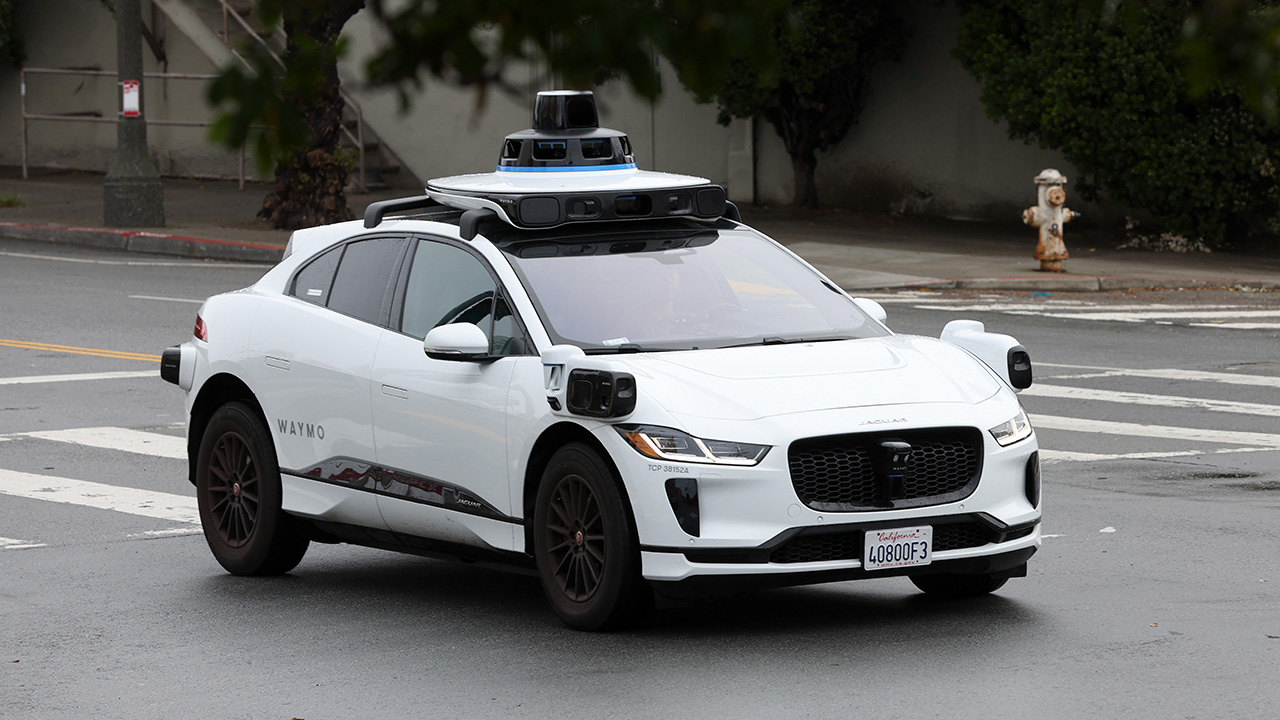
The California Department of Motor Vehicles has ordered Waymo’s driverless vehicles off every California freeway after a string of incidents that the agency said constitute an “imminent hazard to public safety.” The restriction, effective Nov. 11, 2026, applies to both testing and deployment on California freeways and will remain in effect until the company demonstrates effective corrective actions to address the cited deficiencies.
What happened?
The DMV’s action followed multiple freeway incidents, including an event on Nov. 5, 2026 in which three Waymo vehicles entered an active construction closure on U.S. Route 101 near Burlingame, and a Nov. 6 incident involving California Highway Patrol (CHP) vehicles on Interstate 280 in San Francisco. The DMV said these occurrences repeated earlier patterns, pointing to similar construction-zone incursions that prompted restrictions and corrective actions after incidents on May 18, 2026. Video circulating on social media reportedly showed a Waymo attempting to navigate around CHP vehicles conducting a traffic break.
Waymo confirmed to media outlets that it is pausing freeway operations across its other markets voluntarily while it evaluates performance, and said its surface-street ride-hailing service in California continues to operate. The company also said it will continue limited freeway testing with trained autonomous specialists as it works with state regulators on improvements.
Sources: Fox Business, Associated Press, California DMV, Waymo, Fox News Digital.
Regulatory basis and immediate effects
The DMV characterized the freeway construction-zone incursions as an “imminent hazard to public safety,” a legal standard that permits rapid, restrictive action while regulators demand corrective measures. The order confines Waymo’s freeway operations only within California; however, Waymo said it voluntarily restricted freeway operations in other markets pending evaluation.
Operationally, the order halts public freeway rides that Waymo had begun offering in November 2025 in California. Waymo will need to satisfy the DMV that it has fixed the root causes — through software, perception, operational policies, testing, or other measures — before the DMV will lift the restriction.
Why construction zones and traffic breaks are hard for AVs
- Construction zones are dynamic: lane closures, temporary signs, cones, human workers, relocated traffic patterns, and unusual vehicles create perception and planning challenges.
- Human-driven temporary operations (like CHP traffic breaks) introduce atypical vehicle behaviors and ad hoc lane blockages that can confuse an automated planner trained primarily on predictably signed and marked roadway geometry.
- Edge-case detection: infrequent but high-risk events (temporary barriers, workers near lanes, emergency personnel) are difficult to fully capture in training data and simulation.
What Waymo likely needs to show regulators
To regain freeway permissions, Waymo will probably need to present a clear, evidence-based corrective plan that could include:
- Root-cause analyses for each recent incursion, with reproducible failure modes and mitigation verification.
- Software updates validated in simulation and closed-course testing demonstrating reliable detection and safe behaviors in construction zones and at traffic breaks.
- Operational policy changes (for example, stricter geofencing to exclude active work zones, revised speed and gap-acceptance rules around atypical closures, or temporarily restricting freeway pickups/drops in crews’ proximity).
- Independent third-party audits or shared reporting with the DMV showing improvements across a range of scenarios.
- Enhanced human oversight during freeway testing (trained autonomous specialists on board, remote monitoring improvements) and a timetable for staged reintroduction of public freeway trips.
Implications for Waymo and the AV industry
This enforcement action underscores how quickly regulatory tolerance for autonomy can shift when public safety concerns arise. Potential implications include:
- Heightened regulatory scrutiny in other states and municipalities, and demands for more transparent incident reporting.
- Slower customer adoption and reputational damage for Waymo that competitors could exploit — especially if rivals emphasize safety and conservative operational limits.
- Increased focus among AV developers on robust handling of low-frequency, high-consequence events (construction zones, emergency responses, ad hoc closures), and on human–machine supervisory controls.
- Possible policy responses pushing for industry-wide standards on construction-zone detection, vehicle-to-infrastructure (V2X) integrations, and minimum reporting/auditing requirements for deployments.
Industry and technical paths forward
Solving these problems will likely require a mix of engineering and policy steps:
- Better sensor fusion and perception models trained on large, diverse datasets that include construction-zone geometry, temporary signage, and atypical vehicle formations.
- Improved real-time mapping and nudging from infrastructure (temporary digital work-zone flags, connected equipment), where available.
- More conservative operational design domains (ODDs) in the near term that exclude complex or rapidly changing environments until the systems are demonstrably robust.
- Stronger coordination protocols between first responders, work crews, and AV operators so human-managed traffic interventions (like CHP traffic breaks) are signaled to fleets in real time.
What to watch next
Key milestones and indicators for observers and policymakers:
- Whether Waymo releases a public remediation plan and timelines for technical fixes and revalidation testing. (Company statements indicate it is working with the DMV.)
- Any formal DMV reports or follow-up enforcement actions describing required corrective measures or independent audits.
- Responses from other AV operators and state regulators; voluntary restrictions or policy clarifications could ripple across the industry.
- Independent reviews or media investigations into the incidents and how Waymo’s systems behaved, including logged data if released under regulatory process.
Conclusion
The California DMV’s order is a significant regulatory rebuke that highlights the sector’s remaining technical and operational challenges. For Waymo, the immediate priorities are proving fixes work in the most challenging freeway scenarios and restoring public confidence. For the broader AV industry, the episode reinforces that successful deployments will require not only strong perception and planning systems but also tight integration with regulators and roadway operators to handle the messy, temporary, and human-driven realities of today’s roads.
Further reading: