
President in the Suite, Fans in the Stands
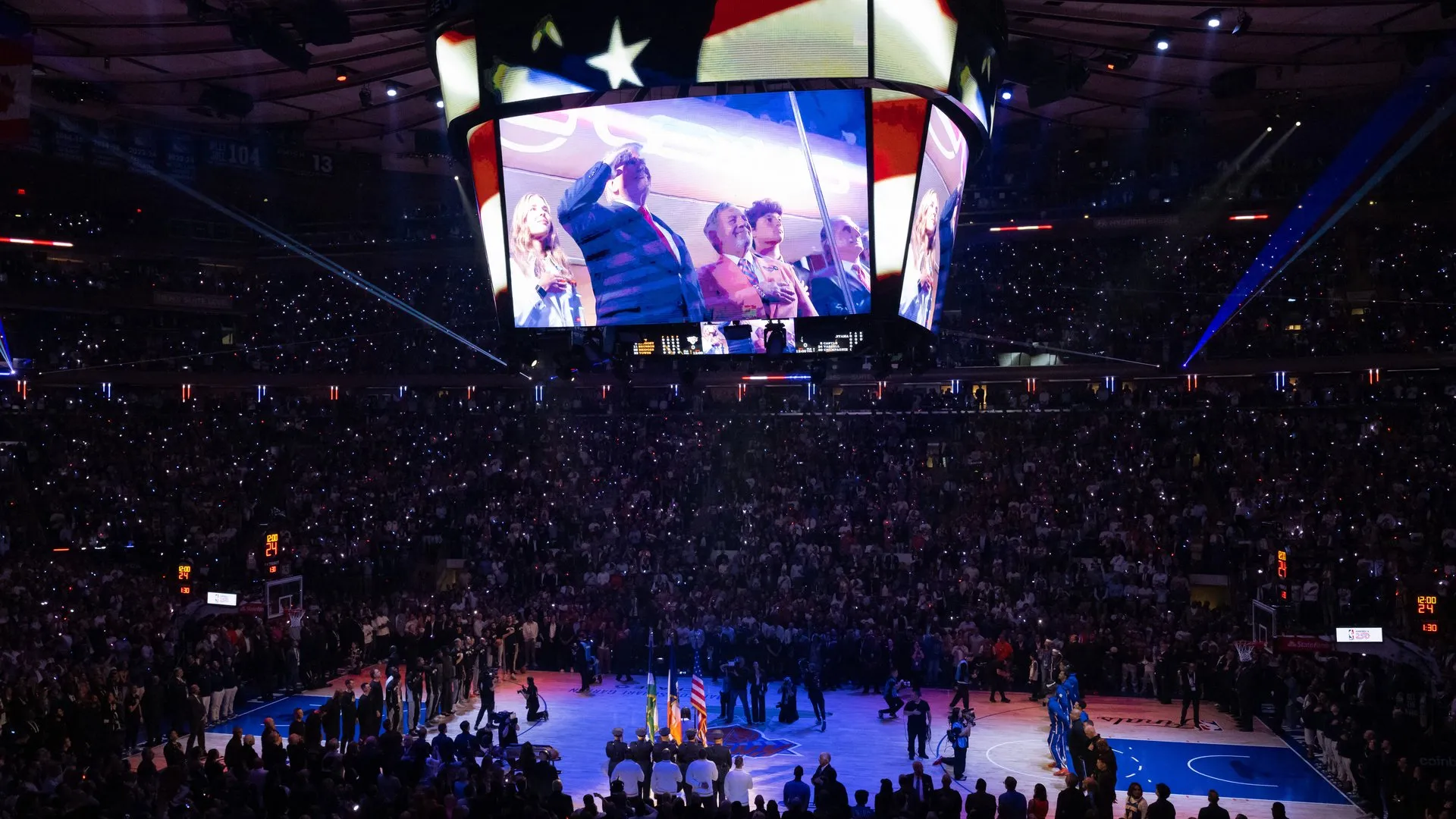
Monday night’s Game 3 at Madison Square Garden became as notable for who was watching as for what happened on the floor. The president attended the matchup between the New York Knicks and the San Antonio Spurs, drawing intense security measures and a mix of boos and cheers from the crowd.
What Happened Inside and Outside MSG
Security around the arena was unusually tight, with fans warned to arrive hours early to accommodate enhanced screening procedures. Secret Service checks were reportedly in place for every fan entering the venue, and the president was seated in an owner’s suite with family and several administration officials. During the national anthem the president gave a salute visible from his seat and later walked down to the court at halftime, drawing fans to take photos and videos.
The Game
On the court, the Spurs defeated the Knicks 115–111. Victor Wembanyama scored 32 points in the game. Despite the loss, New York maintained a lead in the series at two games to one, with play scheduled to return to Madison Square Garden for Game 4 on Wednesday night.
Politics and Live Sport: A Complicated Intersection
High-profile political attendance at major sporting events is rarely neutral. For many fans, a visit from a sitting president is an exciting — if unexpected — element of the spectacle. For others, it can be polarizing and divert attention from the athletic contest. Monday’s game illustrated both dynamics: tight security and protocol altered the fan experience, while on-court action continued to draw the focus of sports purists and casual viewers alike.
From an operations perspective, events with senior political figures require additional planning across venue management, team ownership, league officials and federal agencies. This can lead to longer entry times, restricted areas within and around arenas, and visible law-enforcement presence that changes the feel of what would otherwise be a typical playoff night.
Player Focus vs. Public Spectacle
Players and teams typically try to compartmentalize such events, focusing on game preparation and performance. Still, the presence of high-profile spectators can create distraction on multiple levels — media narratives shift, TV coverage may emphasize the political presence, and in-game moments (like boos or cheers aimed at the guest) can become talking points that linger beyond the final score.
What This Means for Fans and the League
For leagues and franchises, balancing access and security while preserving the fan experience is an ongoing challenge. Fans attending playoff games expect intense atmospheres and emotional highs; introducing a high-security political visit adds another dimension that arenas and teams must manage carefully to avoid negative impacts on attendance enjoyment and safety.
Looking Ahead
With the series continuing and the next game returning to Madison Square Garden, attention will be on both how teams respond on the court and how the venue handles any further high-profile visits or security needs. Ultimately, Monday’s game served as a reminder that major sporting events often operate at the crossroads of athletics, media, and politics — and that each visit from a political figure can reshape the story of a single game and the wider conversation around it.
Note: This article is based on the account provided in the supplied event summary and focuses on the intersection of sports operations and public spectacle surrounding the game.