




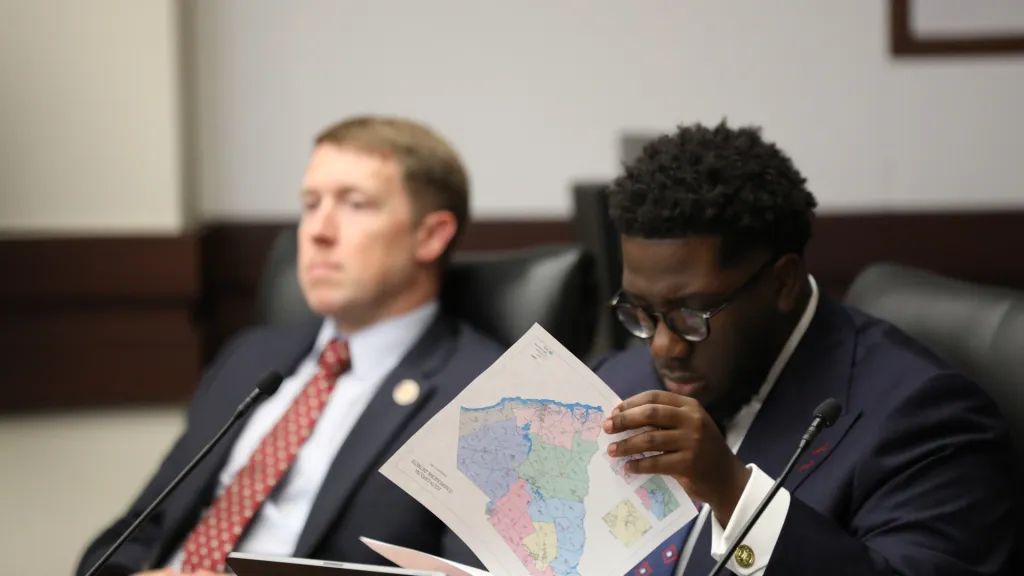
South Carolina politics is heading into a high-stakes special session after Gov. Henry McMaster ordered lawmakers back to Columbia to tackle two politically explosive issues at once: the state budget and congressional redistricting. The move, announced Thursday, immediately intensified an already bitter fight over whether Republicans will redraw the state’s congressional map in time to affect the 2026 midterm elections.
Why the Special Session Matters
McMaster’s executive order calls the General Assembly back beginning Friday at 11 a.m., reviving a redistricting effort that had stalled during the regular legislative session. According to reporting from the Associated Press, Republican lawmakers are under growing pressure to revisit the map after former President Donald Trump publicly urged them to eliminate South Carolina’s only Democratic U.S. House seat, held by Rep. James Clyburn in the 6th Congressional District.
The procedural stakes are significant. During the regular session, extending debate for redistricting required a two-thirds vote, a threshold that Republicans failed to secure after resistance from a group of GOP senators. In a special session, however, a new congressional map can move with a simple majority, creating a clearer path for passage.
The Target: South Carolina’s 6th District
The heart of the battle is the 6th District, a majority-minority seat represented by Clyburn, one of the most influential Democrats in the country. Trump recently called on South Carolina Republicans to be “bold and courageous” and suggested shifting the state’s U.S. House primaries to August so a new map could be in place before November. His message underscored how nationalized even state-level redistricting battles have become ahead of the midterms.
The push also lands at a moment when legal protections around racial gerrymandering are under renewed scrutiny. The U.S. Supreme Court has recently weighed key redistricting disputes, including cases involving Louisiana and South Carolina itself, shaping how aggressively states may redraw districts while navigating the Voting Rights Act and constitutional challenges. Readers looking for broader legal context can review SCOTUS coverage from SCOTUSblog and redistricting analysis from the Brennan Center for Justice.
Election Logistics Could Become a Costly Problem
One of the biggest practical obstacles is timing. State election officials have warned that changing the primary calendar this late would be expensive and disruptive. Ballots for the June 9 primary have already been printed, and some have already been returned. The South Carolina State Election Commission has indicated that reworking the schedule could cost between $2.2 million and $2.5 million, with local governments across all 46 counties likely absorbing much of the burden for election staffing and administration.
That financial reality has become a central Democratic argument against the move. Critics say the state is prioritizing partisan advantage over governance, especially at a time when voters are also focused on affordability, healthcare, and education funding.
Republicans Are Not Entirely United
Although Republicans control South Carolina government, the effort is not without internal tension. Some GOP lawmakers have raised concerns that redrawing Clyburn’s district too aggressively could produce unintended consequences for the party’s hold on the state’s other congressional seats. Others argue that forcing through a hyperpartisan map could invite fresh legal challenges and deepen public mistrust in the process.
That split reflects a wider national dynamic. Across the country, both parties are increasingly treating redistricting not as a once-a-decade chore, but as an ongoing political weapon. In states from North Carolina to Louisiana, map fights have become central to the struggle for control of the U.S. House. Recent coverage from Reuters and The New York Times Politics has documented how redistricting litigation and legislative maneuvering are reshaping the battlefield ahead of 2026.
The Bigger Picture
What is happening in South Carolina is about more than one district. It is a preview of how aggressively state leaders may try to redraw the political map before voters head to the polls. Supporters of the special session say lawmakers have every right to revisit district lines and election timing if they believe the current map no longer reflects the state’s political realities. Opponents counter that the rush is a naked power play designed to weaken Black voting strength and erase Democratic representation.
Either way, the special session is poised to become one of the most closely watched state political showdowns of the year. If Republicans succeed, the move could alter not only South Carolina’s congressional delegation but also the national conversation around race, representation, and the limits of partisan redistricting.
Sources
Associated Press
Reuters
SCOTUSblog
Brennan Center for Justice
The New York Times Politics