

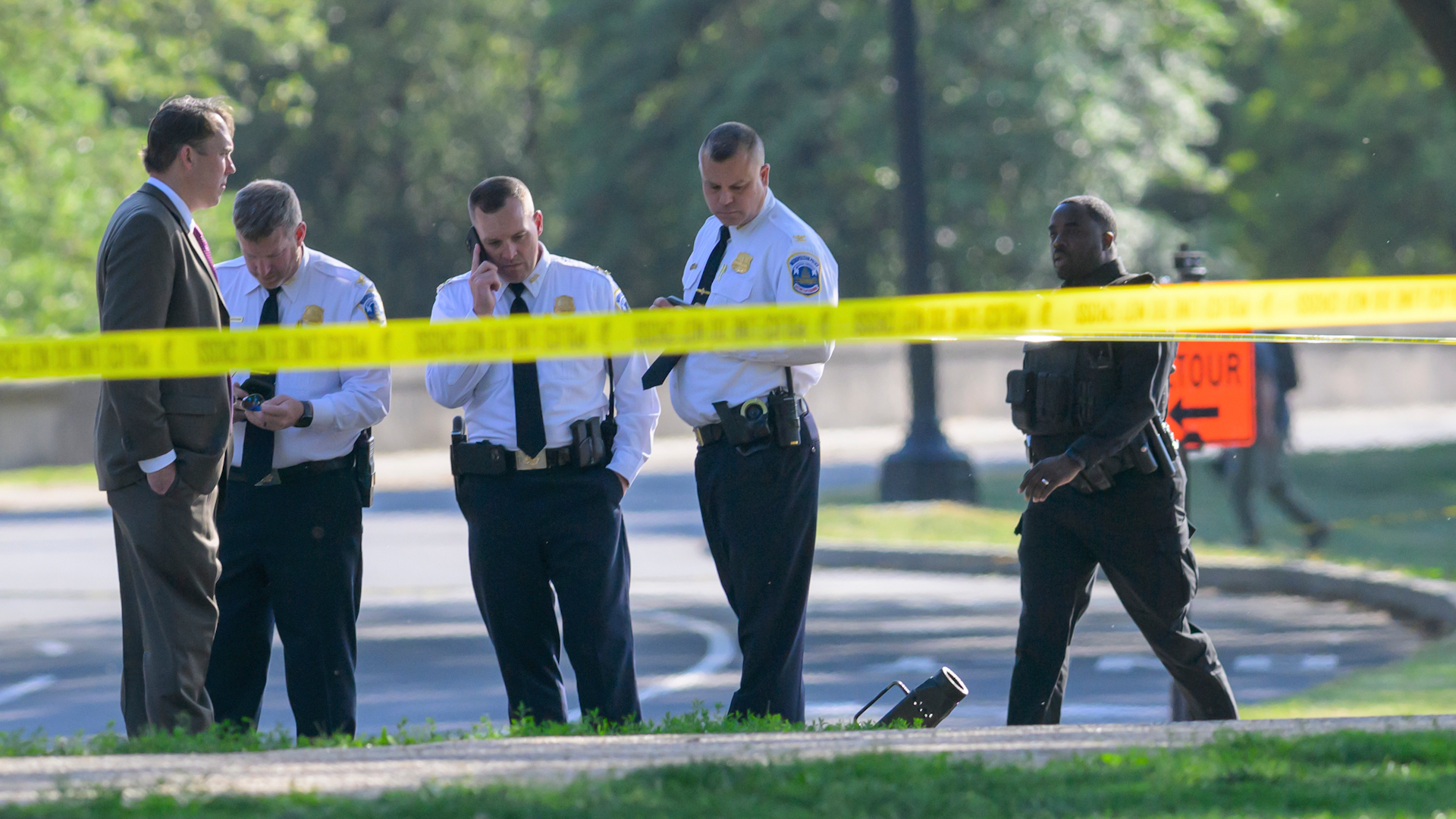
A shooting involving Secret Service officers just outside the White House complex is quickly becoming one of the most closely watched security incidents in Washington this week. According to officials, an armed man was shot by Secret Service personnel near the Washington Monument after authorities say he fled from officers and opened fire in their direction. A 15-year-old bystander was also struck, though officials said the injuries were not life-threatening.
The incident unfolded in a highly sensitive area near the White House perimeter, a zone routinely used by tourists, federal officials and presidential or vice-presidential motorcades. Secret Service Deputy Director Matt Quinn said officers first identified what appeared to be an armed and suspicious individual. When uniformed officers approached, the man allegedly ran, pulled a firearm and fired toward agents, prompting them to return fire. The suspect was taken to a hospital, and investigators are still working to determine motive and whether the event had any connection to the White House or broader threats against government officials.
Why this is a politics story, not just a crime story
At first glance, this may look like a straightforward law enforcement incident. But the location, timing and potential implications make it a political story as well. Any armed confrontation near the White House immediately raises questions about executive branch security, threat assessment and the broader climate surrounding public officials. The fact that Vice President JD Vance’s motorcade reportedly passed through the area shortly before the gunfire only deepens the scrutiny.
This comes amid persistent concern about threats against elected leaders and government institutions. In recent years, federal agencies have warned about a rise in politically charged threats, including plots targeting members of Congress, judges and executive branch officials. The broader trend has made even isolated incidents near major government sites politically significant.
The latest broader developments in political security
Recent reporting shows that threats against public officials remain a central concern across Washington. The U.S. Secret Service, whose mission includes protecting the president, vice president and other national leaders, has repeatedly emphasized the growing complexity of modern threat environments. Open-source information, online radicalization and lone-actor violence have made protective work more difficult than in previous decades.
The FBI and Department of Homeland Security have also continued to warn that domestic violent extremism and individualized grievance-based attacks remain serious concerns in the United States. While authorities in this case have not identified a motive, incidents near high-profile political locations are often examined through that wider lens because of the potential implications for national security and public trust.
Meanwhile, according to reporting from ABC News, the shooting occurred after officers encountered an armed suspect who then allegedly fired first. The New York Times separately reported that a Secret Service official said there was, at least initially, no known nexus between the suspect and the White House. That distinction matters. In Washington, the line between an isolated violent act and a politically motivated threat can shape everything from public messaging to the scale of the federal investigation.
What investigators will likely focus on next
In the coming days, investigators will likely examine several key questions: whether the suspect specifically intended to approach a protected site, whether he had a known political grievance, how he was able to move through such a sensitive area while armed and whether any advance warning signs were missed. Law enforcement will also closely review the exchange itself, including body-camera footage, witness testimony and ballistic evidence.
Another important piece will be the bystander injury. Even when agents respond under clear rules of engagement, injuries to civilians can intensify public debate about tactical decision-making in crowded, symbolically important spaces. The area near the Washington Monument and White House is not only a security zone; it is also one of the most visited public spaces in the country.
The larger political climate
This episode lands at a moment when American politics remains deeply tense and public officials across party lines face elevated security concerns. Threats no longer exist only in private intelligence briefings; they increasingly shape campaign events, travel schedules, courthouse procedures and public appearances. Security has become inseparable from politics itself.
That is why this shooting is likely to remain in the news beyond the immediate facts of the confrontation. Even if investigators ultimately determine there was no direct plot against the president or vice president, the incident underscores how fragile the boundary can be between everyday public space and the protective bubble around national power.
What to watch
The most important developments now will be the identification of the suspect, any details about motive, updates on the bystander’s recovery and whether federal officials revise the initial assessment that there was no known connection to the White House. If evidence emerges of ideological intent or prior threats, the story could quickly become more consequential.
For now, the shooting stands as a reminder that in Washington, location is never just geography. Violence near the White House is not merely local news. It is a test of federal security, a measure of the national mood and, increasingly, a reflection of the political pressure surrounding America’s institutions.
Sources: Straight Arrow News; ABC News; U.S. Secret Service; FBI; Department of Homeland Security; The New York Times.