
Quick summary
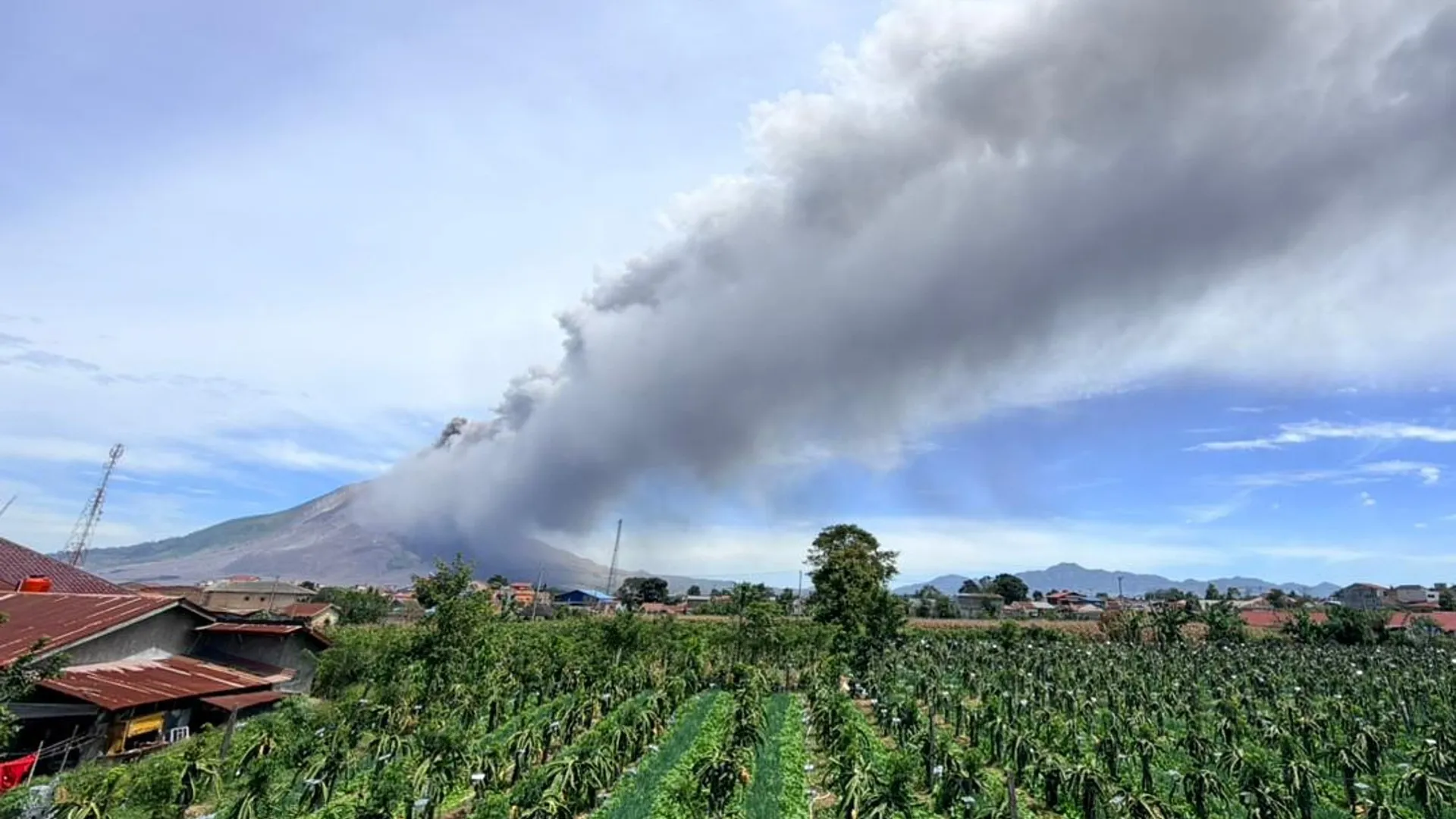
An explosive eruption on Sumatra sent ash and smoke thousands of feet into the atmosphere, prompting authorities to warn residents to stay away from villages near the summit. The plume created immediate local hazards — ashfall, reduced visibility, and disrupted transport — and raised aviation and public-health concerns downwind. This article summarizes the situation, explains the main risks, and points to reliable live sources for updates.
Latest situation (what we know now)
According to the initial reports, heavy ash and smoke were emitted from a volcano on Sumatra, with plumes rising to roughly 11,500 feet (about 3,500 meters) above the summit. Local authorities issued warnings asking people to avoid areas close to the crater and nearby villages until officials can complete damage and hazard assessments. Emergency management teams and volcanological monitors are tracking ash dispersal and seismic activity.
Immediate impacts and hazards
- Ashfall: Ash can blanket nearby villages, contaminate water supplies, damage crops, and cause respiratory problems. Fine volcanic ash is abrasive and harmful to engines and machinery.
- Health effects: Short-term exposure can irritate eyes, skin, and airways; vulnerable people (children, older adults, those with respiratory conditions) are at higher risk. Use masks (N95 or equivalent) and stay indoors where practical.
- Infrastructure: Heavy ash can collapse roofs, clog drainage, and impair power generation and telecommunications. Roads can become slippery and visibility poor, complicating evacuation or relief operations.
- Aviation: Volcanic ash poses a critical hazard to aircraft. Airlines and aviation authorities monitor ash clouds closely; flight routes may be re-routed or canceled depending on plume height and direction.
Who’s monitoring and where to get reliable updates
For an unfolding volcanic event in Indonesia, the primary sources to watch are:
- Pusat Vulkanologi dan Mitigasi Bencana Geologi (PVMBG) — Indonesia’s volcanology agency: official hazard status, exclusion zones, and technical advisories. https://vsi.esdm.go.id/
- Badan Nasional Penanggulangan Bencana (BNPB) — Indonesia’s National Disaster Management Authority: public-safety guidance and response coordination. https://www.bnpb.go.id/
- Darwin Volcanic Ash Advisory Centre (VAAC) — issues aviation ash advisories covering Indonesia and nearby regions: https://www.metoffice.gov.uk/services/transport/volcano-ash
- Smithsonian Institution / Global Volcanism Program — background on the volcano’s activity history and recent bulletin summaries: https://volcano.si.edu/
- NASA FIRMS / satellite imagery — near-real-time thermal hotspots and ash detection from satellites: https://firms.modaps.eosdis.nasa.gov/
Context: why Sumatra’s volcanoes matter
Indonesia sits on the Pacific “Ring of Fire” and has many active volcanoes that periodically threaten local communities and global aviation. Eruptions range from small ash emissions to larger explosive events; the local impacts depend on the eruption magnitude, wind direction, population density, and preparedness. Historical activity at many Sumatran volcanoes demonstrates the need for rapid monitoring and pre-established evacuation plans.
Practical advice for people in the area
- Follow official instructions from PVMBG and local authorities; evacuation orders should be obeyed immediately.
- If ashfall occurs: stay indoors, close windows and doors, seal gaps if possible, and avoid driving unless necessary (ash reduces traction and visibility).
- Protect your lungs and eyes: use N95/FFP2 masks when outdoors; otherwise use a damp cloth to cover nose and mouth and goggles for eye protection.
- Keep water supplies covered and avoid using contaminated food or water until officials confirm safety.
- Motorists and pilots: avoid flying through or near ash clouds and expect flight disruptions. Ground vehicles should reduce speed; ash is extremely abrasive to engines.
Wider consequences to monitor
Major eruptions can disrupt national and international air traffic, damage agricultural livelihoods, and require long-term recovery for communities affected by thick ash deposits. Authorities will be watching seismic trends, ash column height and composition, and any secondary hazards such as lahars (volcanic mudflows) in rainy conditions.
How journalists and editors should cover this
Focus on verified updates from official monitoring agencies, human impacts (displaced families, health clinics, local responders), and practical safety information. Use satellite imagery from NASA and advisory products from VAACs to illustrate plume movement; always link to PVMBG/BNPB advisories for local accuracy.
Sources and further reading
- PVMBG (Pusat Vulkanologi dan Mitigasi Bencana Geologi): https://vsi.esdm.go.id/
- BNPB (Badan Nasional Penanggulangan Bencana): https://www.bnpb.go.id/
- Darwin VAAC / Met Office — volcanic ash advisories and guidance: https://www.metoffice.gov.uk/services/transport/volcano-ash
- Smithsonian Institution — Global Volcanism Program (volcano background and eruption reports): https://volcano.si.edu/
- NASA FIRMS — real-time satellite fire/thermal and ash detection: https://firms.modaps.eosdis.nasa.gov/
- World Health Organization — guidance on health impacts of volcanic ash exposure: https://www.who.int/
If you are preparing to publish this on a live site, include a live-updating embed or links to PVMBG and VAAC advisory charts so readers in affected regions can get minute-by-minute changes. For local human-interest follow-ups, contact local health clinics, district emergency management offices, and community leaders for details about evacuations and relief needs.