


Buc-ee’s heads into six new states as travel-center competition heats up
Buc-ee’s is preparing to enter six new states in a major expansion wave that underscores how strong the U.S. roadside retail market remains. The Texas-based chain, famous for its massive convenience stores, extensive fuel stations and cult-like customer following, is expected to debut first locations in Arizona, Arkansas, Wisconsin, Louisiana, Kansas and North Carolina over the next two years. If those projects stay on track, Buc-ee’s footprint would expand from 12 states to 20.
The planned openings are more than a store-count milestone. They reflect broader business trends: sustained highway travel demand, consumer appetite for destination-style retail, and continued investment in large-format roadside real estate. According to the company’s location updates reported by Fox Business, new sites in Goodyear, Arizona and Benton, Arkansas are expected to open first, with additional projects progressing across the Midwest and Southeast.
Why Buc-ee’s growth matters for business news
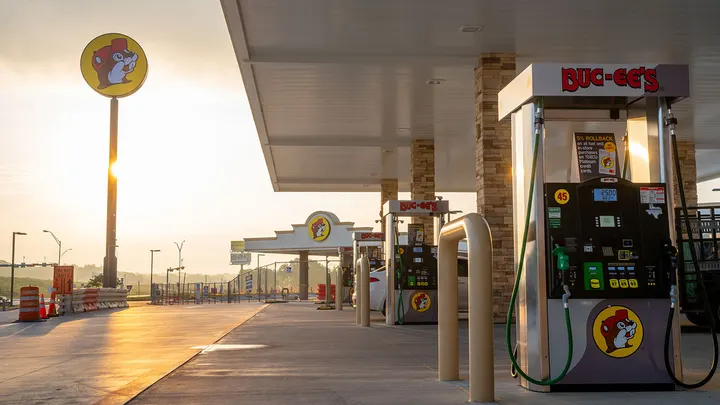
Buc-ee’s expansion stands out because it is not simply adding convenience stores. It is scaling a destination-retail model that blends fuel, foodservice, branded merchandise and tourism appeal. That formula has helped the chain carve out a niche in a sector typically dominated by traditional gas stations and truck-stop operators.
Its upcoming Arizona site in Goodyear is expected to span roughly 74,000 square feet with 120 fueling positions, according to Fox 10 Phoenix. Similar oversized formats are planned elsewhere, reinforcing the company’s strategy of building high-volume travel centers rather than small-footprint convenience locations.
That strategy aligns with broader retail patterns. Large-format operators that create a strong in-person experience have remained resilient even as e-commerce pressures other categories. In Buc-ee’s case, the store itself is part of the attraction, which helps generate both fuel traffic and higher-margin in-store spending.
A wider retail backdrop: consumers still spending, but selectively
The latest retail environment offers important context for Buc-ee’s push. The U.S. Census Bureau’s retail trade data has continued to show that consumer spending remains active, though shoppers are increasingly value-conscious and selective about where they spend discretionary dollars. Travel-linked categories have also benefited from consistent road-trip demand and experience-driven purchases.
At the same time, major retailers and consumer companies have been navigating a mixed macroeconomic picture shaped by still-elevated borrowing costs, shifting fuel prices and cautious household budgeting. The Bureau of Economic Analysis and the Bureau of Labor Statistics have both pointed to an economy where inflation pressures have cooled from their peaks but still influence purchasing behavior. That makes Buc-ee’s model notable: it appeals to practical spending on fuel and food while also capturing impulse buys through branded snacks, apparel and novelty merchandise.
What investors and operators can learn from the Buc-ee’s model
One lesson from Buc-ee’s rise is that physical retail still wins when it delivers scale, consistency and a memorable customer experience. Clean facilities, broad product assortment and a recognizable brand identity may sound simple, but in roadside retail they create a meaningful competitive edge.
Another takeaway is location discipline. Buc-ee’s tends to build near major interstate corridors with heavy vehicle flow and enough land to support supersized sites. That gives it a structural advantage in attracting families, commuters and long-distance travelers in one stop. Local governments also often welcome these projects because of expected job creation, construction activity and future sales-tax revenue.
There are risks, of course. Rapid expansion can strain operations, staffing and service standards. Large sites also require major up-front capital commitments and depend heavily on sustained traffic volumes. But so far, the chain’s selective market entry suggests it is prioritizing long-term brand strength over speed alone.
The bigger story in business
The latest Buc-ee’s announcement is ultimately a reminder that some of the most durable growth stories in American business are happening outside Silicon Valley and Wall Street. In this case, a regional convenience chain has turned roadside stops into a scalable lifestyle brand and is now extending that success across the country.
As expansion continues, Buc-ee’s will be testing whether its Texas-born formula can retain its appeal in a broader range of regional markets. If it does, the company could become one of the clearest examples of how experiential retail, disciplined real-estate strategy and strong brand loyalty can still drive growth in a highly competitive consumer economy.
Sources
Fox Business – Buc-ee’s set to debut in 6 new states in major expansion push across US
Fox 10 Phoenix – Buc-ee’s opening date set for Goodyear location
U.S. Census Bureau – Retail Trade
Bureau of Economic Analysis – Economy at a Glance
U.S. Bureau of Labor Statistics – Consumer Price Index