


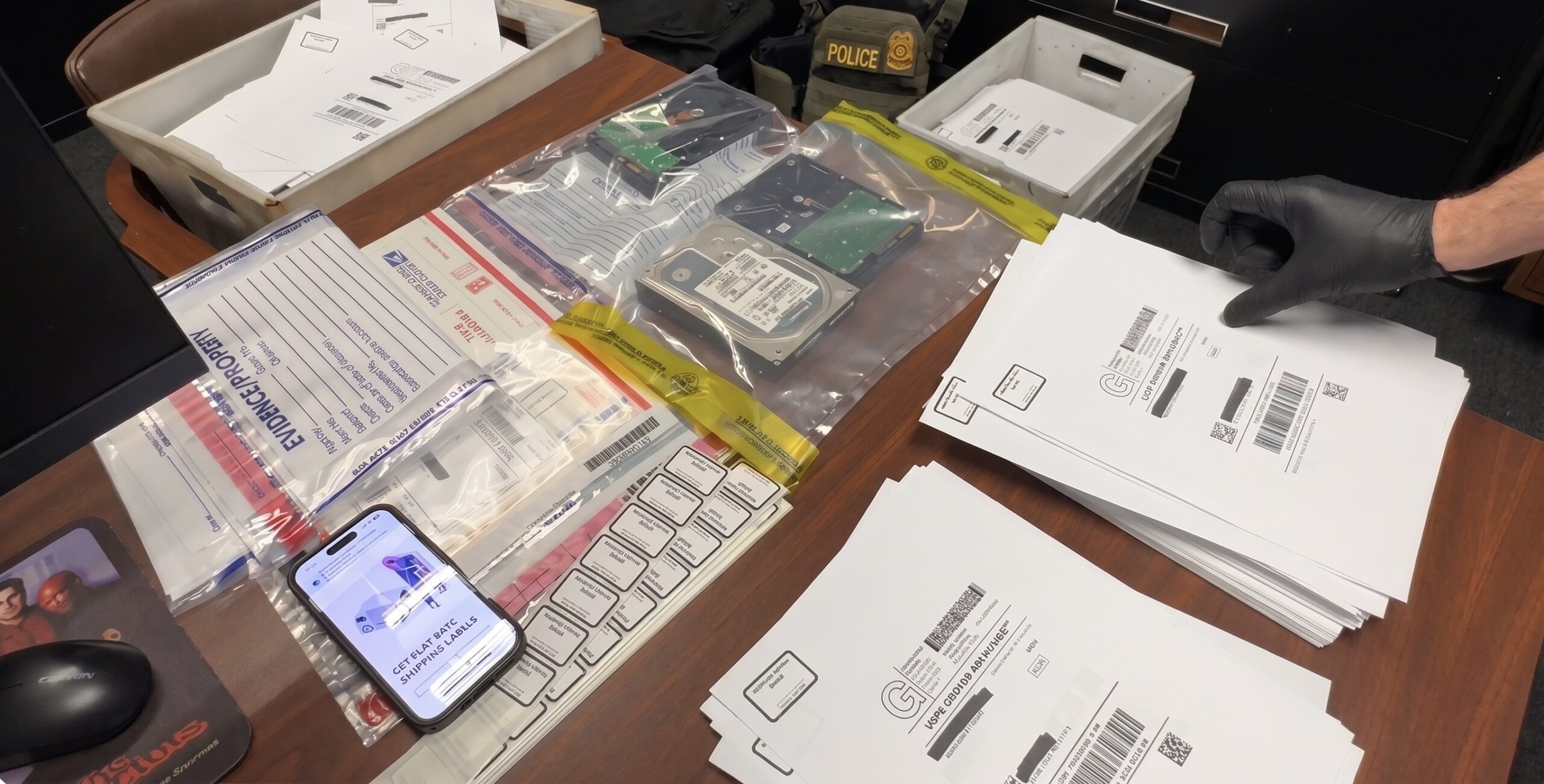
Federal authorities have seized and shut down LabelsBank.com, a website accused of selling counterfeit U.S. Postal Service shipping labels for roughly $2 each regardless of package weight, size or destination. Prosecutors say the scheme cost the U.S. Postal Service more than $126 million and involved more than 5.1 million fraudulent labels sold to over 5,000 customers. The alleged operator, identified in court records as 33-year-old Faheem Akram of Pakistan, now faces multiple federal charges including conspiracy, selling counterfeit postage and wire fraud.
What happened
According to federal investigators, LabelsBank.com listed deeply discounted postage labels that did not reflect USPS set rates. The U.S. Postal Inspection Service (USPIS) and federal prosecutors say buyers were charged about $2 per label — a fraction of legitimate postage for many packages — and in many cases those labels were counterfeit and unusable within the Postal Service processing system. The domain has been seized as the case proceeds through federal court.
Key allegations
- More than 5,000 customers bought over 5.1 million counterfeit shipping labels.
- The U.S. Postal Service sustained alleged losses in excess of $126 million.
- The accused operator faces 10 federal counts including conspiracy, wire fraud and selling counterfeit postage.
Why this matters
The case highlights two intersecting trends: the ease with which bad actors can reach U.S. consumers from overseas via websites and online marketplaces, and the growing impact of digital and label-based fraud on national postal operations. The Postal Service operates on set rates for services and relies on secure indicia and valid postage to route and process mail and packages. Counterfeit labels undermine revenue, create processing errors, and pose risks to both consumers and carriers.
As Jason Quiñones, the U.S. Attorney for the Southern District of Florida, noted, customers purchasing deeply discounted postage are often a warning sign. USPIS investigators similarly emphasized that offers “too good to be true” frequently indicate fraud. Beyond immediate financial losses to consumers who paid for labels that may not work, large-scale counterfeit-label schemes can impose significant operational and financial burdens on the Postal Service and the mailing ecosystem.
How these schemes typically work
Counterfeit postage schemes can take several forms:
- Illegitimate websites selling fake shipping labels or discounted postage, often requiring online payment with little buyer protection.
- Altered or duplicated indicia (the printed markings that show postage has been paid), which may pass initial inspection but later fail scanning or accounting processes.
- Resale of labels purchased with stolen accounts or payment methods, or generated by fraudulent access to postal-label printing systems.
Protecting yourself — practical steps for consumers and small businesses
- Buy postage only from trusted sources: the official U.S. Postal Service website or recognized postage providers and retail locations. See USPS shipping and pricing information at USPS.com/ship.
- Verify prices before you buy. The Postal Service posts its current rate tables online; if a seller’s price looks dramatically lower, treat it with suspicion.
- Use secure payment methods and check seller reputations. Prefer credit cards or payment platforms that offer purchase protection, and review seller ratings and reviews.
- Check postage labels before use. If a label fails to scan or if you receive a notification from the shipping carrier, contact your payment provider and the postal inspector’s office immediately.
- Report suspected counterfeit postage or mail fraud: you can report incidents to the U.S. Postal Inspection Service at USPS Inspection Service — Report, and to federal consumer protection authorities such as the Federal Trade Commission.
Broader enforcement and policy implications
Large-scale cases like the LabelsBank.com seizure illustrate why federal law enforcement and postal inspectors prioritize digital and counterfeit-postage enforcement. Beyond criminal prosecution, outcomes from similar cases can lead to improved online marketplace monitoring, cooperation between international law enforcement partners, and better consumer-education efforts. Agencies such as the Department of Justice and the U.S. Postal Inspection Service routinely publish guidance and press releases on enforcement actions and consumer warnings; seeking information from those sources can help the public stay informed.
Sources
- U.S. Postal Service — Shipping & Mailing: https://www.usps.com/ship/
- U.S. Postal Inspection Service — News & Press Releases: https://www.uspis.gov/news-media/press-releases/
- U.S. Postal Inspection Service — How to report mail fraud: https://www.uspis.gov/report/
- U.S. Department of Justice — News: https://www.justice.gov/news
- Federal Trade Commission — Consumer information and reporting: https://consumer.ftc.gov/
Authorities continue to investigate and prosecute cases that target U.S. consumers and federal agencies. Consumers and small businesses that ship regularly should confirm postage sources and report suspicious offers to help protect themselves and the larger postal system.