

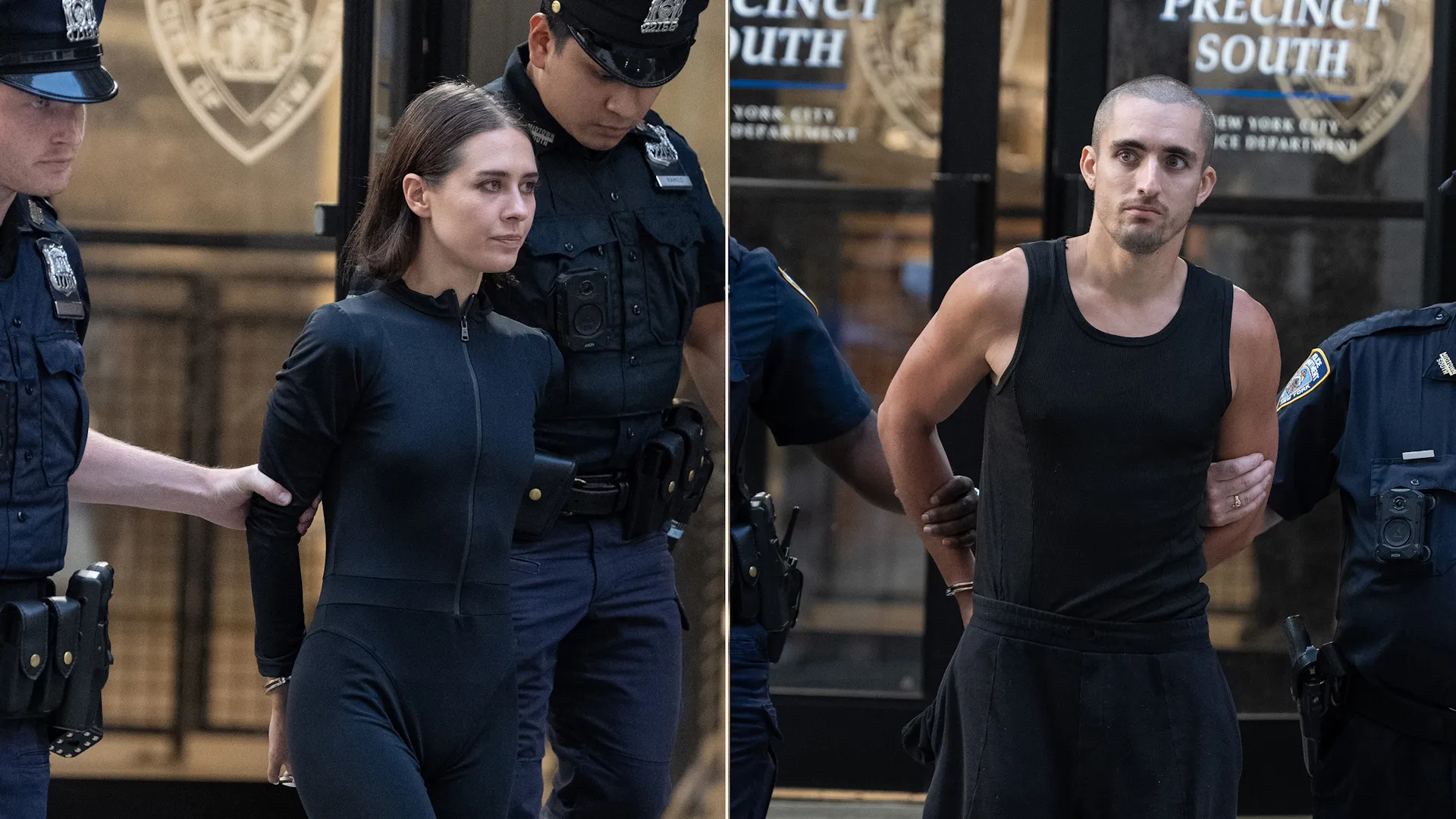
Two high-rise climbers scaled the Empire State Building’s antenna, unfurled a black banner calling for love and peace, appeared to get engaged on a lower platform, and were arrested by police after spending several minutes on the structure. The climbers were identified by authorities as Angelina Nikolau and Ivan Kuznetsov, who have previously drawn attention for unauthorized high-rise stunts and were featured in the 2024 documentary “Skywalkers: A Love Story.”
What happened
According to police and news reports, the climbers — dressed in black and wearing masks — reached the antenna of the Empire State Building, which rises to 1,454 feet above Midtown Manhattan. They unfurled a banner that read, “When the power of love beats the love of power the world knows peace.” After several minutes, the pair descended to a lower platform where one appeared to get down on one knee; officers later arrested the two on charges including burglary, reckless endangerment, and criminal trespass. The observation deck was temporarily cleared while emergency personnel responded, and police body camera footage captured officers climbing up to meet the couple.
Immediate implications
The stunt raised immediate questions about building security and how the climbers gained access to restricted areas. The Empire State Building said the action was unauthorized and that tenants and visitors were not in danger. Still, the incident highlights vulnerabilities that large urban landmarks face from determined climbers — both for safety of the climbers themselves and for onlookers and first responders who may be put at risk during rescue or enforcement operations.
Who are the climbers?
The two were identified as Angelina (also reported as Angela) Nikolau and Ivan Kuznetsov (sometimes reported with variant spellings). They have been publicly visible for performing rooftop and antenna stunts on skyscrapers around the world. Their appearance in the 2024 Netflix documentary “Skywalkers: A Love Story” increased public recognition of their activities and style.
Legal and safety context
Authorities typically treat such climbs as criminal trespass and may add charges tied to endangering public safety or damaging property. Beyond criminal exposure, participants can face civil liability if their actions necessitate emergency responses or put others at risk. From a public-safety standpoint, untethered climbs at extreme heights carry a high risk of fatal falls, and rescue operations can endanger first responders.
Why this matters culturally
Stunts like this sit at the intersection of daredevil performance, political or social messaging, and influencer-era spectacle. The climbers’ banner and public proposal framed the act as both a personal moment and a public statement. That mix of personal theater and political-sounding rhetoric makes these incidents resonate widely: they are easily captured on video, spread quickly on social networks, and provoke debates about safety, accountability, and the ethics of attention-seeking stunts at iconic public sites.
What to watch next
- Official statements and charging decisions from the NYPD and Manhattan prosecutors; follow-ups could include formal charges, arraignments, or plea outcomes.
- Statements or security reviews from the Empire State Building and other landmark operators about policy or physical changes to deter rooftop access.
- Any civil claims from the building or municipal authorities if costs were incurred because of the incident.
- Reactions from the documentary’s producers or platforms that previously covered the climbers, which could shape the cultural conversation around responsibility and publicity.
Context: urban climbers and public landmarks
Unauthorized building climbs have a long, controversial history. Some climbers present their acts as athletic feats or artistic statements; others say they are protests or personal milestones. Landmark operators and law enforcement generally respond with criminal charges and security reviews because of the acute risks involved. High-profile incidents often trigger renewed attention to how iconic structures balance public access, safety, and the need to deter dangerous behavior.
Conclusion
The Empire State Building incident is emblematic of a modern form of public spectacle: fast-moving, dramatically visual, and amplified by media coverage. It raises predictable questions about risks to participants and to the public, and likely will prompt follow-up from prosecutors and building security teams. For now, the immediate story centers on the climbers’ arrest and how authorities will handle any legal and civil consequences.
Note on sources: This article summarizes contemporaneous news reporting and official statements about the event. I do not have browsing access in this session to fetch live links; if you want, I can add direct hyperlinks to contemporary reports (for example from major outlets and official NYPD or Empire State Building statements) once given permission to retrieve them or if you provide the URLs to include.