



A federal court ruling has thrown the future of Voice of America back into the center of a major Washington power struggle, after a judge found that Kari Lake lacked the legal authority to carry out sweeping cuts at the U.S. Agency for Global Media.
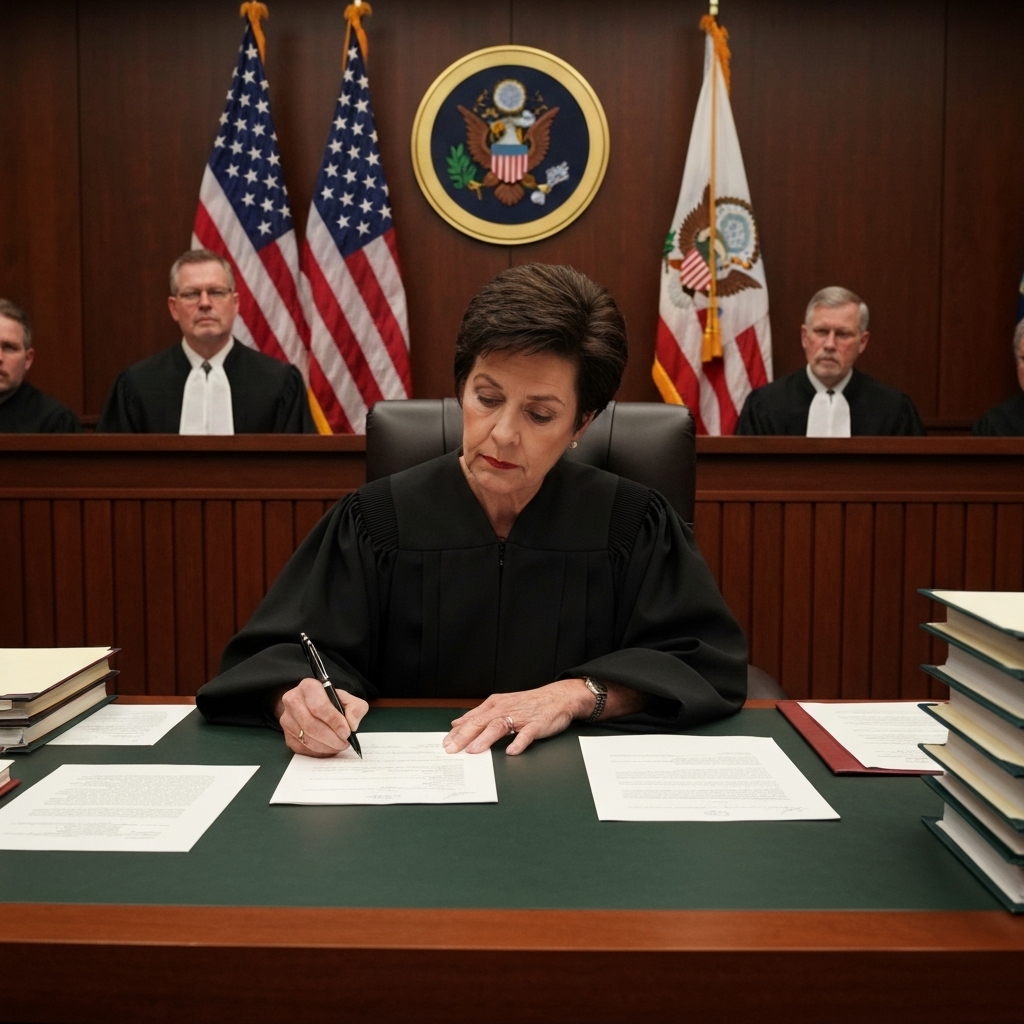
In a closely watched decision, U.S. District Judge Royce C. Lamberth ruled that Lake’s move to defund and effectively dismantle Voice of America could not stand because of problems tied to how she assumed power. The case is not just about one personnel dispute. It raises broader questions about presidential appointment power, Senate confirmation, executive control over government-funded media, and the limits of agency restructuring without proper statutory authority.
Why the ruling matters
Voice of America, created during World War II, has long served as a U.S.-funded international broadcaster delivering news in dozens of languages. Its parent agency, the U.S. Agency for Global Media, also oversees other U.S. international broadcasting entities. The court’s ruling suggests that even if an administration wants to dramatically reshape or shrink such institutions, it must do so through legally valid appointments and processes.
According to the reported decision, the judge focused on the fact that Lake was never confirmed by the Senate for the role that gave her effective control. Her authority stemmed from a chain of internal delegations and promotions after President Donald Trump had announced plans for her to lead VOA. The court rejected the argument that those steps cured the constitutional and statutory defects, warning that such a theory could let presidents evade the Senate confirmation process altogether.
That makes the ruling politically significant well beyond VOA. It speaks to a recurring tension in modern administrations of both parties: how far a president can rely on acting officials, advisers, and internal delegations to exercise powers normally reserved for Senate-confirmed leaders.
A larger battle over media, government, and executive power
The fight over Voice of America also reflects a deeper political argument over the role of publicly funded media. Trump and allies have argued that VOA had drifted from its mission and promoted what they described as ideological or partisan content. Critics of the cuts, including former employees and press freedom advocates, have said the dismantling weakened an important U.S. institution designed to project credible journalism abroad in places where free media are limited or under attack.
The administration’s broader effort to shutter operations and carry out layoffs turned a management dispute into a constitutional and institutional test case. If the ruling stands on appeal, it could limit future attempts to use disputed appointments to rapidly transform federal agencies.
What happens next
Lake has already signaled that she will appeal, calling the decision outrageous. That means the legal fight is likely to continue, and the practical effects may unfold slowly. Questions remain over whether VOA can quickly rebuild operations, restore staffing, or resume prior programming levels after such a sharp contraction.
For now, the ruling offers a temporary legal victory to former employees and supporters of VOA, but it also opens a fresh phase in a larger political conflict over who controls federal institutions, how public media should function, and where courts will draw the line when executive branch officials try to act without clear legal footing.
The broader political backdrop
The case arrives at a moment when battles over executive authority are intensifying across Washington. Courts have increasingly been asked to referee disputes involving the appointments process, agency independence, and the use of interim officials. Legal scholars have repeatedly noted that the Constitution’s appointments framework is meant to preserve accountability by requiring Senate confirmation for principal officers exercising significant authority.
That is one reason this dispute has drawn attention far beyond media policy circles. If major agency actions can be invalidated because the official behind them was not lawfully installed, then other administrations could face similar challenges when relying on creative workarounds to fill powerful posts.
At the same time, the controversy underscores how information policy has become inseparable from partisan politics. Supporters of stronger government-backed international broadcasting argue that U.S. outlets like VOA are strategic tools in a global information war, especially against authoritarian states. Opponents counter that taxpayer-funded media must be tightly scrutinized and should not become insulated from political oversight.
Latest developments in politics
The VOA fight fits into a wider pattern in U.S. politics, where the courts, Congress, and the White House are increasingly clashing over institutional power. Coverage from Reuters, The Associated Press, and The New York Times Politics continues to show that legal confrontations over executive action are no longer isolated events; they are now central to the national political story.
Recent reporting across those outlets has highlighted how judges are playing a larger role in disputes over appointments, agency actions, and presidential authority. That trend gives added weight to the VOA ruling. Even if the immediate issue involves one broadcaster and one appointment, the underlying legal logic could influence future political battles over regulatory agencies, federal boards, and executive control.
Why this story will keep resonating
This is ultimately a politics story because it sits at the intersection of law, ideology, media, and presidential power. It touches on how far an administration can go in remaking institutions it opposes, whether courts will step in to reverse those efforts, and what happens when public trust in media becomes part of the governing debate itself.
As the appeal moves forward, the central issue will remain simple: can a president’s chosen ally wield enormous authority without the approval process the law requires? The judge’s answer, at least for now, is no.
Sources: Straight Arrow News; CourtListener filing; Reuters U.S. News; AP Politics; New York Times Politics.