




The company is offering employee pricing on most new 2025 and 2026 Ford and Lincoln vehicles through July 6, framing the promotion around America’s upcoming 250th anniversary. On its face, it’s a consumer deal. In a broader sense, it is also a signal about how automakers are competing for buyers in a market shaped by affordability concerns, high financing costs, and shifting demand.
Ford launches a nationwide pricing campaign
According to FOX Business, Ford’s “American Value. For American Values” campaign gives U.S. customers access to the same below-MSRP pricing typically available to employees. The offer applies to many new 2025 and 2026 Ford and Lincoln models, potentially saving buyers hundreds or even thousands of dollars depending on the vehicle.
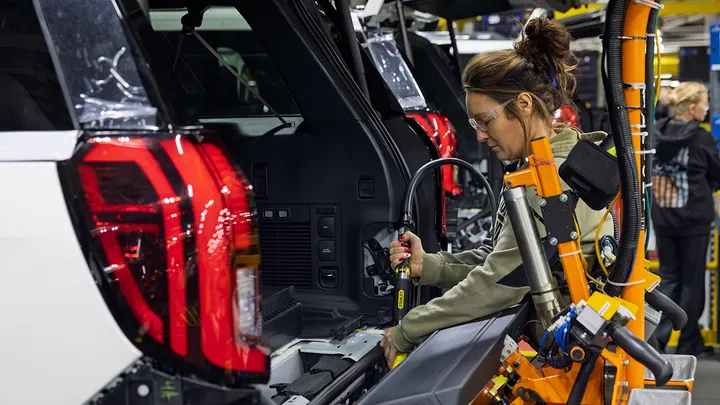
Ford said the campaign is meant to honor American workers, families, and small business owners, while also underscoring the company’s U.S. manufacturing footprint. That messaging is not accidental. At a time when consumers are watching every dollar, automakers are trying to show both value and identity: lower prices, domestic production, and brand trust.
Why this matters beyond one promotion
Ford’s move lands at a moment when the U.S. auto market is still navigating a difficult balancing act. New vehicle prices remain elevated compared with pre-pandemic norms, while borrowing costs have made monthly payments harder for many households to absorb. Industry data from Cox Automotive has repeatedly shown that affordability remains one of the biggest pressures on vehicle demand, even as inventory levels have improved from the worst supply shortages of recent years.
That helps explain why promotions matter again. During the tight-inventory era, many automakers had little reason to discount. Now, as supply normalizes in several segments, pricing and incentives are becoming more important competitive tools. Ford’s campaign reflects that reality. It is patriotic in branding, but practical in business terms.
The bigger business backdrop: pressure on consumers and manufacturers
Recent reporting and data from the U.S. Bureau of Economic Analysis and the Bureau of Labor Statistics show that consumers are still facing a mixed economic environment: inflation has cooled from its peak, but many goods and services remain expensive, and interest rates are still high enough to affect major purchases. For automakers, this means demand is present but price-sensitive.
At the same time, manufacturers are dealing with their own cost pressures, including labor, technology investment, supply-chain resilience, and the capital demands of electrification. Ford has been open in recent years about the costs tied to scaling electric vehicles and modernizing operations. As a result, promotions like this are not just about moving metal off dealer lots; they are part of a larger effort to protect market share while the industry transitions.
Competition in the auto market is getting sharper
The latest U.S. vehicle sales updates tracked by major industry sources such as Motor Intelligence and market analysis from CNBC Autos and Reuters Autos & Transportation point to a market where legacy automakers are fighting on several fronts at once. They are competing with one another on truck and SUV loyalty, with EV makers on innovation, and with consumer caution on price.
Ford’s employee-pricing strategy is especially notable because it speaks directly to value rather than aspiration. In a market flooded with messaging about premium features and future mobility, this is a plainspoken offer: pay less now. That kind of pitch may resonate strongly with middle-income households and small business customers who need dependable transportation but are reluctant to stretch financially.
A business story with political symbolism, but economic substance
Ford’s campaign naturally borrows from national symbolism by tying itself to America’s 250th anniversary. But the more meaningful story is economic. This is a major manufacturer reading the room. Consumers want relief. Dealers want traffic. Automakers want volume without destroying brand strength. Employee pricing is one way to thread that needle.
There is also a strategic reputational element. By emphasizing U.S. jobs and domestic assembly, Ford is reinforcing its identity at a time when “made in America” messaging carries weight across political and income lines. That positioning could help the company not only sell vehicles, but also deepen loyalty in an era when brand perception matters almost as much as product lineup.
What to watch next
The key question is whether Ford’s promotion remains a temporary anniversary-themed push or becomes part of a broader incentive trend across the industry. If rivals respond with similar deals, shoppers could gain leverage in a market that has often felt unforgiving in recent years. If not, Ford may enjoy a short-term advantage among buyers who were already on the fence.
Either way, this story is about more than one sale. It offers a snapshot of where American business stands in 2026: large brands are leaning on value, patriotism, and practicality to connect with consumers who are still cautious but willing to spend when the offer feels real.
Sources
FOX Business – Ford rolls out nationwide employee pricing to mark America’s 250th anniversary
Cox Automotive Market Insights
U.S. Bureau of Economic Analysis
U.S. Bureau of Labor Statistics
Reuters Autos & Transportation
CNBC Autos
Motor Intelligence