




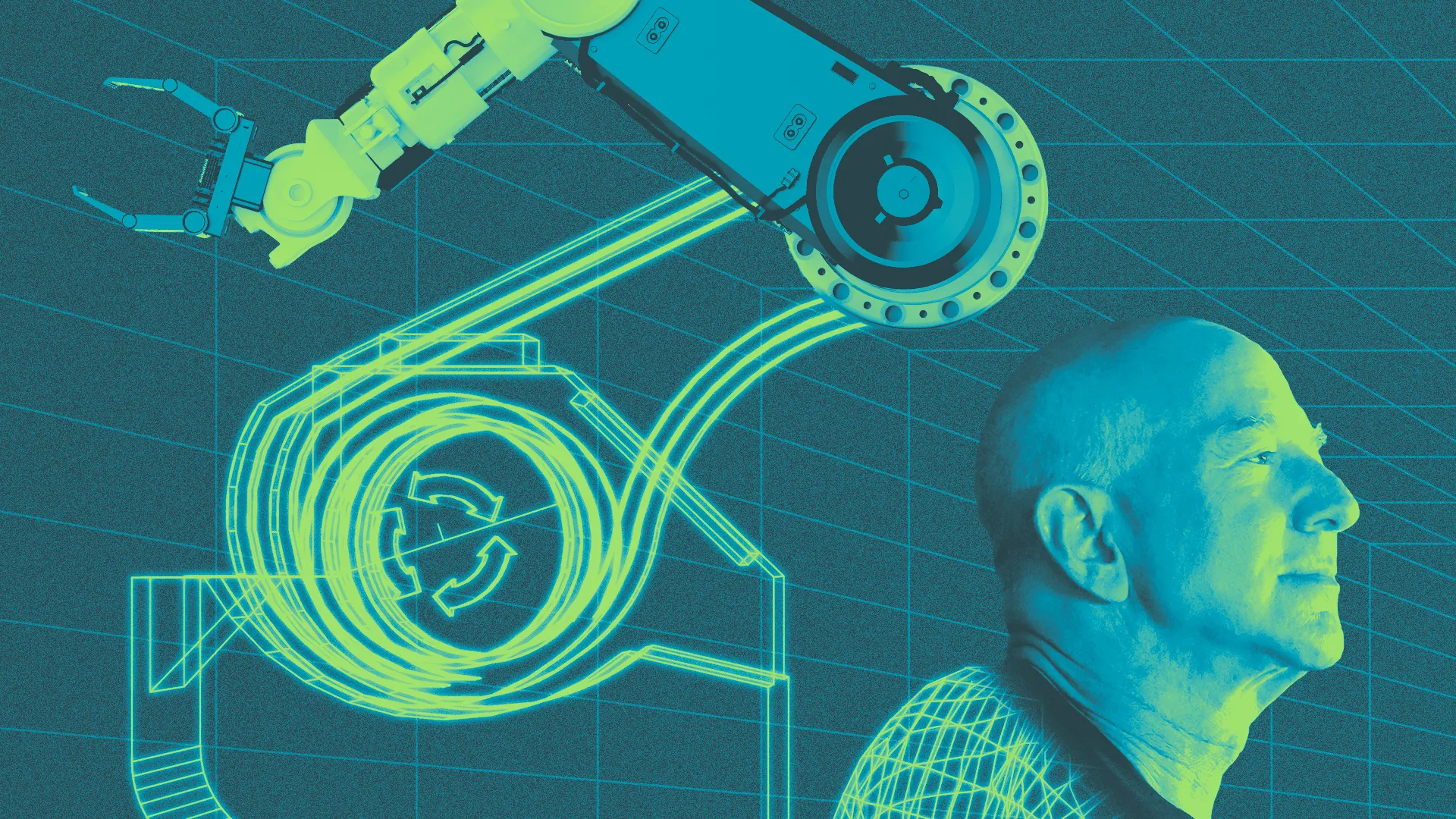
A milestone for ‘physical AI’
A recent funding round that reportedly valued a physical-AI startup at about $41 billion highlights a turning point: AI is no longer only about models and cloud compute — it is increasingly being embedded into robots, lab automation, and systems that physically design, build and test new products and medicines.
What is “physical AI”?
“Physical AI” refers to systems that combine advances in machine learning with robots, automated lab platforms, and other hardware so that AI can act in and learn from the physical world. Instead of only proposing designs or molecules on a screen, these systems can synthesize compounds, run experiments, assemble parts, or iterate on mechanical designs — dramatically shortening the build-test-learn cycle.
Why the $41B valuation (and similar large investments) matter
- Scale of ambition: A multibillion-dollar valuation signals investor belief that automating heavy engineering and drug discovery is a huge market opportunity — spanning manufacturing, aerospace, energy, and biopharma.
- Capital intensity and integration: Physical AI requires combining expensive hardware, wet labs or factory floors, and software. That raises capital needs (for facilities, sensors, robotics, and regulatory work) compared with pure-play software startups.
- Acceleration of R&D cycles: Integrating AI with automated experimentation can compress years of lab work into months or weeks, which could accelerate drug discovery pipelines and time‑to‑market for engineered systems.
How this ties into what’s already proven in biology and engineering
AI-driven breakthroughs such as protein structure prediction have already changed life sciences workflows. DeepMind’s AlphaFold demonstrated how predictive models can replace a slow, manual step in biology by providing high‑accuracy protein structures (Jumper et al., Nature 2021). That work is a concrete example of AI lowering a major barrier in the physical sciences: when models reach sufficient accuracy, downstream automation (synthesis, screening, and optimization) becomes feasible at scale.
At the same time, broad reviews of machine learning in drug discovery show that combining algorithmic design with high-throughput experimentation and careful validation is where substantive commercial and scientific impact emerges (See review: AI in drug discovery, Nature Reviews Drug Discovery).
Business and industrial implications
Several industry consequences are likely if large investments continue to flow into physical AI:
- Consolidation and partnerships: Large sums invite partnerships between startups, established pharma, and industrial OEMs who can provide manufacturing scale and regulatory experience.
- New capital winners and losers: Startups that can demonstrate reproducible, safety‑conscious results in regulated settings (biotech, aerospace) will attract corporate partnerships and follow‑on funding; those that can’t will face rapid re‑pricing.
- Workforce change: Engineers, lab scientists, and technicians will increasingly work with automated platforms and AI tools, shifting skill requirements toward data‑centric lab work and systems integration.
Scientific and ethical considerations
Embedding AI into physical systems raises scientific and safety questions. Automated experimentation can speed discovery, but it also amplifies the need for robust validation, reproducibility, and oversight. In drug discovery, for example, faster candidate generation must be matched with rigorous toxicology and clinical testing. In heavy engineering, automated design must be subject to strict simulation and real‑world safety validation.
Where investors and regulators will watch next
Investors will look for clear demonstrations of closed‑loop systems: models that propose designs or molecules and hardware that reliably builds and tests them with clear metrics. Regulators — especially in healthcare and aviation — will push for transparent validation pathways. Expect to see more strategic deals between AI startups, legacy manufacturers, and big pharma as the field moves from prototypes to deployed systems.
Bottom line
The reported $41 billion valuation is emblematic: capital is betting that combining AI with physical systems can remake entire industries by shortening R&D cycles and automating high‑value physical work. That promise is real — encouraged by prior advances such as AlphaFold and continuing investments — but it brings technical, regulatory, and ethical complexity that will determine which players succeed.
Selected sources and further reading
- Jumper, J. et al., “Highly accurate protein structure prediction with AlphaFold,” Nature (2021). https://www.nature.com/articles/s41586-021-03819-2
- Review — Artificial intelligence in drug discovery (Nature Reviews Drug Discovery). https://www.nature.com/articles/s41573-021-00279-7
- Industry context and reports on AI adoption and investment trends — McKinsey & Company: Artificial Intelligence featured insights. https://www.mckinsey.com/featured-insights/artificial-intelligence