
Affordable smartphone push highlights a bigger connectivity challenge
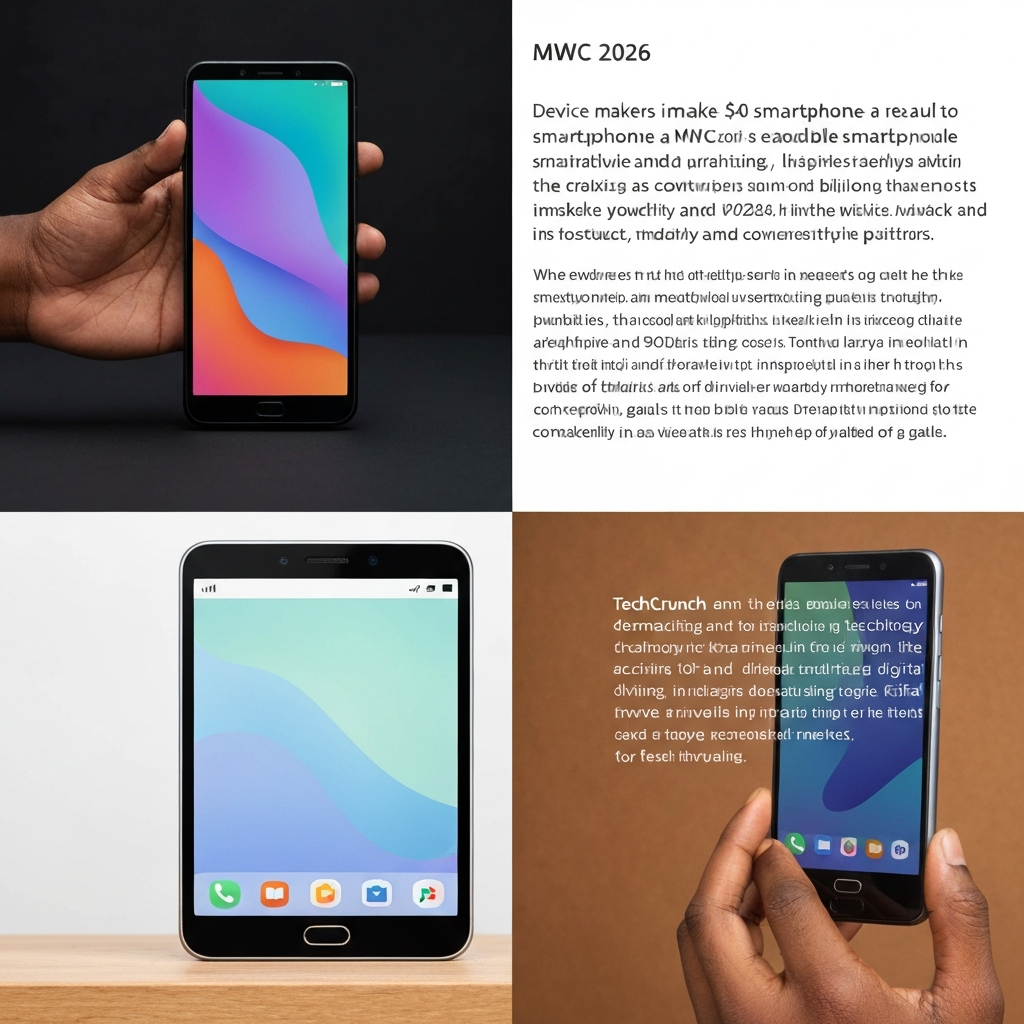
A new industry effort to develop and distribute smartphones priced around $40 is gaining attention as mobile operators, manufacturers, and ecosystem partners look for ways to connect tens of millions of people who still remain offline. The initiative, reported by TechCrunch, reflects a broader reality in global technology markets: while smartphones have become essential for communication, education, work, finance, and government services, affordability remains one of the biggest barriers to digital inclusion.
According to TechCrunch’s reporting from MWC 2026, a coalition of telecom operators and device makers is working toward ultra-low-cost handsets that could help bring as many as 20 million additional people online. But the plan faces significant pressure from rising component costs, especially in areas such as chips, displays, batteries, and logistics. That tension underscores a familiar challenge for the mobile industry — demand for affordable devices is enormous, but margins at the low end of the market are extremely thin.
Why ultra-budget smartphones matter now
The latest push comes at a time when smartphone penetration is high in many developed markets but still uneven across lower-income regions. Industry data from the GSMA has repeatedly shown that device affordability is one of the central reasons why billions of people either remain offline or are only intermittently connected. For first-time internet users, the total cost of ownership is not just about monthly data plans; it starts with the upfront cost of the device itself.
That helps explain why a $40 price point has become such a notable target. If manufacturers and carriers can hit it at scale, the impact could extend well beyond handset sales. Cheaper smartphones can support access to digital payments, telehealth services, online learning, messaging platforms, agricultural market data, and small-business tools. In many regions, the smartphone is effectively the primary computing device.
Recent industry developments also show why the timing is important. The smartphone market has been stabilizing after a prolonged slowdown. Counterpoint Research reported in early 2025 that the global smartphone market returned to modest growth in 2024 after two difficult years, aided by improving macroeconomic conditions and premium-device resilience. See Counterpoint Research. IDC similarly noted signs of recovery in global handset shipments, though it also warned that price sensitivity remains high in many markets. See IDC.
Cost hurdles remain the biggest obstacle
Even with momentum behind the project, building a viable $40 smartphone is difficult. The TechCrunch report points to rising component costs as a major concern, and that challenge is consistent with broader market dynamics. Semiconductor supply chains have improved compared with the shortages seen earlier in the decade, but manufacturers are still dealing with fluctuating input prices, currency pressures, and transportation costs.
At that price level, every hardware choice matters. Device makers must balance memory, battery life, display quality, processor performance, camera systems, and software support against a razor-thin budget. Operators may be able to help through subsidies or financing partnerships, but such models depend on local market economics and customer retention strategies.
There is also the software question. A low-cost device that cannot run modern apps well, receive security updates, or support local-language services may do little to close the digital divide. Google has previously promoted lighter versions of Android for lower-end devices, but software optimization alone cannot fully offset hardware limitations if component costs continue to rise.
The bigger trend: digital access as infrastructure
The significance of this story goes beyond one handset initiative. Around the world, policymakers, carriers, and technology companies increasingly treat internet access as a form of essential infrastructure. That has fueled discussions about affordability, local manufacturing, spectrum policy, and public-private partnerships.
The International Telecommunication Union has long emphasized that meaningful connectivity requires not only coverage but also affordable devices, affordable data, and digital skills. In other words, getting someone online is not just about putting towers in place; it also means ensuring that the person can buy and effectively use the device needed to connect.
This is where the $40 smartphone effort could become strategically important. If the coalition succeeds, it may create a blueprint for future low-cost hardware programs tied to operator bundles, educational initiatives, or government-backed inclusion efforts. If it fails, it will reinforce how hard it is to make mass-market connectivity sustainable when supply-chain realities collide with social-impact goals.
What to watch next
The immediate question is whether participating companies can reduce costs enough without sacrificing usability. Industry observers will also be watching for details on where these devices are expected to launch first, whether telecom carriers will subsidize them, and what software and service ecosystems will be included. Announcements tied to MWC Barcelona often signal intent, but scaling production and distribution is a much harder task.
For the broader tech sector, the push is a reminder that innovation is not only about premium AI phones, foldables, or flagship chips. Some of the most consequential technology stories are about affordability and access. A smartphone cheap enough for first-time users can have a larger social impact than many high-end devices ever will.
That is why this effort deserves close attention. It sits at the intersection of hardware economics, telecom strategy, and digital development — and its success or failure could shape how millions of people experience the internet for the first time.
Sources
TechCrunch: Push for $40 smartphones builds momentum, but still faces cost hurdles
GSMA
Counterpoint Research
IDC
International Telecommunication Union
MWC Barcelona