
Miller Lite Targets World Cup Fans as 2026 Tournament Nears
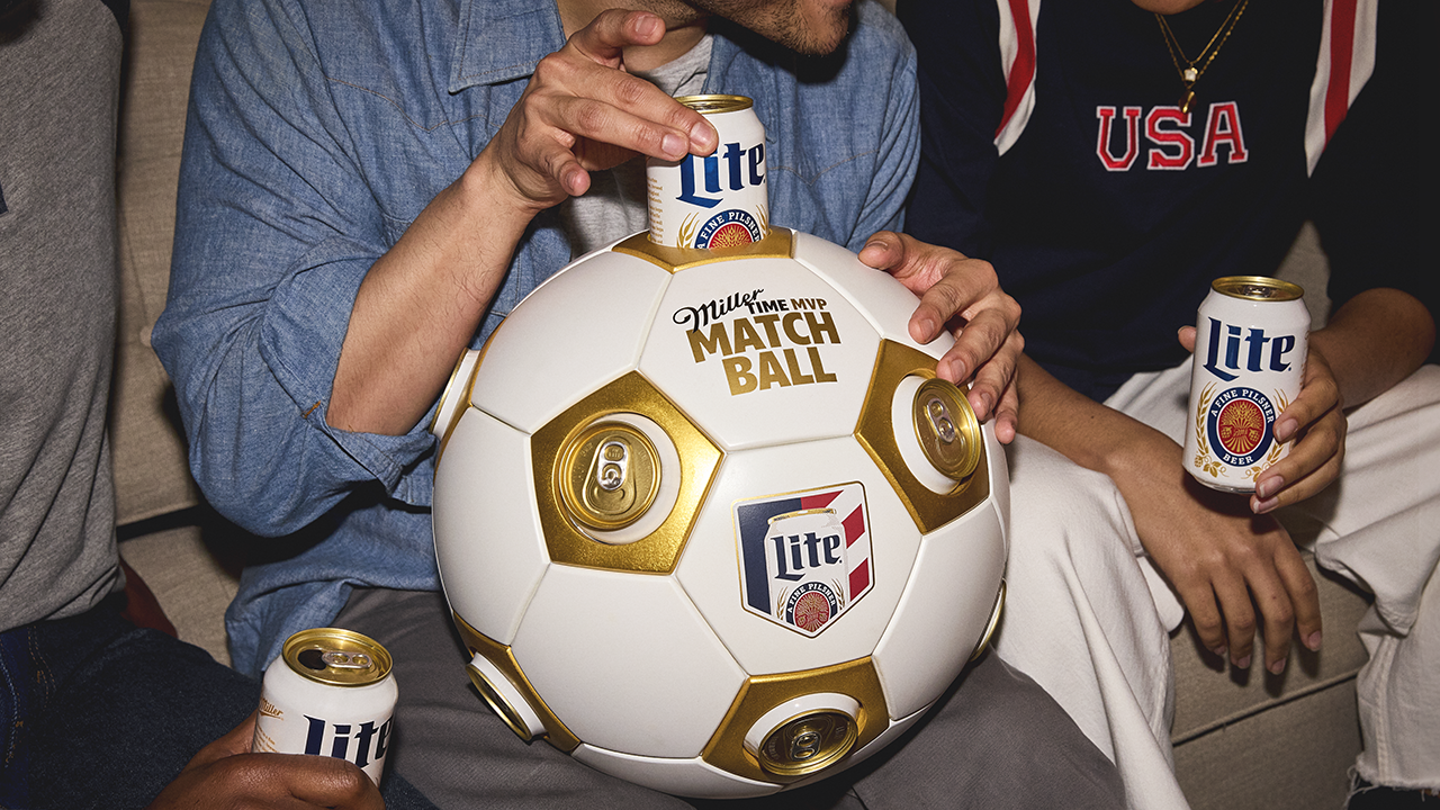
With the 2026 FIFA World Cup set to begin across the United States, Mexico, and Canada, brands are ramping up efforts to connect with the millions of fans expected to follow the tournament. One of the more unusual activations comes from Miller Lite, which has unveiled a limited-edition “Miller Time MVP Matchball” designed not for players, but for supporters gathering at watch parties across the country.
The oversized white-and-gold ball, which can hold 12 Miller Lite cans, is part of the company’s “Miller Time is on U.S.” campaign. The launch reflects a broader trend surrounding the World Cup: major consumer brands are increasingly treating soccer fandom in the United States as a mainstream commercial force rather than a niche market. With the men’s tournament being hosted on U.S. soil for the first time since 1994, expectations for audience growth, sponsorship spending, and fan engagement are particularly high.
According to FIFA, the 2026 World Cup will be the largest in the tournament’s history, featuring 48 teams instead of 32. That expansion is expected to bring more matches, more host-city activity, and significantly more commercial opportunities for brands trying to establish a foothold with soccer audiences. In North America, the tournament is widely viewed as a watershed moment for the sport’s popularity, especially in the United States, where both Major League Soccer and international competitions have seen steady growth in recent years.
A Bigger Tournament, Bigger Business Opportunity
The commercial significance of the 2026 event extends well beyond ticket sales and broadcasting rights. Sports business analysts have pointed to the World Cup as a major catalyst for consumer spending tied to travel, hospitality, merchandise, streaming, and food-and-beverage partnerships. A recent overview from Statista has highlighted the continued rise of global soccer viewership and sponsorship value, with major tournaments consistently drawing some of the largest television and digital audiences in sports.
For beverage companies in particular, international soccer tournaments create a rare convergence of all-day viewing, communal gathering, and emotionally driven brand loyalty. Miller Lite’s strategy appears to focus less on elite competition itself and more on the ritual of watching. That distinction matters. Rather than emphasizing athletes, the company is celebrating the fans who arrive early, organize the viewing parties, and help turn games into social events. It is a marketing approach that mirrors a larger industry shift toward experiential branding.
In a statement accompanying the launch, Miller Lite described the Matchball as a tribute to the “true MVPs” of the World Cup experience: the fans. The product will be released in limited drops beginning May 20 and June 3, priced at $19.75, a reference to the beer brand’s founding year. For consumers unable to purchase one directly, the company also plans to run a social media contest inviting users to nominate the MVP of their watch-party crew.
Why the 2026 World Cup Matters in the U.S.
The timing of the campaign is notable. Soccer has spent decades trying to convert periodic American interest into sustained mainstream relevance. But several indicators suggest the 2026 World Cup could mark a turning point. Media coverage has grown, European club soccer attracts substantial U.S. television audiences, and younger demographics are more likely to follow global soccer than previous generations. Industry reporting from outlets such as ESPN Soccer and The Athletic has consistently documented this momentum, particularly around international tournaments and cross-platform streaming engagement.
The U.S. men’s national team will open its 2026 World Cup campaign on June 12 against Paraguay at SoFi Stadium in Inglewood, California, before Group D matches against Australia in Seattle and Türkiye back in Southern California. Those fixtures are expected to draw significant domestic attention, not only because of the home-field setting but also because the tournament presents a rare opportunity for the U.S. team to capture broader public imagination.
That possibility is part of what makes campaigns like Miller Lite’s notable. They suggest advertisers believe the audience is already there, or at least large enough to justify high-profile, culturally tailored promotions. In practical terms, the World Cup is no longer just a sports story in North America. It is a media story, a consumer story, and increasingly, a story about how global events reshape local habits.
Fan Culture Is Becoming the Real Product
The Matchball itself is intentionally playful, but it also reflects something deeper about modern sports marketing. Fans are no longer seen simply as spectators; they are participants in the event ecosystem. Watch parties, social content, themed merchandise, and limited-edition collectibles all help transform a tournament into a lifestyle moment. In that environment, brands are competing not just for purchases, but for relevance inside fan rituals.
That may be especially true in the United States, where soccer still competes with entrenched domestic leagues for attention. To break through, marketers often focus on social identity and shared experience rather than technical aspects of the game. Miller Lite’s campaign appears designed for exactly that dynamic: it gives fans a novelty item, ties it to national-team excitement, and creates social media moments around community viewing.
Whether the Matchball becomes a genuine hit or merely a clever promotional stunt, its release says something important about where soccer stands in the North American market. As the World Cup approaches, businesses are acting less like they are testing demand and more like they are preparing for a cultural event of enormous scale.
The Bigger Picture
The latest developments around the 2026 FIFA World Cup show how rapidly the tournament is becoming a magnet for brand investment and fan-centered innovation. Miller Lite’s launch may be lighthearted, but it fits into a much broader wave of commercialization surrounding the event. With an expanded format, home-continent hosting, and rising U.S. interest in soccer, the World Cup is positioned to be one of the defining sports-business stories of 2026.
For fans, that means more products, more promotions, and more ways for the tournament to enter everyday life before the first whistle even blows. For marketers, it is a signal that soccer in America is no longer a future opportunity. It is a present-tense business opportunity already being contested.
Sources
FIFA Official Website
Statista
ESPN Soccer
The Athletic Football