




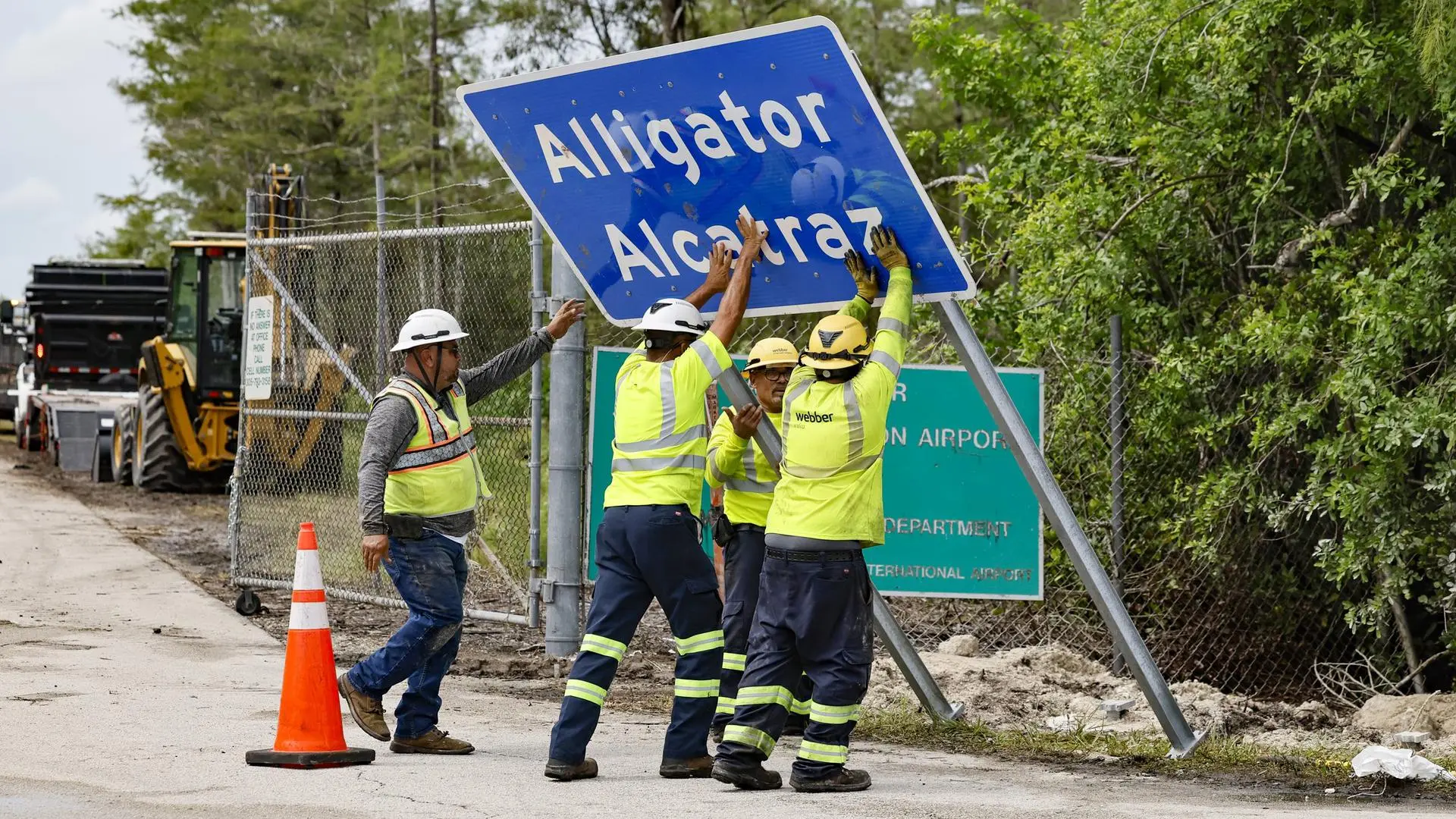
Florida officials have ordered a full demobilization of the controversial Everglades immigration detention site popularly nicknamed “Alligator Alcatraz,” with contractors told to begin dismantling the site this week. State Emergency Management Director Kevin Guthrie told vendors he expected “significant progress” within days as the state moves to end vendor operations under contract demobilization clauses. The closure follows the recent transfer of the facility’s remaining detainees to other centers or deportation to third countries and, once teardown is complete, the site is expected to return to its prior use as a small airport and pilot training facility.
What happened
Less than 15 months after opening with high-profile political backing, Florida’s Everglades detention complex is being taken apart. State officials have directed contractors to begin demobilization under contract terms that allow vendors to claim demobilization fees. The final detainees were moved out the prior week, and officials have framed the immediate steps as part of a planned broader shutdown rather than a short-term evacuation for hurricane season.
Context: why the facility was built
The facility was championed by national and state political leaders as a model for a strict, state-led response to increased irregular migration. It processed tens of thousands of migrants after opening, and its supporters framed it as an aggressively managed alternative to federal detention capacity. Critics, including immigration advocates and human rights organizations, long assailed its conditions and the cost of running the site.
Costs, contracts and the demobilization fee
Reports have indicated operating costs for the site ballooned far beyond initial projections; public reporting cited figures in the neighborhood of $1.2 billion for the facility’s operation. The demobilization clause in vendor contracts now allows vendors to bill the state for the expense of winding down operations — a cost that media reporting has suggested could reach into the tens of millions of dollars. That payment exposure will be politically sensitive for the state, raising questions about budgeting, procurement oversight and whether the operation delivered expected value for the cost.
Policy and legal implications
- Accountability and procurement review: The use of emergency or expedited contracting to stand up the site will likely prompt legislative and public records scrutiny over contract terms, oversight and whether cost controls were adequate.
- Precedent for state-run detention: The facility’s rise and rapid demobilization will shape national political debates about whether states can — or should — run large-scale immigration detention operations outside federal systems.
- Litigation risk: Former detainees or advocacy groups could pursue legal action regarding conditions, transparency or due process measures tied to operations at the site.
Humanitarian and operational concerns
Advocates have consistently described the site as harsh and inadequately resourced for long-term detention, raising humanitarian concerns about access to counsel, medical care and oversight. Meanwhile, rapid transfers of detainees to other facilities or deportation to third countries may create additional strain on receiving facilities and raise questions about continuity of care and legal access for migrants.
Political fallout and messaging
The facility’s opening had been framed by some political leaders as a policy success and proof of state capability to manage migration outside federal frameworks. Its demobilization provides opponents with a tangible example to argue the strategy was costly, ineffective or unsustainable. Supporters may argue the shutdown is administrative or temporary, emphasizing redeployment of capacity elsewhere; either narrative will shape upcoming campaign messaging and oversight hearings.
What’s next
Contractors will dismantle the site and return the property to its prior aviation use. State officials will have to address immediate budget questions from demobilization fees and longer-term questions about how to handle future migration surges. Lawmakers, oversight bodies and advocacy groups will likely pursue records and hearings to assess cost, contract compliance and detainee treatment while the site was operational.
Analysis
The rapid rise-and-fall of the Everglades detention site underscores several recurring dynamics in contemporary immigration policy: the pressure for quick, visible actions in response to migration surges; the fiscal risks of high-cost emergency facilities; and the potential gap between political theater and operational sustainability. Even if framed by officials as an administrative demobilization, the broader lesson for policymakers is the need for clearer cost-benefit analysis, robust oversight of emergency contracting, and contingency planning that privileges humane, legally compliant care for migrants.
Sources
- Reporting in CBS News (as cited in the supplied feed) — background on the demobilization order and vendor notification: https://www.cbsnews.com
- Reporting referenced from The New York Times regarding earlier critiques of effectiveness and cost: https://www.nytimes.com
- Public statements from Florida Emergency Management and state procurement notices (as summarized in the supplied feed).
Note: This article was prepared using the RSS feed text you provided and publicly reported coverage summarized therein. Please add direct links to the specific news stories when pasting this into WordPress to preserve the original source references and to enable readers to consult the primary reporting.