

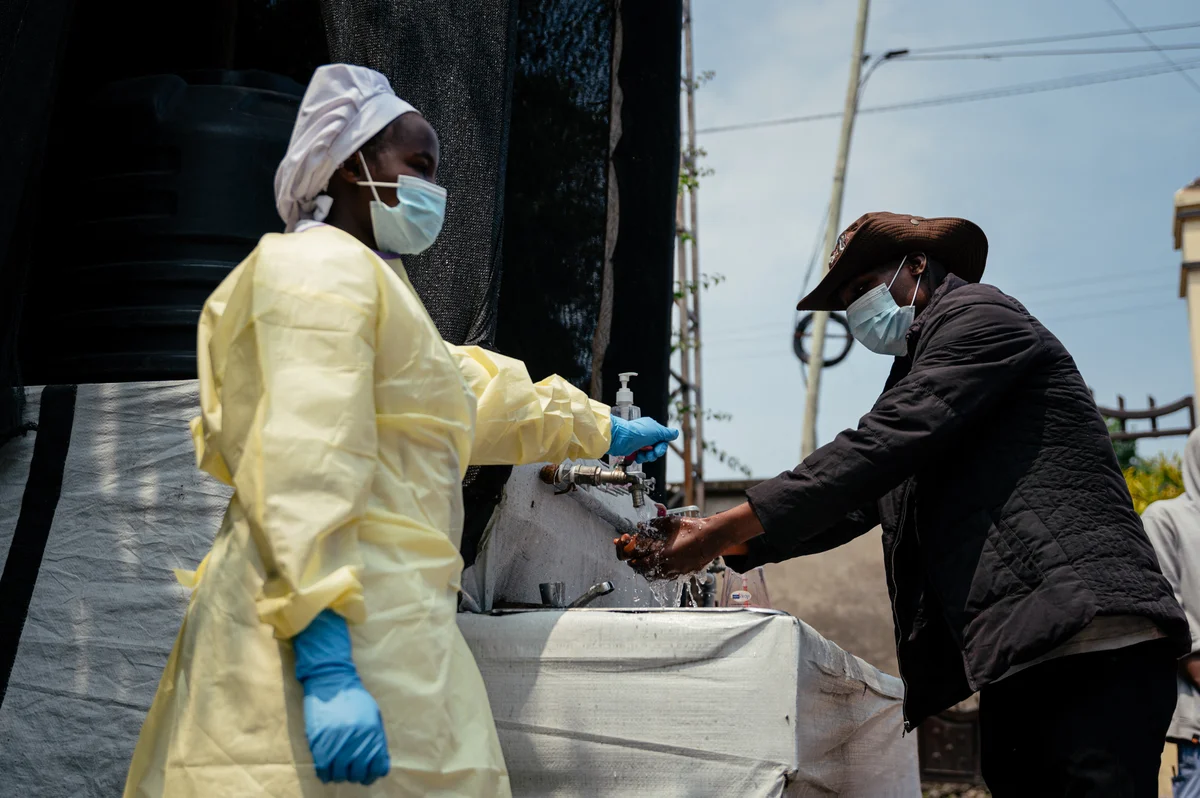
Health officials confront a fast-moving Ebola outbreak
An American doctor working in eastern Democratic Republic of Congo has tested positive for Ebola, adding urgency to an outbreak that has already crossed borders and triggered an expanded international response. Dr. Peter Stafford, a medical missionary serving with the Christian nonprofit Serge, contracted the virus while treating patients near Bunia and is being transferred to Germany for specialized care. Two additional Americans exposed during the response are being monitored, while U.S. health authorities say the immediate risk to the public in the United States remains low.
The case has drawn renewed attention to a dangerous reality in global public health: outbreaks can gain momentum quickly when early detection is delayed, especially in regions already struggling with instability, displacement and weak health infrastructure. In this case, officials say valuable weeks were lost after early testing focused on the better-known Zaire strain of Ebola. Later analysis identified the outbreak instead as the much rarer Bundibugyo strain, a form of the virus for which there is currently no approved vaccine or strain-specific treatment.
Why this outbreak is especially concerning
According to the World Health Organization, Ebola outbreaks remain among the world’s most dangerous health emergencies because of the virus’s high fatality rate and its ability to spread through close contact with infected bodily fluids. What makes the current outbreak especially troubling is its location. Eastern Congo has long faced armed conflict, population displacement and difficult access to medical care, all of which make case tracking and isolation far more difficult.
Health authorities in Congo have reported a sharp rise in suspected cases and deaths, with the outbreak centered in Ituri Province and concerns growing about spread into neighboring Uganda. The WHO has emphasized that cross-border coordination, community trust and faster laboratory identification are now central to containing the crisis. In outbreaks like this one, a delayed diagnosis does not just slow treatment decisions; it also allows chains of transmission to widen before contact tracing is fully underway.
What U.S. and global agencies are doing now
The Centers for Disease Control and Prevention has said several Americans connected to the outbreak area are being moved for monitoring or care. Federal officials have also introduced temporary travel-related precautions involving certain noncitizens who have recently been in Congo, Uganda or South Sudan. At the same time, public health agencies have stressed that these steps are preventive and that there is no sign of broader community spread in the United States.
Internationally, the response is focused on surveillance, contact tracing, safe isolation procedures and support for frontline clinics. The challenge is that containment depends not only on medicine, but also on logistics and trust. In areas affected by violence or misinformation, residents may avoid health workers or delay seeking care, which can allow the virus to circulate longer. That means the response must be both medical and community-based.
The bigger lesson from the latest Ebola scare
The newest developments underscore a recurring lesson from global outbreaks: preparedness is only as strong as the speed of recognition. Rare strains such as Bundibugyo can complicate diagnostics, but the broader issue is whether local and international systems are equipped to pivot quickly when initial assumptions prove wrong. The earlier a pathogen is correctly identified, the sooner targeted containment measures can begin.
For readers following the latest health news, this outbreak is a reminder that infectious disease threats remain deeply global. A case in eastern Congo can quickly become an international concern not because panic is warranted, but because travel, humanitarian work and cross-border movement connect local emergencies to the wider world. The most effective response is not alarm, but investment in rapid testing, transparent reporting and sustained international cooperation.
Sources
World Health Organization
U.S. Centers for Disease Control and Prevention
Newsweek
AFP