


Summary: President Donald Trump has introduced a new voluntary safety agreement for artificial intelligence, placing substantial responsibility for safety and risk management on the companies that build advanced AI systems. The White House meeting cited in the reported feed brought together senior industry leaders to discuss a nonbinding approach to AI oversight. Below we summarize the announcement, place it in the context of ongoing AI governance debates, and outline possible implications for regulators, industry, and the public.
What was announced
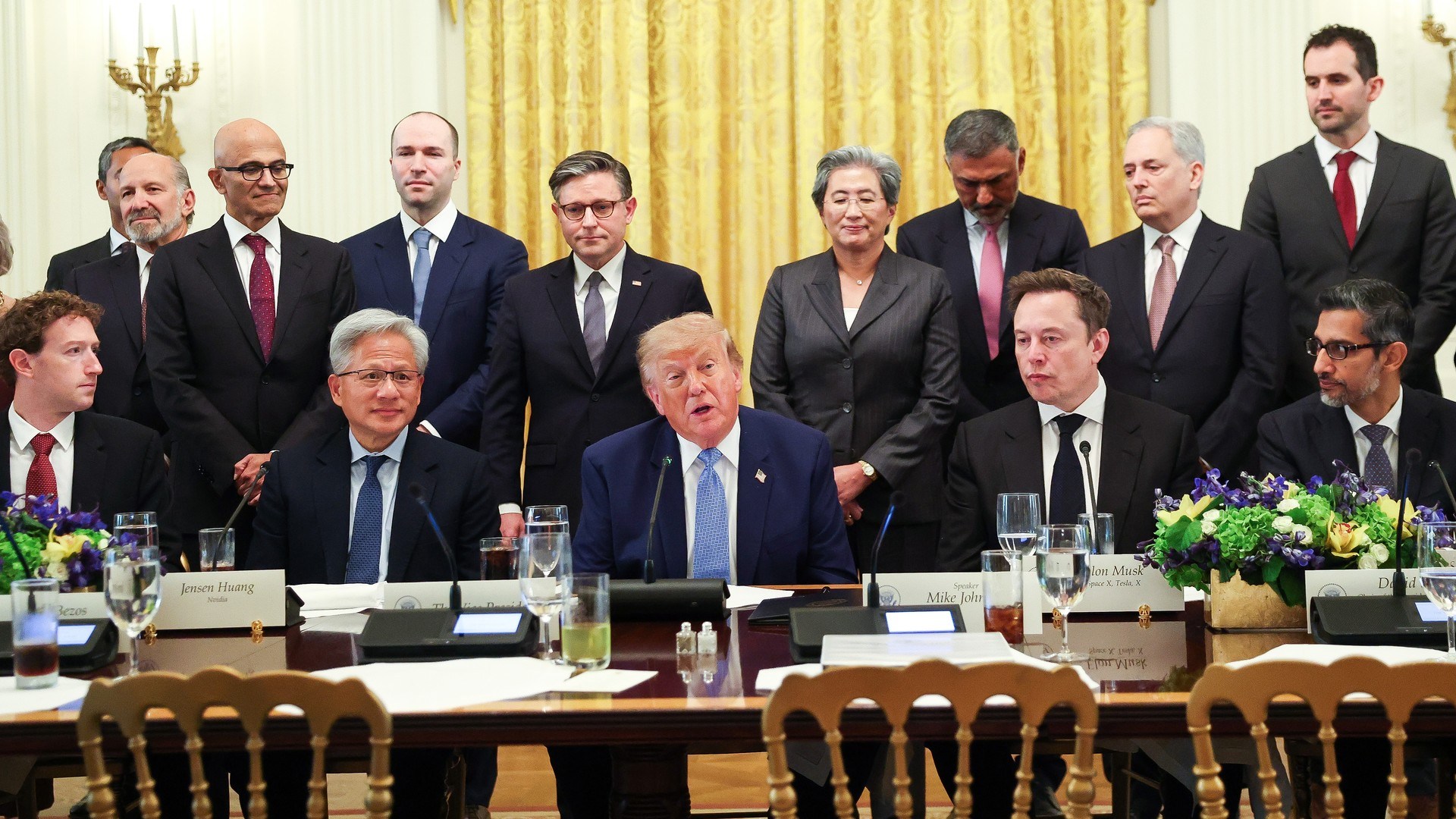
According to the RSS feed excerpt provided with this assignment, the administration announced a voluntary safety agreement for AI and emphasized industry responsibility for ensuring safe development and deployment of powerful models. The announcement reportedly followed a White House meeting with senior executives from major AI companies. The administration framed the approach as relying primarily on industry-led commitments rather than prescriptive federal mandates.
How this fits into the broader regulatory landscape
The debate over how best to govern advanced AI has centered on a spectrum from voluntary industry commitments to mandatory regulation enforced by government agencies. Across jurisdictions, policymakers have explored a mix of strategies:
- In the United States, recent policy work—both in the executive branch and in Congress—has explored labeling, testing, disclosure, and targeted rules for high-risk systems while also debating whether voluntary frameworks are sufficient.
- The European Union has moved forward with the EU AI Act, a largely mandatory, risk-based regulatory regime that sets legal obligations for certain categories of AI systems.
- Independent research organizations and academic centers have urged a combination of technical standards, independent audits, red-team testing, and contingency planning to manage systemic AI risks; see analysis from research centers such as the Center for Security and Emerging Technology (CSET).
Why voluntary agreements can be appealing — and why they can fall short
Voluntary agreements between government and industry can deliver faster initial cooperation and encourage innovation-friendly practices without imposing immediate regulatory costs. They also can foster industry investment in safety research and create fora for information-sharing.
However, voluntary approaches have limitations:
- They may produce uneven adoption: some firms will adopt strong safeguards while others may not, leading to competitive imbalances and potential safety gaps.
- Enforceability is limited: without legal penalties, compliance relies on reputational incentives and market pressure, which may be insufficient for managing systemic or catastrophic risks.
- Transparency can be weak: voluntary agreements often lack standardized disclosure requirements, making independent verification of safety claims difficult.
What the voluntary route might look like in practice
Effective voluntary frameworks that have been proposed by experts typically include concrete elements such as:
- Clear, measurable safety benchmarks and red-team testing protocols;
- Independent third-party auditing and standardized reporting to enable external verification;
- Data-sharing mechanisms for threat intelligence and safety failures;
- Sunset clauses or triggers that convert voluntary commitments into mandatory rules if risks materialize or if compliance is insufficient.
Industry groups and consortia—such as the Partnership on AI—have promoted multi-stakeholder approaches that can incorporate many of these elements. At the same time, leading AI developers (including major labs and platforms) have published safety best-practices and roadmaps, signaling some willingness to self-regulate while continuing to advocate for flexible policy approaches; see industry safety discussions and FAQs on major developer sites such as OpenAI for examples of voluntary safety commitments.
Implications for Congress, regulators, and the public
Even if the administration prioritizes voluntary agreements, several likely follow-on effects deserve attention:
- Congress may press for clearer statutory backstops. Lawmakers on both sides of the aisle have shown interest in AI oversight; failure of voluntary measures to deliver consistent protections could accelerate legislative action.
- Federal agencies may develop sector-specific expectations. Agencies with expertise in particular domains (finance, health, critical infrastructure) could adopt binding rules for AI uses within their jurisdictions.
- State and international regulatory divergence will continue. U.S. voluntary approaches may coexist uneasily with mandatory regimes abroad, creating compliance complexity for multinational firms.
What to watch next
- Details of the voluntary agreement: Will it include measurable testing standards, disclosure requirements, and independent audits?
- Who signs on: Will smaller developers and international firms participate—or will commitments come mainly from large, high-profile companies?
- Accountability mechanisms: Does the framework include enforcement triggers or backup regulatory authority if commitments prove insufficient?
- Congressional response: Will lawmakers introduce or accelerate legislation to codify minimum standards or sectoral rules?
Bottom line
A voluntary safety agreement can be a useful start—especially if it produces transparent, measurable, and independently verifiable practices that other actors can adopt. But history and analysis suggest voluntary measures alone rarely suffice when technologies pose broad systemic risks. If the voluntary approach announced at the White House is intended as a bridge—coupling immediate industry engagement with statutory backstops and independent verification—it could help buy time to craft durable, enforceable policy. If it remains purely nonbinding and opaque, it risks providing cover for insufficient safeguards while the pace of AI development accelerates.
Selected sources and further reading
- European Commission, “A European approach to artificial intelligence” — https://digital-strategy.ec.europa.eu/en/policies/european-approach-artificial-intelligence
- Center for Security and Emerging Technology (CSET), topical AI governance research — https://cset.georgetown.edu/research/
- Partnership on AI — https://www.partnershiponai.org/
- OpenAI — safety and policy materials — https://openai.com/
- Brookings Institution, AI policy analyses and commentary — https://www.brookings.edu/topic/artificial-intelligence/
- Reuters Technology / Artificial intelligence coverage (aggregated reporting) — https://www.reuters.com/technology/artificial-intelligence/
Note: This article is based on the RSS feed excerpt provided for this task and on publicly available policy and research materials about AI governance. For direct reporting on the White House announcement, consult major news outlets’ coverage and the administration’s official releases.