



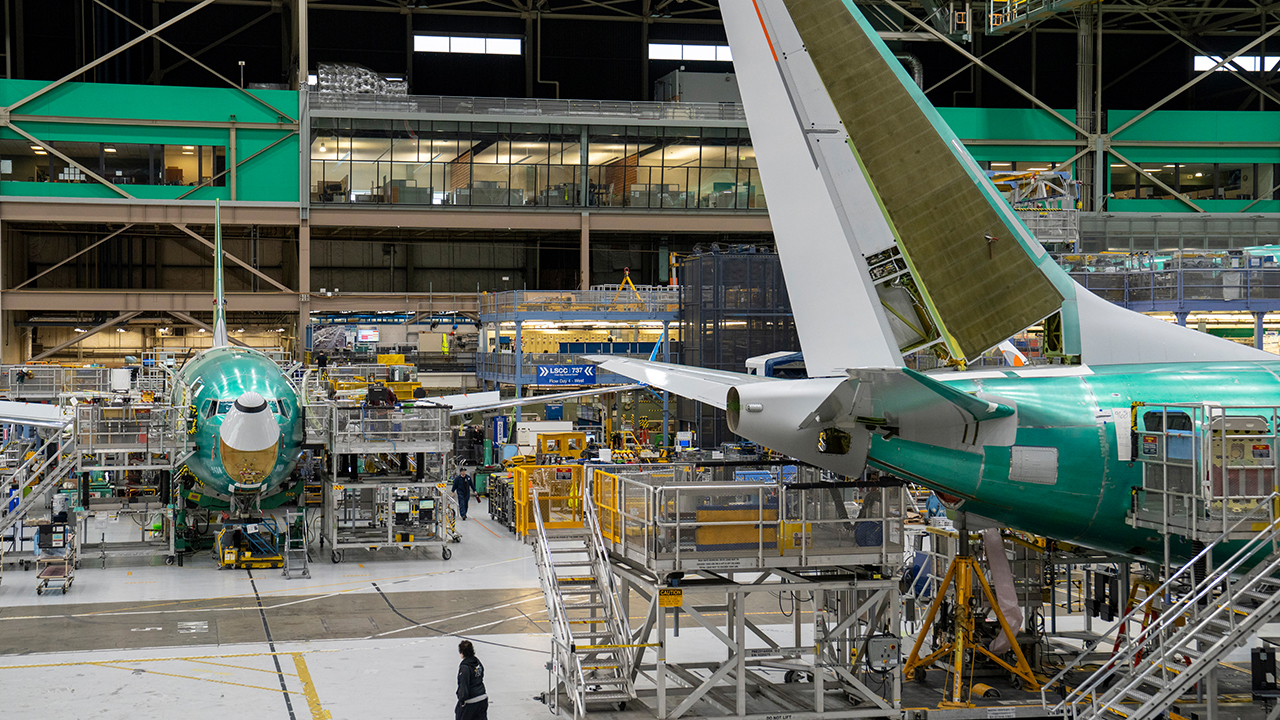
The Federal Aviation Administration (FAA) has issued an airworthiness directive requiring inspections of certain Boeing 737 Max 8, Max 9 and Max 8-200 airplanes after reports of possible cracking in a fuselage bear strap near the forward galley door cutout. The directive affects an estimated 471 U.S.-registered 737 Max jets and takes effect Sept. 10, 2026.
What the directive requires
The FAA’s directive mandates inspections of the fuselage skin and the bear strap at the forward upper corner of the forward galley door cutout. Operators must perform the required inspections and complete any additional repairs mandated by the AD if cracking is found. The FAA warned that the condition could compromise a principal structural element’s ability to sustain limit loads and could therefore affect structural integrity.
How this issue was identified
Boeing told regulators that the condition was first identified on certain 737 Next Generation (NG) aircraft and that the company had been working with operators for several years. While Boeing said the cracking issue has not been observed on the 737 Max fleet, it supported the FAA’s decision to extend inspections to certain Max models because of similarities in design and manufacturing processes between NG and Max airplanes.
Historical context
Boeing notified 737 NG operators about the issue in 2019, and the FAA previously mandated inspections for the NG fleet in 2021. The latest directive applies the same precautionary inspections to Max models to provide additional opportunities to detect and correct cracks before they reach a critical length. Boeing has also said it performed an engineering analysis to identify root causes and has implemented manufacturing changes intended to prevent recurrence on in-production airplanes.
Operational and business implications
- Scope: The AD affects certain 737 Max 8, 9 and 8-200 models. The FAA estimated roughly 471 U.S.-registered aircraft fall under the directive.
- Airline impact: Inspections can be disruptive depending on required access, inspection intervals and any necessary repairs. Carriers and maintenance providers will need to schedule work into maintenance cycles; in many cases, inspections can be coordinated to minimize operational impact, but unexpected repairs can cause aircraft out-of-service time and short-term capacity constraints.
- Aircraft manufacturer: Boeing said it supports the directives and is working with customers. The company also reported making manufacturing changes for in-production aircraft to address the root cause.
- Safety perspective: Regulators and manufacturers emphasize that the inspections are preventative and intended to find and fix small cracks before they grow to critical lengths that would threaten structural integrity.
What to watch next
Key developments to monitor include how many operators find cracks requiring repair, whether inspections force temporary removals from service, and whether additional regulatory actions or inspection intervals are mandated. Airlines and maintenance organizations will publish compliance plans and timelines as they integrate the AD into maintenance schedules.
Sources
- FAA airworthiness directive and related information: Federal Aviation Administration (FAA)
- Fox Business reporting on the directive and Boeing statement: Fox Business
- Reuters coverage summarizing the FAA action and industry reaction: Reuters
- Boeing newsroom statement on inspections and manufacturing changes: Boeing
Note: Operators should consult the full FAA AD and their assigned maintenance/engineering authority for the precise inspection tasks, compliance windows, and reporting requirements described in the regulatory text.