



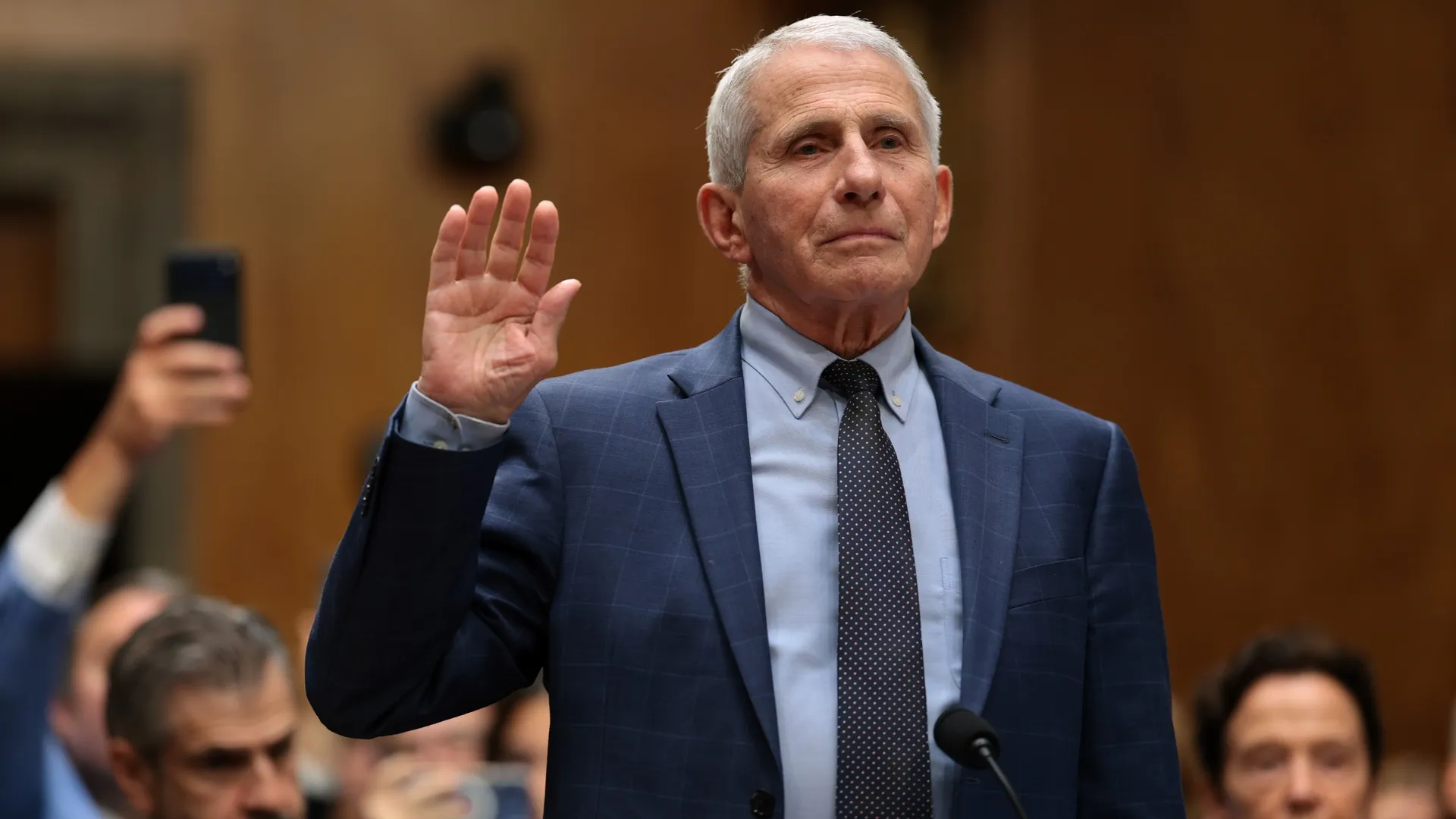
Senators on the Senate Homeland Security and Governmental Affairs Committee voted to hold Dr. Anthony Fauci in contempt of Congress after he repeatedly invoked his Fifth Amendment right during a scheduled hearing. The committee’s vote clears the way for a referral to the Department of Justice (DOJ), which must decide whether to pursue prosecution and seek an indictment from a grand jury.
What happened
During a recent session convened by the Senate Homeland Security and Governmental Affairs Committee, committee members voted along party lines to hold Dr. Anthony Fauci in contempt following his decision to repeatedly invoke the Fifth Amendment during testimony. Committee Chairman Sen. Rand Paul (R-Ky.) has said he will refer the contempt resolution to the Department of Justice for potential prosecution.
Legal process and immediate next steps
Under the normal process for contempt of Congress, the committee can refer the matter to the U.S. Attorney for the District of Columbia. That office — or the DOJ more broadly — may then seek to present the case to a grand jury to obtain an indictment. If indicted, Fauci would face potential criminal proceedings. The contempt referral does not itself impose criminal penalties; rather, it triggers the prosecutorial decision and any subsequent judicial process (overview of contempt of Congress).
Political reactions
Republican committee leaders framed the contempt move as accountability for what they describe as unanswered questions about the federal pandemic response and the origins of COVID-19. Outside the hearing room, Sen. Ron Johnson (R-Wis.) said the committee’s investigative work has only begun and noted the committee recently obtained a copy of Fauci’s phone and related material from the Department of Health and Human Services (HHS).
Democrats on the committee vigorously opposed the contempt move. Ranking Member Sen. Gary Peters (D-Mich.) warned that punishing a witness for invoking a constitutional right could create a troubling precedent that deters future witnesses from appearing before congressional panels. Sen. Maggie Hassan (D-N.H.) argued the hearing was directed at a single public servant and urged that bipartisan, serious review of pandemic response remain the priority.
Evidence and documents
Committee Republicans have emphasized they recently received material from HHS, including a copy of a device belonging to Dr. Fauci and previously released diary entries. Committee leaders say those materials may help answer questions Fauci declined to address publicly at the hearing.
Why the Fifth Amendment matters here
The Fifth Amendment protects individuals from being compelled to testify against themselves in criminal proceedings. Invoking the Fifth in a congressional hearing is a recognized constitutional protection, though it can be politically consequential. The committee’s move to hold Fauci in contempt underscores the tension between constitutional protections for witnesses and Congress’s investigative powers (Cornell Law – Fifth Amendment).
Possible outcomes and implications
- DOJ declines to prosecute: The most immediate way the matter could end is if prosecutors decide not to pursue an indictment. The Department of Justice exercises broad discretion in contempt referrals.
- Prosecution and court battle: If the U.S. Attorney seeks an indictment, Fauci could face criminal charges for contempt of Congress, leading to pretrial litigation and potential appeals focused on whether invoking the Fifth in this setting was appropriate and whether Congress followed proper procedures.
- Political fallout: Regardless of legal outcomes, the contempt vote will likely deepen partisan divides and could influence public perceptions of congressional oversight of pandemic-era decisions and scientific leadership.
Context and analysis
This episode is part of a broader political and investigative push by some Republican lawmakers to scrutinize federal public-health leadership during the COVID-19 pandemic. Holding a prominent public-health official in contempt is an escalatory step with both legal and symbolic heft; it signals lawmakers’ intent to press the matter beyond public hearings and into potential criminal proceedings.
From a legal perspective, contempt referrals are routinely evaluated by prosecutors on the probability of securing a conviction and whether prosecution serves the public interest. From a political perspective, the move places the DOJ in the center of a divisive political fight — something prosecutors historically seek to avoid unless the underlying facts establish clear criminal conduct.
Observers should watch several near-term developments: whether the U.S. Attorney for the District of Columbia files charges, whether additional documentary evidence is released to the public or the committee, and whether negotiated alternatives (such as a closed-door transcribed interview) are pursued to resolve outstanding questions.
Sources and further reading
- Primary reporting and committee coverage: material provided in the supplied briefing text.
- About contempt of Congress (background): Contempt of Congress — Wikipedia.
- Legal background on the Fifth Amendment: Cornell Law School — Fifth Amendment.
- Senate Homeland Security and Governmental Affairs Committee (committee information and releases): hsgac.senate.gov.
- U.S. Department of Justice (general information on federal prosecution): justice.gov.
- U.S. Department of Health and Human Services (HHS): hhs.gov (for agency records and document production statements).
Note: This article is based on the hearing summary and reporting provided in the supplied briefing text and places that reporting in legal and political context. For the most current, primary-source documents and committee releases, consult the Senate Homeland Security and Governmental Affairs Committee and official DOJ announcements.