



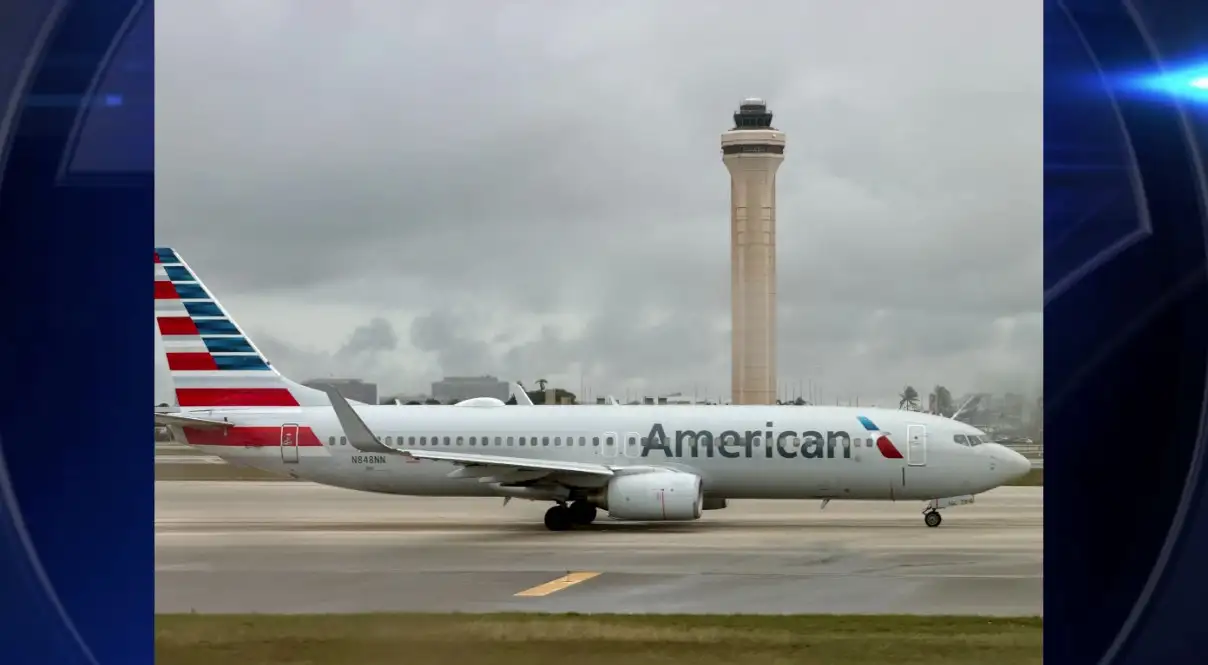
An American Airlines flight bound for Bermuda aborted its takeoff in Miami after a business jet entered the same runway shortly before departure, creating a near miss and prompting an FAA investigation. The flight stopped after the crew, having received takeoff clearance, observed another aircraft on the runway and rejected the takeoff.
What happened
According to reporting and available air-traffic audio, the incident occurred around 6 p.m. ET when American Airlines Flight 308 was rolling for takeoff at Miami International Airport. The crew halted the takeoff when they saw a business jet—identified as NetJets Flight EJA434—on the runway. Air-traffic-control audio captures a tense exchange in which the controller tells the business-jet pilot, “You just crossed an active runway,” and the pilot replies that he was following a crossing clearance he believed was addressed to him.
After the aborted takeoff, American Airlines said the flight later departed for Bermuda. The Federal Aviation Administration confirmed it is investigating the incident.
Immediate safety actions and responses
Airlines and crews train extensively to perform a rejected takeoff when an unexpected hazard appears on the runway. The quick decision by the American Airlines crew to stop likely averted a collision; rejected takeoffs at high speeds carry their own risks but are an accepted safety maneuver when runway incursions occur.
NetJets stated the flight was being operationally controlled by a third-party maintenance vendor at the time. American Airlines thanked passengers for their understanding and lauded the crew for swift action.
Context: runway incursions and recent aviation close calls
Runway incursions—where an unauthorized aircraft, vehicle or person is on a runway—are among the most serious risks in commercial aviation because they can lead to catastrophic runway collisions. The incident in Miami is part of a string of high-profile close calls reported in the same timeframe, including a separate incident in which a commercial jet nearly encountered a drone on approach to New Jersey. Those episodes underscore both the complexity of modern airport operations and the growing array of hazards—from general aviation coordination to unmanned aircraft systems—that controllers and flight crews must manage.
Why these incidents happen
- Communication breakdowns: Misheard or misidentified call signs, similar-sounding traffic, or ambiguous phraseology can lead pilots to act on instructions intended for another aircraft.
- Ground controller workload and traffic complexity: Busy airports with intersecting runways, multiple surface routes and mixed traffic (airlines, charters, general aviation) increase the chance of routing or clearance errors.
- Operational control/third-party coordination: When business or charter flights are coordinated by third-party vendors, ambiguities in operational control or flight-following responsibilities can complicate communications.
- Emerging threats: Increased drone activity near airports adds a new dimension to airspace safety, requiring integrated mitigation and enforcement measures.
Systems and procedures designed to reduce risk
Industry and regulators rely on multiple layers of defense to prevent runway incursions and collisions:
- Standardized phraseology and strict readback/hearback requirements for controller-pilot communications.
- Surface surveillance systems and ground radar (e.g., ASDE-X/Surface Movement Radar) that help controllers track aircraft and vehicles.
- Runway status lights and other automated runway-incursion warning systems at some airports.
- Crew resource management (CRM) training that reinforces cross-checking and immediate action if flight crews perceive a safety hazard.
- Regulatory enforcement and investigation (e.g., FAA inquiries) to identify root causes and recommend corrective actions.
What to watch next
The FAA’s investigation will seek to determine the sequence of clearances, whether any phraseology or readback errors occurred, and whether operational control arrangements contributed to the confusion. Investigations like this often result in recommendations on controller procedures, dispatch coordination, or airport-specific changes to minimize the chance of recurrence.
Passengers should expect occasional operational disruptions when safety is at stake—ground stops, aborted takeoffs or delays may follow until controllers and airlines confirm that runways and procedures are safe.
Bottom line
The aborted takeoff in Miami highlights how quickly a routine departure can become a safety incident when another aircraft enters an active runway. The flight crew’s decision to reject the takeoff likely prevented a collision; now, aviation authorities will probe the clearance chain and communications that led to the incursion to recommend changes and reduce future risk.
Sources and further reading
- CNN reporting — original reporting referenced in the incident summary.
- Federal Aviation Administration (FAA) newsroom — official statements and regulatory updates.
- ATC.com — air-traffic audio and ATC recordings referenced in coverage.
- American Airlines — airline statements and passenger advisories.
- NetJets — operator statements regarding corporate/business jet operations.
- FAA Runway Safety resources — background on runway-incursion mitigation and data.
- FAA UAS (drone) safety resources — context on unmanned aircraft near airports.
Note: This article summarizes the reported incident and provides context on runway-incursion risks. The FAA investigation is ongoing; readers should consult the FAA and airline statements for any updates.