




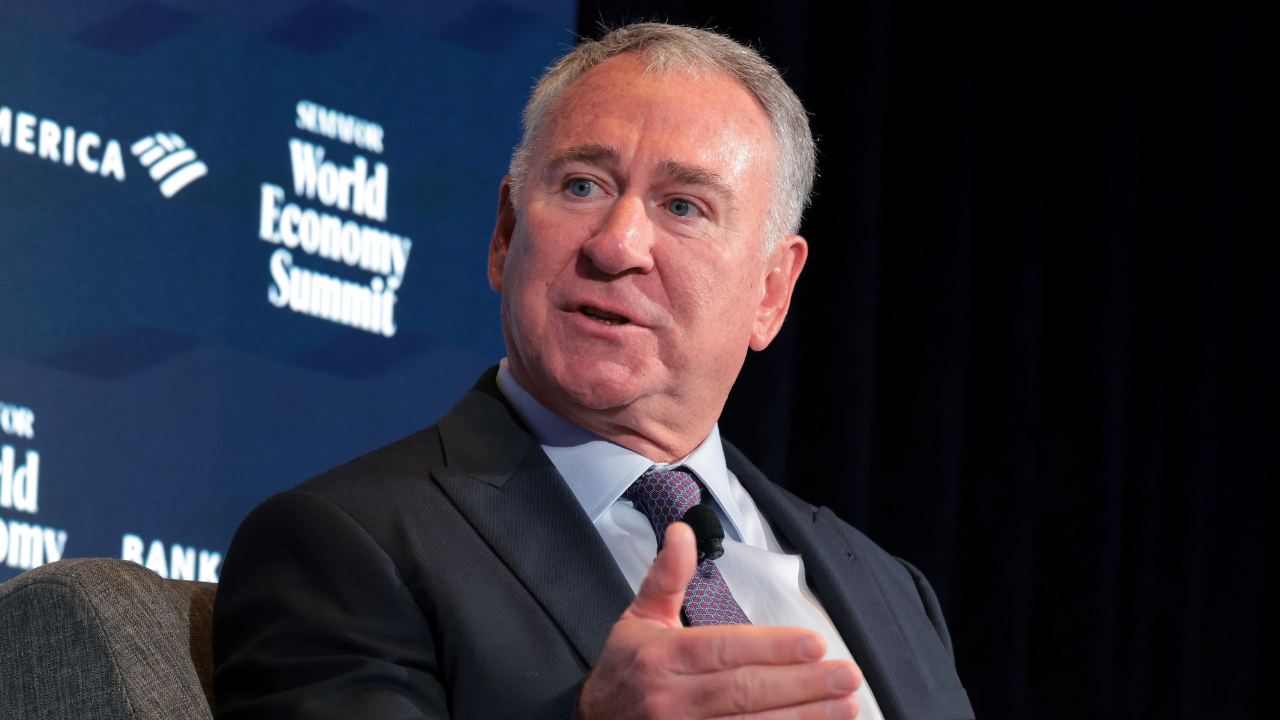
Ken Griffin’s latest remarks about Miami and New York land squarely in the Business category, but they also reflect a wider debate now shaping corporate relocation, state tax policy, and the geography of American finance.
Why this belongs in Business
The core of the story is not celebrity, culture, or electoral politics. It is about business climate, taxation, investment decisions, and where major firms choose to place capital and jobs. Citadel founder Ken Griffin used the Milken Institute Global Conference to reaffirm that his firm is “doubling down” on Miami, arguing that New York’s tax posture and political rhetoric are pushing companies and wealthy investors toward lower-tax, more business-friendly states.
That framing fits squarely within business coverage because the implications are economic: office investment, hiring, tax base migration, and competition between cities for financial firms.
The latest business story: the battle over where capital wants to live
Griffin’s comments arrive at a moment when major U.S. cities are under renewed pressure to prove they can still attract employers, investors, and high earners. In recent years, Miami has continued marketing itself as a finance and technology hub, while New York remains the nation’s dominant financial center but faces recurring debates over affordability, taxation, and quality of life.
At the center of the latest flare-up is New York City Mayor Zohran Mamdani’s push for tax reform aimed at wealthier residents and owners of high-value properties. Griffin criticized the message coming from City Hall, calling it hostile to success and suggesting it strengthens Miami’s appeal as a destination for businesses seeking regulatory and tax stability.
That argument echoes a broader trend documented by business and policy reporting: firms and wealthy individuals have increasingly weighed moves to Florida and Texas, citing lower taxes, lighter regulation, and flexible post-pandemic office strategies. Miami, in particular, has aggressively positioned itself as a landing spot for hedge funds, private equity, and technology investors.
What the broader reporting shows
Recent reporting from Fox Business highlights Griffin’s direct criticism of New York’s tax rhetoric and his insistence that Citadel made the right choice by choosing Miami over New York during its relocation process. Meanwhile, the long-running policy debate over tax competitiveness has also been reflected in coverage from outlets such as The Wall Street Journal, Bloomberg, and CNBC, all of which have tracked the migration of firms, executives, and investment capital toward Sun Belt markets in the post-pandemic era.
Data from the U.S. Census Bureau and economic analysis from the Bureau of Economic Analysis continue to show strong population and economic momentum in Florida and Texas relative to some higher-cost legacy hubs. At the same time, New York remains uniquely entrenched in global finance, media, law, and corporate services, giving it structural strengths that are difficult for rivals to replicate quickly.
Miami’s rise is real, but New York’s dominance is not over
It would be too simple to frame this as a clean handoff from New York to Miami. Miami has made real gains as a destination for hedge funds, family offices, and fintech entrepreneurs. Florida’s no-state-income-tax model remains a powerful draw, especially for top earners and founders whose location decisions can move substantial wealth.
But New York still offers what few cities can: unmatched access to institutional investors, elite legal and banking infrastructure, deep labor pools, and global visibility. Many companies that expand in Florida still keep major footprints in New York because the ecosystem is too valuable to abandon outright.
That is why Griffin’s remarks matter beyond the headline. They are not simply about one billionaire’s frustration with one mayor. They are part of a larger competition over whether economic power in the United States is becoming more distributed geographically, or whether traditional capitals like New York will continue to dominate despite political and tax backlash.
The deeper issue: signaling matters
One of the biggest takeaways from this latest episode is that business leaders often respond not only to tax rates, but to tone. Investors and executives listen closely to how public officials talk about wealth, business formation, and private enterprise. Even when actual tax changes are modest or slow-moving, rhetoric can shape perception. And perception can influence where firms open offices, where executives buy homes, and where entrepreneurs decide to build.
That may be the most important context here. Griffin is using a public platform to send a message to peers: that political culture matters almost as much as policy. For New York officials, the counterargument is that a city cannot remain economically vibrant if ordinary workers are priced out while the tax code disproportionately benefits the very wealthy. That tension is likely to intensify, not fade.
Bottom line
Ken Griffin’s Miami comments are best understood as a business story about capital flight, tax competition, and urban economic strategy. Miami is gaining credibility as a serious financial center, and leaders like Griffin are amplifying that momentum. Yet New York still holds extraordinary advantages that make any narrative of decline incomplete.
The real story is the contest itself: cities are now fighting more openly for the businesses, investors, and workers who can choose where to live and operate. In that battle, public policy, tax structure, housing affordability, and political messaging are all part of the pitch.
Sources: