



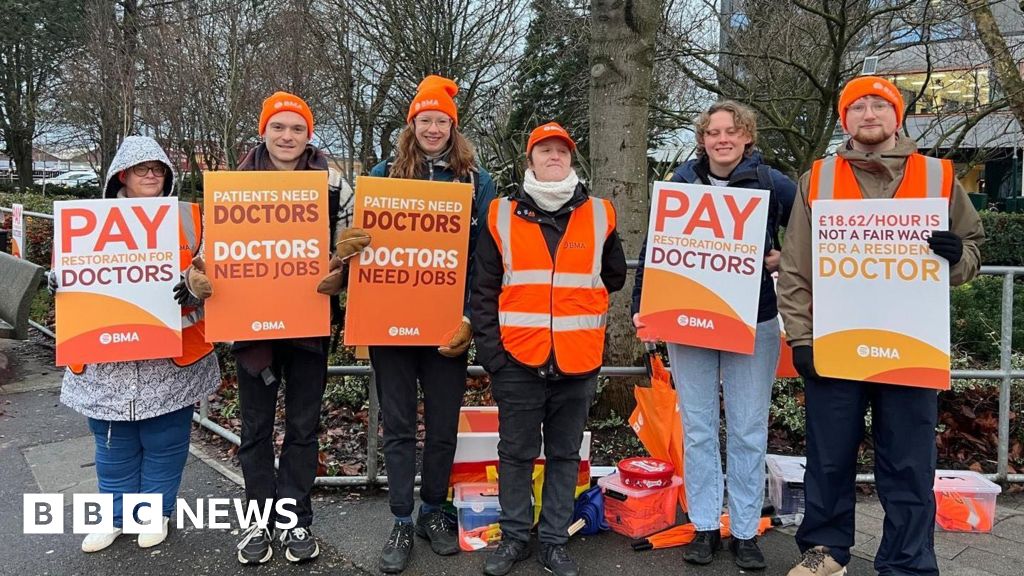
Patients across England are being warned to expect disruption from 7 April as doctors prepare for another round of industrial action, according to BBC News. The strike is expected to affect appointments, routine care and waiting times, while NHS leaders urge the public to use services wisely and check local updates before attending non-urgent appointments.
Why this story belongs in Health
This is fundamentally a health system story: it concerns patient care, hospital operations, NHS staffing pressures and the delivery of medical services. While the dispute has political and economic dimensions, the direct impact is on healthcare access and outcomes, making Health the most appropriate category.
What is happening now
The latest warning comes as the NHS continues to manage heavy demand, long waiting lists and workforce strain. Industrial action by doctors has become one of the most visible signs of the pressure facing the UK health service. Ahead of the planned strike beginning 7 April, health officials are advising patients to expect cancelled appointments and delays, particularly for non-emergency care.
BBC News reports that disruption is likely across services, with hospitals and clinics expected to prioritize emergency, urgent and critical care while scaling back routine activity. Patients are being told to attend appointments unless contacted otherwise, but to remain alert for changes from their local NHS providers. Source: BBC News.
The bigger picture: a health service under strain
This strike warning lands at a time when the NHS is still grappling with deep structural challenges. Waiting lists in England remain historically elevated, and workforce shortages continue to shape care delivery across hospitals, GP practices and community services. Recent NHS data has shown persistent pressure on elective care recovery, emergency departments and bed capacity. Source: NHS England Statistics.
At the same time, the British Medical Association has repeatedly argued that pay erosion, staff burnout and retention problems are undermining the long-term stability of the medical workforce. The union has framed industrial action as part of a broader push to restore pay and protect the future of the profession. Source: British Medical Association.
Why patients are caught in the middle
For many patients, strike action creates a painful sense of uncertainty rather than a clear-cut political choice. A postponed consultation may mean extra weeks of anxiety before a diagnosis. A delayed procedure can affect someone’s ability to work, care for family or live without pain. That is why stories like this resonate so strongly: the consequences are personal, even when the dispute is institutional.
Health policy experts have long warned that prolonged workforce disputes can ripple far beyond the strike dates themselves. Missed appointments must be rescheduled into an already crowded system, adding further pressure to providers trying to reduce backlogs. In practical terms, one period of disruption can continue to be felt for weeks or months. Source: The King’s Fund; Nuffield Trust.
Latest related developments in UK health
Broader reporting from major UK health sources continues to focus on the same core themes: staffing gaps, funding pressure, care delays and difficult negotiations between unions and government. Analysis from independent health think tanks such as The King’s Fund and Nuffield Trust has emphasized that industrial action is not an isolated event, but a symptom of wider system stress that has built over years.
Meanwhile, NHS England has continued to publish updates on performance targets, elective recovery efforts and urgent-care challenges, underscoring how fragile service capacity can become when staffing is disrupted. These pressures are especially significant during periods of seasonal illness, high bed occupancy or delayed discharge from hospitals. Sources: NHS England Performance Updates; The King’s Fund Analysis.
What patients should do
Patients should continue to attend appointments unless their hospital, GP surgery or NHS service contacts them to rearrange. Emergency care will remain available, and anyone facing a life-threatening situation should still call emergency services or go to A&E. For less urgent needs, the NHS typically advises people to consider NHS 111, pharmacies and routine GP contact channels where appropriate. Official guidance is available via NHS.uk.
Analysis: this is about more than one strike
The immediate headline is a warning about disruption beginning 7 April. But the underlying story is about whether the NHS can stabilize its workforce quickly enough to rebuild public confidence. Repeated industrial action signals unresolved tensions over pay, workload and morale. If those issues persist, the NHS may find it harder not only to reduce waiting lists, but also to retain experienced staff and recruit the next generation of doctors.
In that sense, the strike is both an event and a warning. It is an event because it will disrupt care in the coming days. It is a warning because it highlights the long-term fragility of a health service trying to do more with overstretched people and finite resources.
Sources: BBC News; NHS England; British Medical Association; The King’s Fund; Nuffield Trust; NHS.uk.