




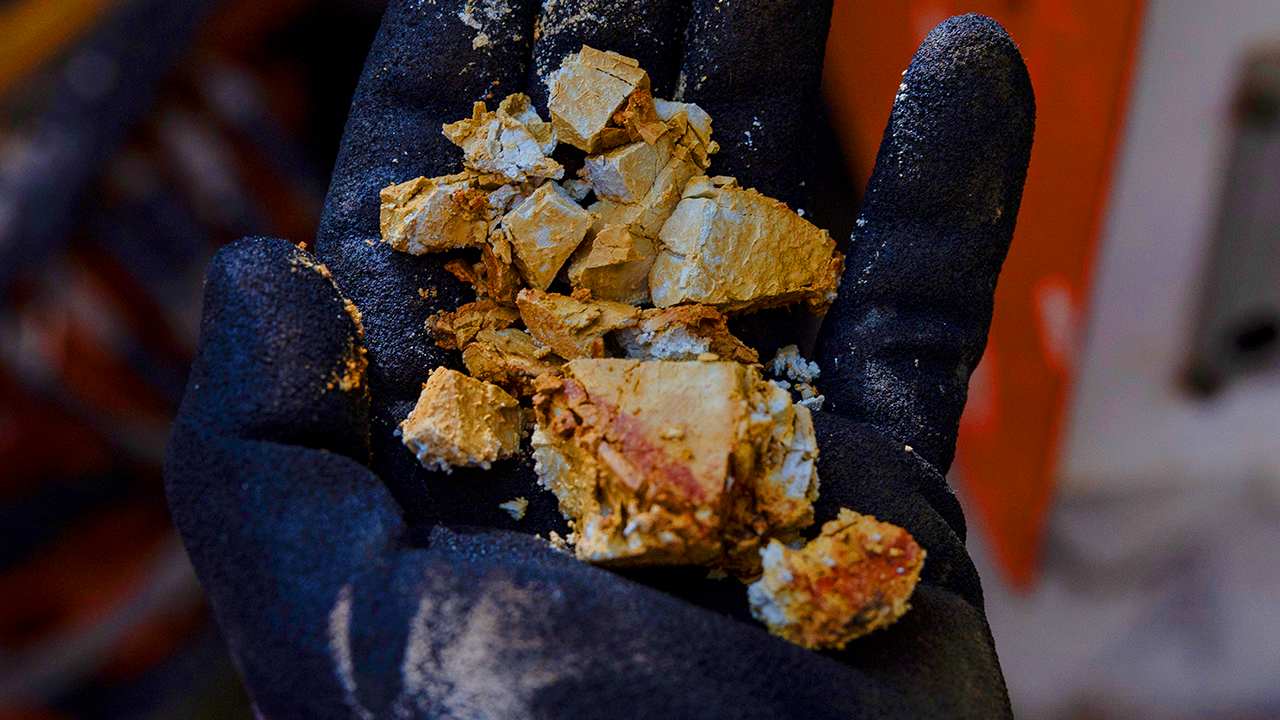
A major rare-earth mining push in Texas is emerging as part of a broader U.S. effort to reduce dependence on China for minerals essential to defense systems, semiconductors, electric vehicles and advanced manufacturing.
The immediate story centers on the Round Top deposit in West Texas, which Texas officials say could become a strategic domestic source of heavy rare-earth elements. According to Fox Business, Texas Land Commissioner Dawn Buckingham argued the project could both strengthen national security and generate significant long-term revenue for Texas public education.
Why this is a business story
While the political and national-security implications are obvious, this is fundamentally a business and industrial supply-chain story. Rare earths sit at the center of a high-stakes market involving mining investment, refining capacity, industrial policy, manufacturing competitiveness and pricing power. The core business question is whether the U.S. can build a commercially viable domestic supply chain in a market China has dominated for years.
That matters because rare-earth elements are not just obscure commodities. They are inputs for magnets, missile systems, wind turbines, robotics, consumer electronics and chipmaking equipment. If U.S. companies cannot source them reliably, entire downstream industries face strategic and financial risk.
Round Top and the renewed U.S. minerals push
The Texas project arrives as Washington and state governments put new attention on critical minerals. Fox Business reported that Round Top is viewed as one of North America’s richest known deposits of heavy rare-earth minerals, a category especially important because heavy rare earths are often harder to secure and process than lighter varieties.
That focus aligns with the broader push to build U.S. critical-mineral stockpiles, speed up domestic permitting and expand processing capacity. In recent years, policymakers from both parties have increasingly treated mineral security as an economic priority rather than a niche mining issue.
For investors and manufacturers, however, the real challenge is not only extraction. The hardest part is often the midstream segment: separation, refining and magnet production. Even if more ore is mined in the United States, companies still need cost-effective domestic facilities to turn those materials into usable industrial inputs.
The bigger market backdrop: China still leads
China remains the dominant global player in rare-earth processing and refining, a position built over decades through industrial policy, scale and established infrastructure. The International Energy Agency and the U.S. Geological Survey have both highlighted the concentration risks surrounding critical-mineral supply chains, including rare earths and other strategic inputs.
That concentration gives China considerable leverage over global pricing and availability. It also leaves countries like the United States vulnerable when trade tensions rise or geopolitical priorities shift.
Recent coverage from Reuters’ commodities reporting has repeatedly underscored how governments and corporations are scrambling to diversify away from single-country exposure in strategic raw materials. The logic is simple: no major economy wants its clean-energy future, weapons production or semiconductor manufacturing constrained by one chokepoint supplier.
What businesses will be watching next
The next phase of this story will hinge on four practical questions.
First, financing: Can developers attract enough long-term capital to move projects from exploration to production without being derailed by commodity-price swings?
Second, permitting and regulation: Mining projects often move slowly, and companies need clarity on timelines before committing billions of dollars.
Third, processing capacity: A mine alone does not create supply-chain independence. The U.S. needs separation, refining and manufacturing capacity onshore or with close allies.
Fourth, customer demand: Defense contractors, automakers, chip suppliers and industrial manufacturers may need to sign long-term offtake agreements to make projects bankable.
Those factors will determine whether projects like Round Top become transformational business successes or remain promising strategic ideas that struggle to scale.
Why this matters beyond Texas
If Round Top develops as supporters hope, it could become more than a regional mining story. It would represent another step in the remaking of American industrial strategy, where supply chains once optimized purely for cost are now being redesigned around resilience, security and domestic capacity.
That shift is reshaping boardroom decisions across energy, manufacturing and technology. Companies are increasingly being forced to ask not just where materials are cheapest, but where they are safest and most dependable.
In that sense, the Texas rare-earth project is a window into a much larger business reality: the age of strategic commodities is back, and the companies and states that can secure them may hold an outsized advantage in the next industrial cycle.
Sources
Fox Business: Texas rare-earth project aims to curb US reliance on China, strengthen national security
U.S. Geological Survey: Rare Earths Statistics and Information
International Energy Agency: Global supply chains and critical minerals analysis
Reuters Commodities News