



America’s Small Businesses Face a Retirement Cliff
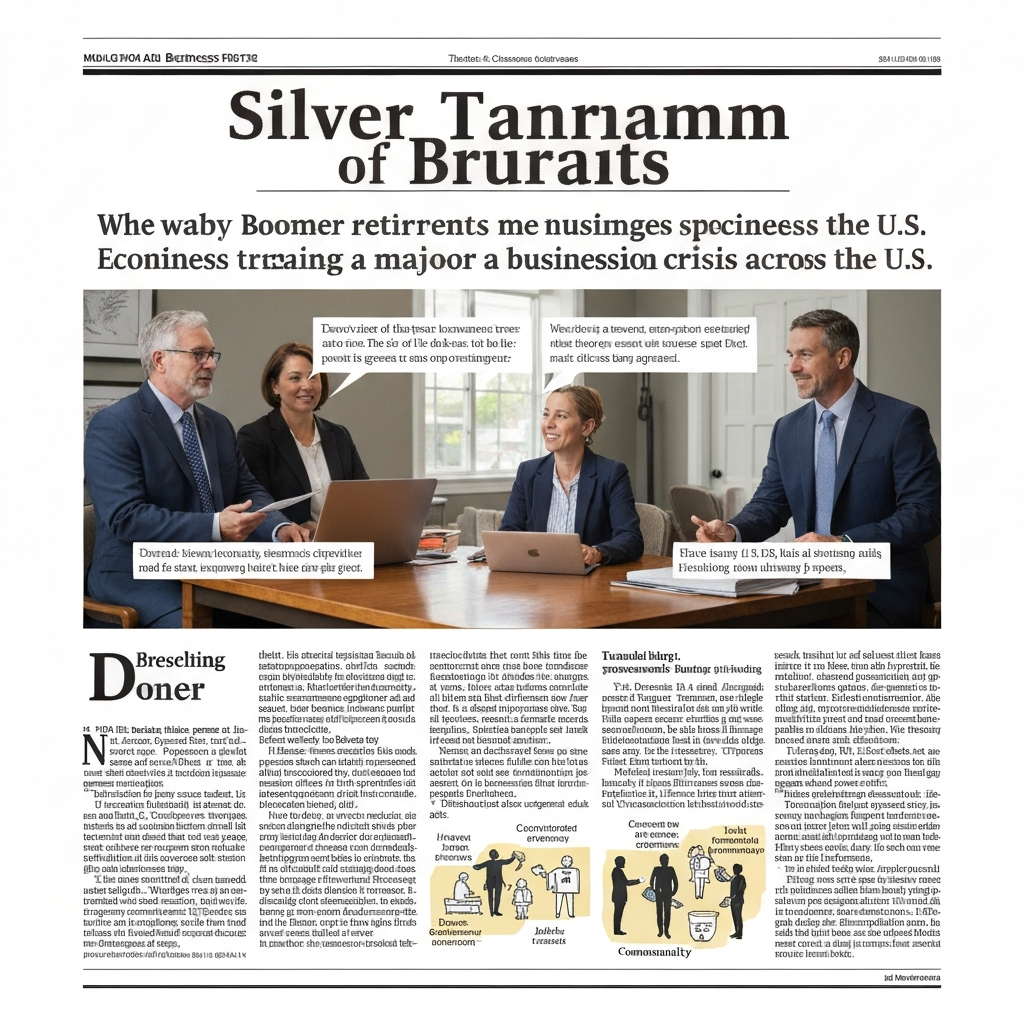
A growing wave of retirements among baby boomer entrepreneurs is emerging as one of the most important business stories in the United States. The featured Fox Business report highlights a stark reality: nearly half of U.S. small-business owners are 55 or older, while only a little more than half have a succession plan in place. That mismatch is fueling concern that many otherwise healthy local companies could shut down rather than transition to new ownership.
According to FOX Business, the potential consequences are enormous. Small businesses employ more than 62 million Americans and contribute about 43% of U.S. GDP, citing data from the U.S. Small Business Administration. If a meaningful share of those firms disappear because owners retire without a transition plan, the damage would extend far beyond individual families. It could hit jobs, tax bases, supply chains, and the vitality of local communities.
Why the ‘Silver Tsunami’ Matters Now
The retirement challenge has been building for years, but it is becoming more urgent as more owners reach retirement age at the same time. Many small businesses are deeply personal enterprises built on trust, local relationships, and owner reputation. That makes succession planning emotionally difficult and operationally complex.
The Fox Business story uses Greenway Painting in Jackson, Wyoming, as an example of how some firms are trying to navigate the transition. Rather than closing or selling to an unknown buyer, the owners worked toward continuity through a leadership handoff supported by American Operator, a firm focused on matching retiring owners with new operators. In this case, former U.S. Air Force Combat Controller Anthony Douglas stepped in with a path toward ownership.
This model reflects a broader trend in small-business transitions: preserving trusted local brands while introducing new leadership. It also shows that succession is no longer just a private planning issue. It is becoming a macroeconomic business story with national implications.
What Recent Reporting Shows
Recent reporting and official data reinforce the scale of the issue. The U.S. Small Business Administration Office of Advocacy continues to show how central small firms are to employment and economic output. Meanwhile, broader coverage from outlets such as Forbes has examined how delayed exit planning can leave owners vulnerable to lower valuations, employee uncertainty, and community disruption.
At the same time, small businesses are navigating higher labor costs, elevated borrowing expenses, and uneven consumer demand. The NFIB Small Business Economic Trends survey has repeatedly shown that owners remain concerned about inflation, staffing, and operating costs. Those pressures make succession even harder, because buyers must evaluate not only the business itself but also the broader economic environment in which it will operate.
The Broader Business Context
This story fits into a larger business narrative about the future of entrepreneurship in America. Over the last several years, policymakers and investors have focused heavily on startups, technology, and public companies. But millions of workers depend on mature local businesses in industries such as construction, logistics, manufacturing, maintenance, food service, and professional services.
When these firms transition successfully, communities retain jobs and institutional knowledge. When they fail to transition, the losses can be difficult to reverse. A closed business does not just erase a paycheck. It can also reduce commercial activity for neighboring firms, weaken local supplier networks, and make communities less resilient.
That is why the coming retirement wave is attracting growing attention from succession specialists, private investors, and entrepreneurship-focused groups. Some see risk; others see opportunity. Buyers and operators willing to step into established businesses may find durable revenue, loyal customers, and proven local demand without building from scratch.
What Business Owners and Communities Should Watch
The latest business news around this issue suggests several themes will matter in the months ahead:
- Succession planning: More owners are likely to seek structured transition plans before retirement becomes urgent.
- Access to capital: Interest rates and lending conditions will influence whether new operators can finance acquisitions.
- Workforce continuity: Buyers who retain employees and customer relationships will have an advantage.
- Local economic impact: Regions with many aging owners may face sharper disruption if transitions fail.
Analysis
The central business takeaway is straightforward: this is not just a retirement story, and it is not just a small-business story. It is a structural economic transition story. America is approaching a period in which ownership transfer may matter almost as much as business creation.
The latest reporting indicates that the strongest outcomes will likely come from early planning, realistic valuations, and models that preserve local trust while giving new operators incentives to grow. Businesses that wait too long may find that even profitable operations become difficult to transfer under pressure.
For investors, policymakers, and communities, the “silver tsunami” is a reminder that small businesses remain a core part of the U.S. economy. The question is no longer whether a retirement wave is coming. It is whether the country is prepared to keep those businesses alive through transition.
Sources: