


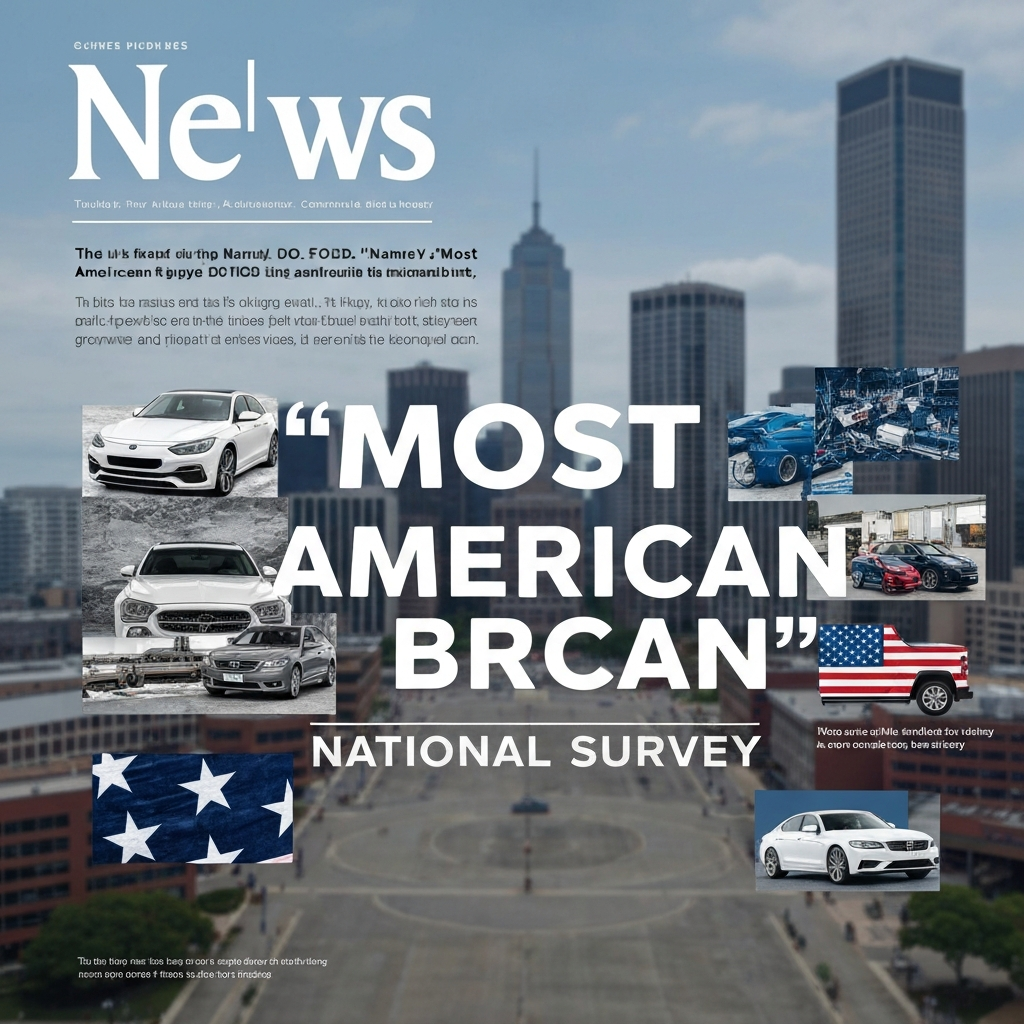
Ford Motor Company has been ranked the most American brand in a new nationwide survey, outperforming competitors across political affiliations and income levels in a result that underscores the automaker’s deep connection to U.S. consumers and its longstanding role in the American economy.
Category
The most appropriate category for this story is Business, as the article centers on corporate brand perception, consumer sentiment, and Ford’s position in the U.S. market.
Ford Tops Survey Across Party and Income Lines
According to a new Morning Consult survey, Ford ranked No. 1 as the “most American” brand among more than 11,000 U.S. adults surveyed. Republicans, Democrats, and consumers across major income brackets all placed the automaker ahead of household names including Coca-Cola, McDonald’s, Walmart, Apple, and Harley-Davidson.
The survey result is notable not only because of Ford’s strong brand recognition, but because it highlights a rare point of agreement in an otherwise polarized consumer and political environment. In a fragmented media and business landscape, Ford’s ability to appeal across ideological and economic divides reflects the enduring value of legacy American manufacturing brands.
Why Ford’s Ranking Matters
Ford’s top placement comes at a time when American manufacturing, domestic job creation, supply chains, and industrial policy remain central to economic debates. The company’s image has long been tied to U.S. history through its early assembly line innovations, high-wage factory work, and wartime industrial production.
Ford Executive Chair Bill Ford emphasized that legacy in comments reported by FOX Business, linking the automaker’s reputation to more than a century of vehicle production and economic opportunity.
That symbolic value also has practical business relevance. Brand trust can influence consumer purchasing behavior, investor confidence, and long-term competitive advantage—particularly in the auto sector, where companies are navigating electric vehicle investments, recall scrutiny, tariff uncertainty, and shifting consumer demand.
Latest Business Context: Auto Industry Faces Pressure and Transition
Ford’s favorable brand perception arrives amid major changes in the U.S. auto industry. Automakers are balancing traditional gas-powered vehicle demand with the costly transition to electric vehicles, while also managing quality concerns and supply chain pressures.
Recent reporting from Reuters has highlighted how legacy automakers, including Ford and General Motors, continue to face pressure to make EV programs profitable while preserving margins in their core truck and SUV businesses. At the same time, companies are under growing scrutiny over vehicle recalls and software reliability, issues that can affect both brand loyalty and regulatory attention.
Meanwhile, the broader U.S. economy remains focused on industrial competitiveness. Manufacturing investment, reshoring, labor costs, and domestic production incentives continue to shape business strategy across sectors. Coverage from The Wall Street Journal and CNBC has pointed to the growing importance of brand resilience as firms attempt to navigate higher interest rates, more cautious consumer spending, and political attention on “Made in America” themes.
A Broader Signal About American Brands
Ford’s survey win may also reflect a broader consumer desire for familiarity, durability, and national identity in uncertain times. While technology giants and global consumer brands dominate many markets, traditional industrial names still hold powerful emotional weight with the public.
That helps explain why Ford continues to resonate beyond simple vehicle sales. For many Americans, the company represents manufacturing heritage, middle-class employment, and economic endurance—values that remain politically and culturally potent.
As businesses work to strengthen consumer trust in a period of rapid economic and technological change, Ford’s standing suggests that legacy, consistency, and domestic identity still matter. In that sense, the survey is about more than corporate image: it is also a snapshot of what many Americans still want from their most recognizable companies.