


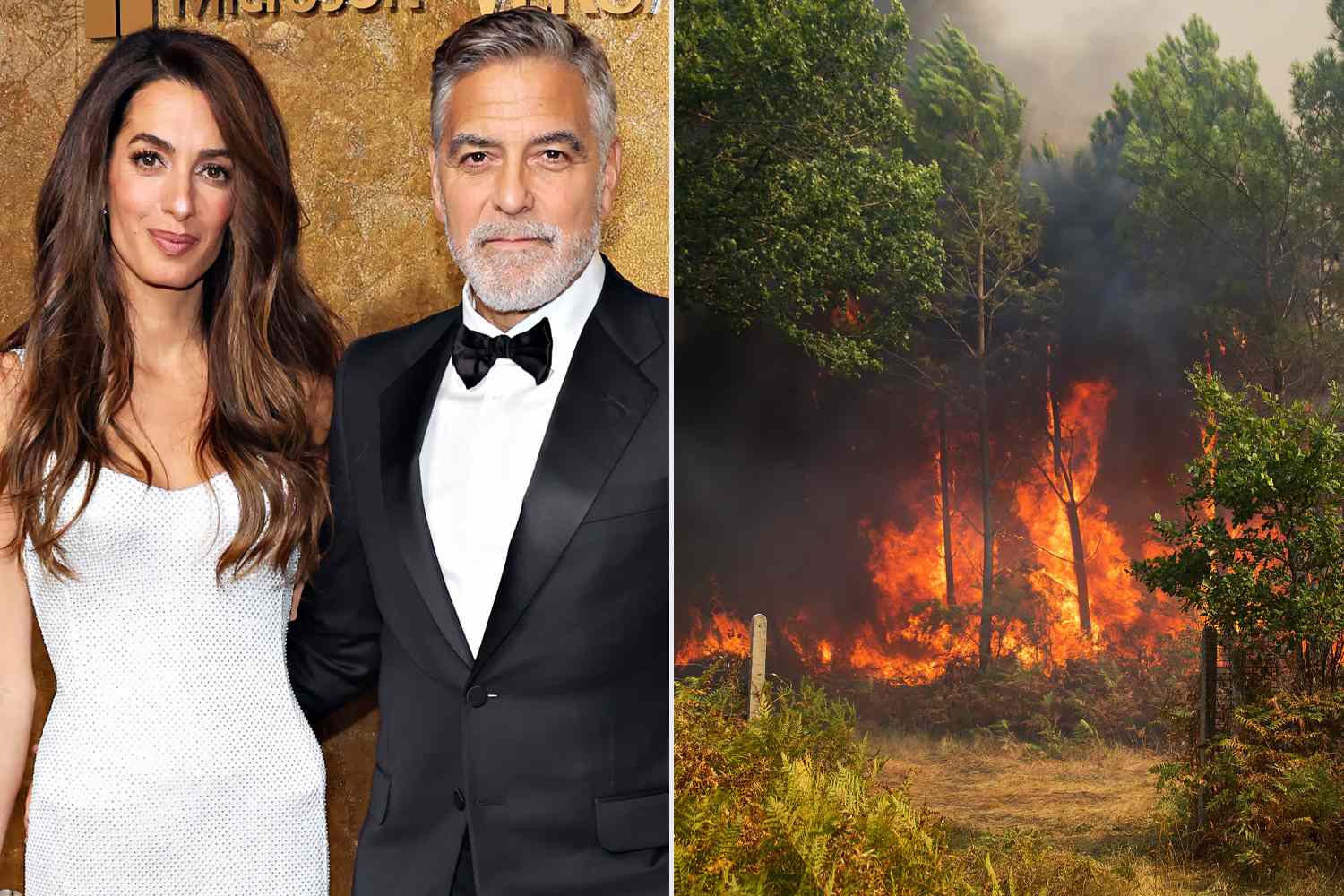
George Clooney, his wife Amal, and their 9-year-old twins have been forced to evacuate their farmhouse in Brignoles, a small historic town in southeastern France, as wildfires spread through the Provence-Alpes-Côte d’Azur region. In a letter to Brignoles mayor Didier Brémond, the Clooneys wrote that they were leaving the town and expressed uncertainty about whether their home would survive the fires, while pledging to help the community recover regardless of what happens to their property.
What happened
The family’s evacuation is part of a much larger emergency: wildfires across southern Europe have prompted mass evacuations and emergency responses in France and Spain. Reports indicate hundreds of thousands of people were forced from their homes as firelines expanded amid hot, dry conditions. Local authorities in southeastern France ordered thousands to leave the area around Brignoles, while authorities in other regions reported far larger evacuation tallies.
Sources and further reading: Entertainment Weekly coverage of the Clooneys’ evacuation (EW search: George Clooney Brignoles), Associated Press reporting on evacuations across France (AP search: France wildfires evacuations), and regional and international coverage at CNN (CNN search: France wildfires Clooney).
Why the story matters
At first glance this is a celebrity story: a prominent actor and his family displaced by a natural disaster. But it’s also a human story about community, climate risk, and the increasingly common reality of major evacuations in Europe during unusually severe heat and drought seasons. The Clooneys’ decision to live outside Hollywood — raising their children on a farm in France — adds a layer of cultural context often highlighted in interviews: George Clooney has described the farm life as offering his children a more grounded upbringing away from celebrity culture.
In their letter to the mayor the Clooneys emphasized two things: concern for the people of Brignoles and a commitment to helping the village recover. That pledge underscores a broader role high-profile residents can play in drawing attention and resources to communities hit by disaster.
Context: wildfires, climate, and evacuation scale
Southern Europe has experienced more intense wildfire seasons in recent years, tied to heatwaves, prolonged drought, and shifts in seasonal weather that create conditions favorable to large blazes. While each fire event has local causes and dynamics, scientists and emergency managers increasingly point to rising temperatures and changing precipitation patterns as factors that raise risk across the region. For background on the links between climate change and wildfire risk, see summaries by climate and environment agencies and reporting such as the European Copernicus climate service and major outlets’ climate desks (Esquire search: George Clooney, NYT search: France wildfires).
What the Clooneys said and why it resonates
In public comments and prior interviews, Clooney has explained that he and Amal chose to raise their twins in France in part to avoid the relentless spotlight of Hollywood. He’s spoken about farm life — driving a tractor, family dinners, and a slower pace — as contributing to a more normal childhood for their children.
“At this point we have no idea whether our beautiful home makes it through this terrible moment,” the Clooneys wrote in a letter to Brignoles’ mayor. “As we evacuate Brignoles we want to emphasise 2 things, first we hope you and the people of our city are safe and second that Amal and I are committed to making sure that whatever happens to our village, we are part of this community and we’ll be part of making it whole. We love Brignoles and our friends who live there.”
The combination of celebrity attention and authentic local ties can accelerate relief efforts and raise awareness — but it can also complicate coverage, drawing focus to a few high-profile households when many residents and communities are affected. Balanced reporting should highlight broader impacts while noting prominent stories that help focus public attention.
How readers can help or learn more
- Follow reliable, local emergency updates from French authorities (Ministry of the Interior and prefectures) for evacuation orders and safety guidance: interieur.gouv.fr.
- Support relief organizations assisting evacuees and fire-response efforts. French Red Cross and local charities coordinate shelter and immediate needs: Croix-Rouge française.
- Track evolving news from multiple outlets to understand both the human impact and the longer-term climate and land-management questions at stake: check aggregate coverage at AP, CNN, and major European news providers (AP, CNN).
Final thoughts
The Clooneys’ evacuation is a reminder that natural disasters do not discriminate by fame: celebrities live in and belong to the same towns and communities as their neighbors. Their public commitment to Brignoles’ recovery could help shine a light on the needs of that community and others facing the same peril. At the same time, the scale of the evacuations reported in France and Spain points to systemic challenges — from firefighting capacity and land management to climate adaptation — that will require sustained attention and investment.
For continuing coverage, follow local authorities and reputable news organizations, and consult international climate and disaster preparedness resources for context on how such events fit into broader regional and global trends.
Sources cited and further reading:
- Entertainment Weekly — coverage of Clooneys and evacuation: https://ew.com/
- Associated Press — reporting on France evacuations: https://apnews.com/
- CNN — regional wildfire and evacuation coverage: https://www.cnn.com/
- Esquire — past interviews with George Clooney about family life in France: https://www.esquire.com/
- New York Times — features on Clooney’s farm life and context: https://www.nytimes.com/