
Quick summary
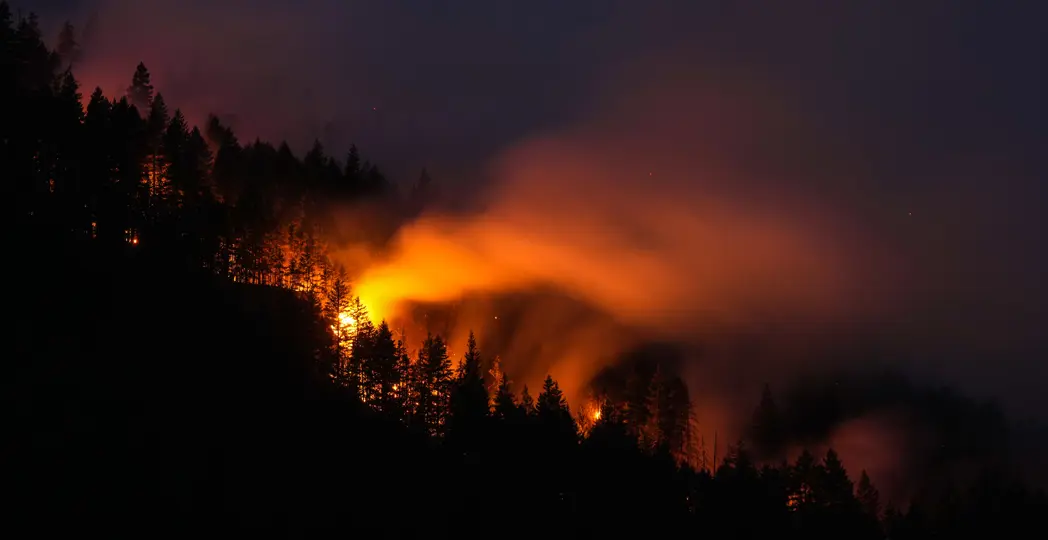
Dense smoke from ongoing wildfires in Canada has pushed south into large swaths of the United States, producing hazardous air quality for tens of millions of people across the Midwest, Northeast and Mid‑Atlantic. The plume has prompted widespread Air Quality Alerts and health warnings; meteorologists say smoke patterns will shift with changing winds and a forecast of rain and storms may bring some relief.
What’s happening now
Smoke produced by hundreds to thousands of active wildfires in Canada has been transported southward by prevailing winds, raising fine‑particle (PM2.5) concentrations over major population centers. Local and national air quality services have issued alerts advising that air quality is unhealthy — in some areas even for healthy adults — and particularly dangerous for people with respiratory or cardiovascular conditions, children and older adults. Forecasts indicate the worst impacts will persist for several days as the smoke layer drifts, though incoming rain and storms could help wash particles out of the atmosphere.
Why this matters for health
- Wildfire smoke contains PM2.5 — particles small enough to enter deep into the lungs and the bloodstream — which can worsen asthma, COPD, bronchitis and trigger cardiovascular events. (See guidance from the EPA and CDC.)
- Short‑term exposure to high PM2.5 levels increases respiratory symptoms and can exacerbate chronic conditions; long‑term and repeated exposures are linked to greater risks of heart disease and other illnesses.
- Public‑health agencies recommend minimizing outdoor activity during heavy smoke, using indoor air filtration, and seeking medical care for concerning symptoms such as difficulty breathing, chest pain or fainting.
Where the smoke is coming from and how far it can travel
The smoke originates from active wildfires across parts of Canada, where thousands of fires have burned large areas this season. Strong, large‑scale weather patterns — including heat domes and high‑pressure systems — control the transport pathways for smoke, often carrying it hundreds to thousands of miles. Satellite monitoring and air‑quality modeling are used to track the plume in near real time.
Practical steps you can take
- Check local Air Quality Index (AQI) and alerts at AirNow (fire.airnow.gov) or your state/local air‑quality agency. When AQI for PM2.5 is in the “Unhealthy” or worse range, limit outdoor exertion.
- Keep windows and doors closed when smoke is heavy. Use central HVAC systems on recirculate or run a portable HEPA air cleaner in frequently used rooms.
- If you must be outdoors, consider an N95/KF94 respirator (fit‑tested where possible) rather than cloth/surgical masks — these offer better protection against PM2.5.
- People with heart or lung disease, older adults, children, and pregnant people should be especially cautious and seek medical advice if symptoms worsen.
- Follow local health department guidance about school and outdoor activity closures.
Longer‑term context: climate, fire seasons and air quality
Scientists link increasing wildfire activity and longer fire seasons to rising temperatures, changes in precipitation, earlier snowmelt and other climate influences. These shifts increase the probability of heavy smoke events and extend the months during which communities may face degraded air quality. Satellite records and air‑quality research show that wildfire smoke has, in some regions, eroded earlier gains in air quality despite regulatory improvements in other pollution sources.
Outlook
Meteorologists will watch changing winds, frontal systems and precipitation to predict where the smoke plume will move next. Rain and storm systems tend to clear smoke locally, but new fires and persistent dry conditions can renew impacts. With months still left in typical wildfire seasons, additional smoke events remain possible.
Sources and further reading
- EPA — Wildfire Smoke and Your Patients’ Health: https://www.epa.gov/wildfire-smoke-course
- CDC — Wildfire Smoke: https://www.cdc.gov/disasters/wildfires/smoke.html
- AirNow — Fire and Smoke Map (current AQI and forecasts): https://fire.airnow.gov/
- Environment and Climate Change Canada — Current wildfire information: https://www.canada.ca/en/environment-climate-change/services/wildfire-status.html
- NASA FIRMS — Satellite fire observations and smoke tracking: https://firms.modaps.eosdis.nasa.gov/
- NOAA National Weather Service — Local forecasts and air quality statements: https://www.weather.gov/
- IPCC — Climate change and extreme events overview: https://www.ipcc.ch/
If you are in an area affected by smoke, monitor local emergency and public‑health guidance and take precautions to protect vulnerable household members. Persistent smoke episodes call for community planning on air filtration, sheltering of high‑risk populations and stronger wildfire mitigation strategies as part of broader climate adaptation and public‑health preparedness.