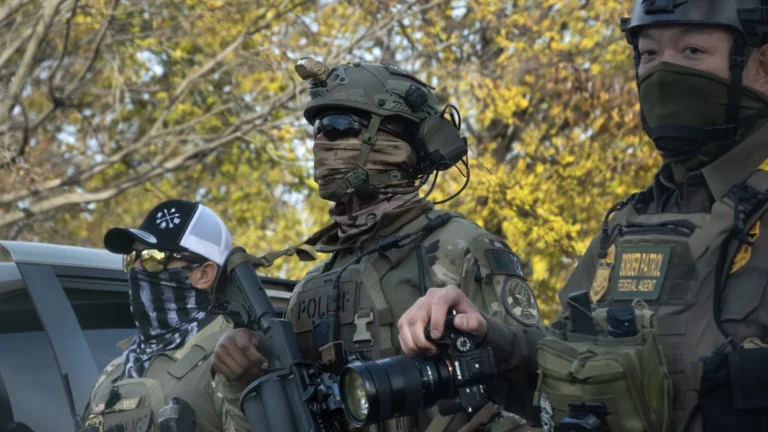



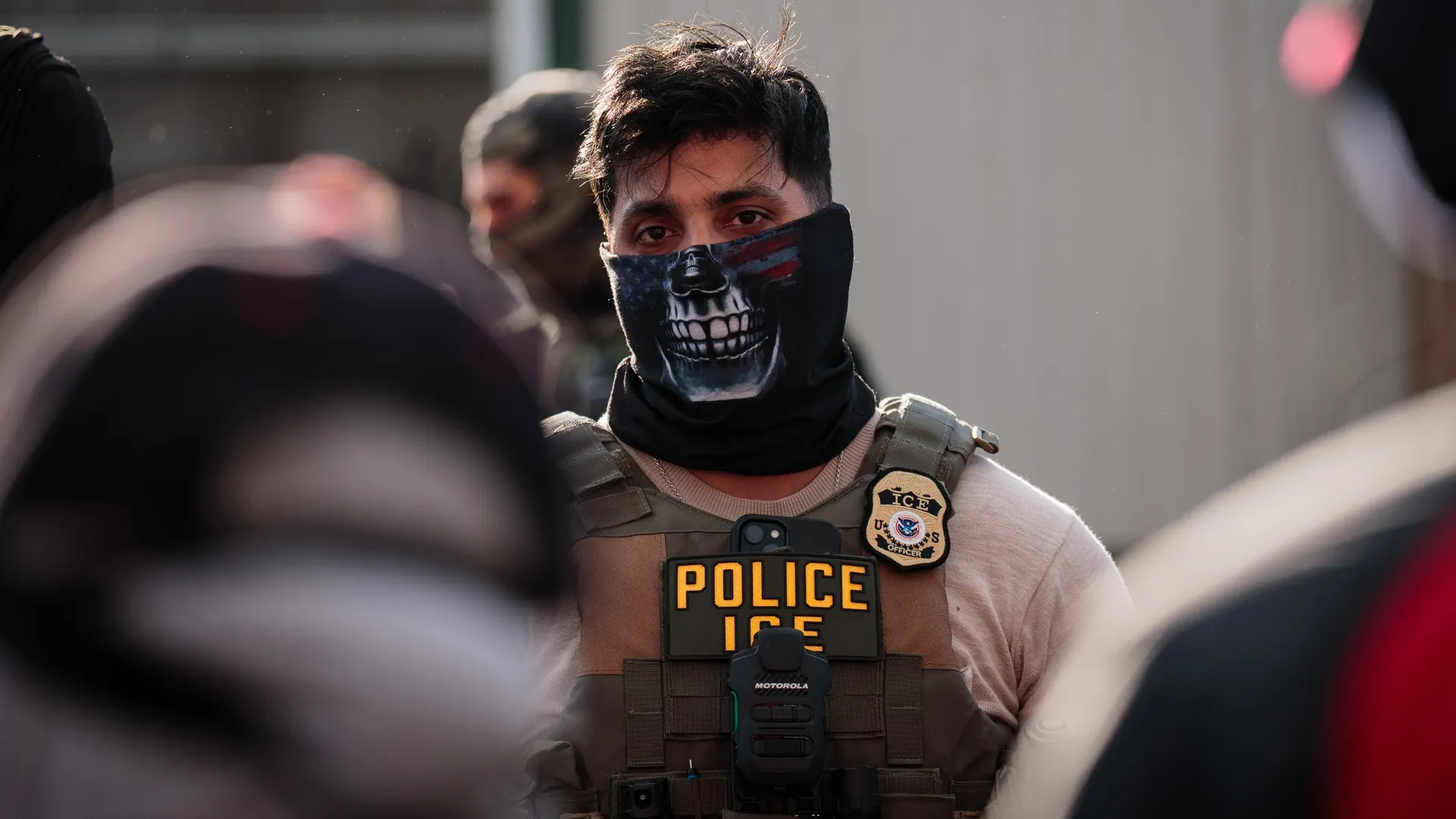
On Monday a federal judge in the Northern District of New York temporarily enjoined a New York state law that would have barred federal officers from wearing face coverings and required federal agents to display physical identification while carrying out their duties. The order halts enforcement of the state measure while a constitutional challenge moves through the courts.
What the court said
In her written opinion, District Judge Mae A. D’Agostino concluded that the Supremacy Clause of the U.S. Constitution prevents New York from imposing its own uniform or appearance rules on federal law enforcement acting pursuant to federal authority. As Judge D’Agostino wrote, “New York cannot impose its own uniform requirements on federal agents simply because it disagrees with how the federal government is exercising its authority.” The injunction preserves the status quo while the legal dispute continues.
How this fits into a broader pattern
The New York decision follows similar rulings and legal challenges in other states. In recent months, courts have considered substantially similar state and local ordinances that were enacted after the federal government expanded immigration enforcement operations. Supporters of the state laws argued they were needed to ensure accountability and public safety by making federal agents identifiable; the federal government countered that the requirements interfere with federal operations and are preempted by federal law.
Immediate implications
- Enforcement pause: The injunction prevents New York officials from enforcing the face-covering and ID provisions while the case proceeds.
- Federal-state tensions: The ruling underscores the limits on state authority to regulate federal officers and highlights recurring tensions between state governments and federal immigration and law enforcement policies.
- Likely appeal path: The injunction and opinion are likely to be appealed to the U.S. Court of Appeals for the Second Circuit, and the dispute could ultimately reach the U.S. Supreme Court if broader constitutional questions remain unresolved.
Legal background and constitutional issues
At the heart of the dispute is federal preemption under the Supremacy Clause, which provides that federal law supersedes conflicting state law. When a state law stands as an obstacle to the execution of federal law or directly regulates federal actors in a way that conflicts with federal interests, courts frequently find the state measure preempted. Courts also assess whether a state law discriminates against the federal government or intrudes into areas where federal uniformity is essential to effective national operations.
Political and practical context
The contested laws were passed after an expansion of federal immigration enforcement operations that prompted concerns among state officials and civil liberties advocates. Proponents of the state measures framed them as transparency and safety measures: they said masks or unmarked appearances by federal agents made it hard for local residents to identify officers and raised accountability concerns. The federal government argued that these local rules impede federal officers’ ability to perform their duties and could compromise officer safety and operational effectiveness.
What to watch next
Key developments to monitor include: whether the government seeks an immediate stay of the injunction, the briefing schedule and disposition in the Second Circuit, and any broader rulings that clarify the reach of state authority over federal actors. The case will also be watched as a test of how courts balance state-level accountability measures against federal supremacy in contexts ranging from immigration enforcement to other federal law enforcement activities.
Further reading and primary sources
For direct access to reporting and official materials, consult these sources:
- Reuters — national and legal reporting on federal-state litigation.
- AP News — continuing coverage of federal court rulings and state responses.
- The New York Times — analysis of the political and social context surrounding federal enforcement and state measures.
- Official court documents (Northern District of New York) and the published opinion by District Judge Mae A. D’Agostino — consult the court docket for the case for filings and the injunction order.
Note: This article is based on the court opinion and contemporaneous reporting of the injunction halting New York’s face-covering and identification requirements for federal officers. Readers seeking primary documents should review the official court opinion and docket filings for the most authoritative record.