



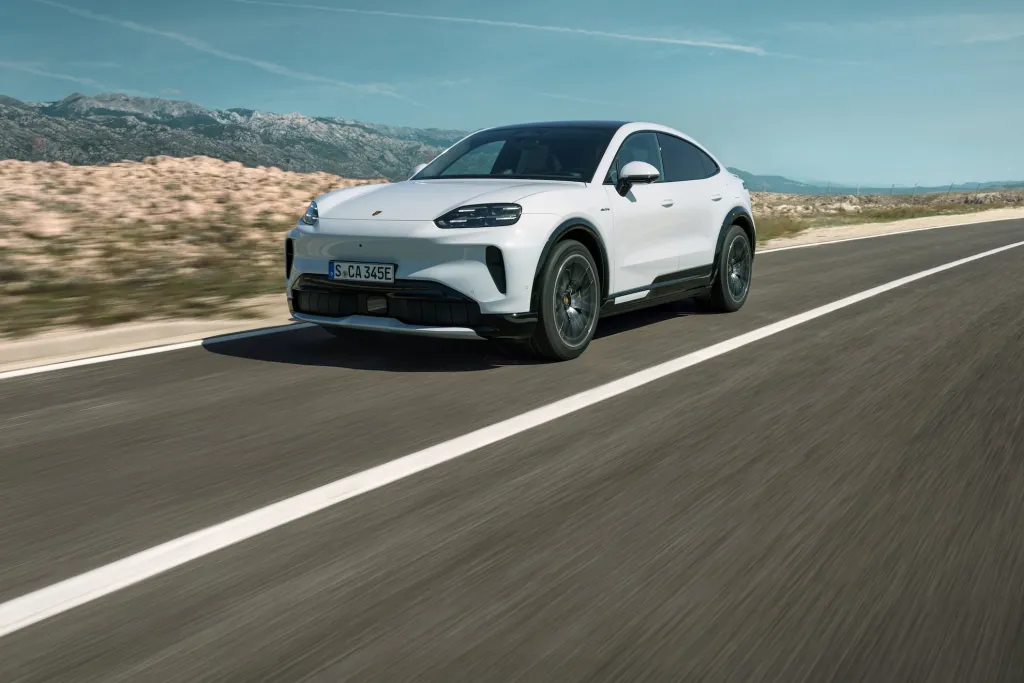
Porsche’s decision to launch an all-electric Cayenne Coupe in late summer is the latest sign that premium automakers are accelerating their shift toward battery-powered vehicles, even as the broader EV market enters a more complicated phase marked by pricing pressure, uneven demand, and intensifying competition.
According to TechCrunch, Porsche plans to begin selling the Cayenne Coupe Electric in late summer, expanding an EV strategy that already includes the Taycan and reflects the company’s effort to electrify some of its best-known nameplates. The move is notable because the Cayenne has long been one of Porsche’s most commercially important vehicles, helping the brand balance performance credentials with the global popularity of SUVs.
Porsche’s EV push comes at a pivotal time
The timing matters. Across the auto industry, carmakers are still investing billions into electrification, but they are doing so in a market that has become far more demanding than it appeared just a few years ago. Consumers now have more EV choices, but many are also weighing high interest rates, charging infrastructure concerns, and questions about resale value.
Recent reporting from Reuters has shown that automakers around the world are recalibrating EV timelines, balancing long-term regulatory and climate goals with short-term market realities. Some brands have delayed certain battery-electric plans, while others have leaned more heavily on hybrids as a transitional strategy. Porsche’s choice to keep pushing forward with a marquee electric SUV suggests the company believes the premium segment may remain more resilient than the mass market.
Why the Cayenne matters so much
The Cayenne is not just another model in Porsche’s catalog. Since its debut, it has been central to the company’s financial strength, broadening Porsche’s customer base and helping fund the development of sports cars that define the brand. Turning that vehicle into an electric offering is therefore more than a product update; it is a strategic test of whether Porsche can bring loyal buyers into the EV era without diluting the performance identity that made the badge valuable in the first place.
That challenge is bigger than Porsche alone. Legacy automakers are all trying to answer a similar question: how do you electrify an iconic product while preserving the emotional appeal that customers associate with it? In Porsche’s case, that means the electric Cayenne Coupe will likely be judged not just on range and charging speeds, but on whether it feels unmistakably like a Porsche.
The luxury EV race is getting crowded
Porsche is entering a premium EV market that is becoming increasingly competitive. Tesla remains a defining force in electric vehicles, but traditional luxury brands and newer entrants are pressing harder into the segment. Companies such as BMW, Mercedes-Benz, Audi, and Lucid have all been expanding their electrified lineups, while Chinese automakers continue to raise pressure globally with rapid product development and aggressive pricing.
Industry data and market analysis from organizations like the International Energy Agency continue to point to long-term growth in EV adoption, even though regional growth rates are uneven. In the United States and Europe, adoption is still rising, but buyers have become more selective. For premium brands, that means design, software, charging experience, and brand trust may matter as much as raw specs.
More than a vehicle launch
The electric Cayenne Coupe also reflects a broader technology story. Modern EVs are increasingly defined by software architecture, battery management, advanced driver assistance systems, and integration with charging ecosystems. In that sense, launches like this are as much about tech strategy as automotive design.
Tech-focused coverage from TechCrunch has consistently highlighted how the transportation sector now sits at the intersection of manufacturing, climate policy, energy infrastructure, and software development. Porsche’s latest launch fits squarely into that trend. The success of the Cayenne Coupe Electric will depend not only on Porsche engineering, but also on battery supply chains, charging access, and how quickly EV-supporting infrastructure continues to mature.
What this signals for the industry
For consumers, Porsche’s move is another indication that electrification is no longer confined to small city cars or niche luxury sedans. It is now reshaping some of the industry’s most profitable and recognizable segments, including performance SUVs. For investors and competitors, the message is that major automakers still see EVs as the center of the industry’s future, even if the road there is proving bumpier than expected.
Porsche’s all-electric Cayenne Coupe may arrive as a single model announcement, but it carries broader significance. If it succeeds, it could strengthen the case that luxury buyers are ready to embrace electric performance at scale. If it struggles, it may reinforce the argument that even elite brands must move more carefully through the EV transition.
Either way, this is not just a story about one new vehicle. It is a snapshot of where the automotive and technology industries are heading next.
Sources: