




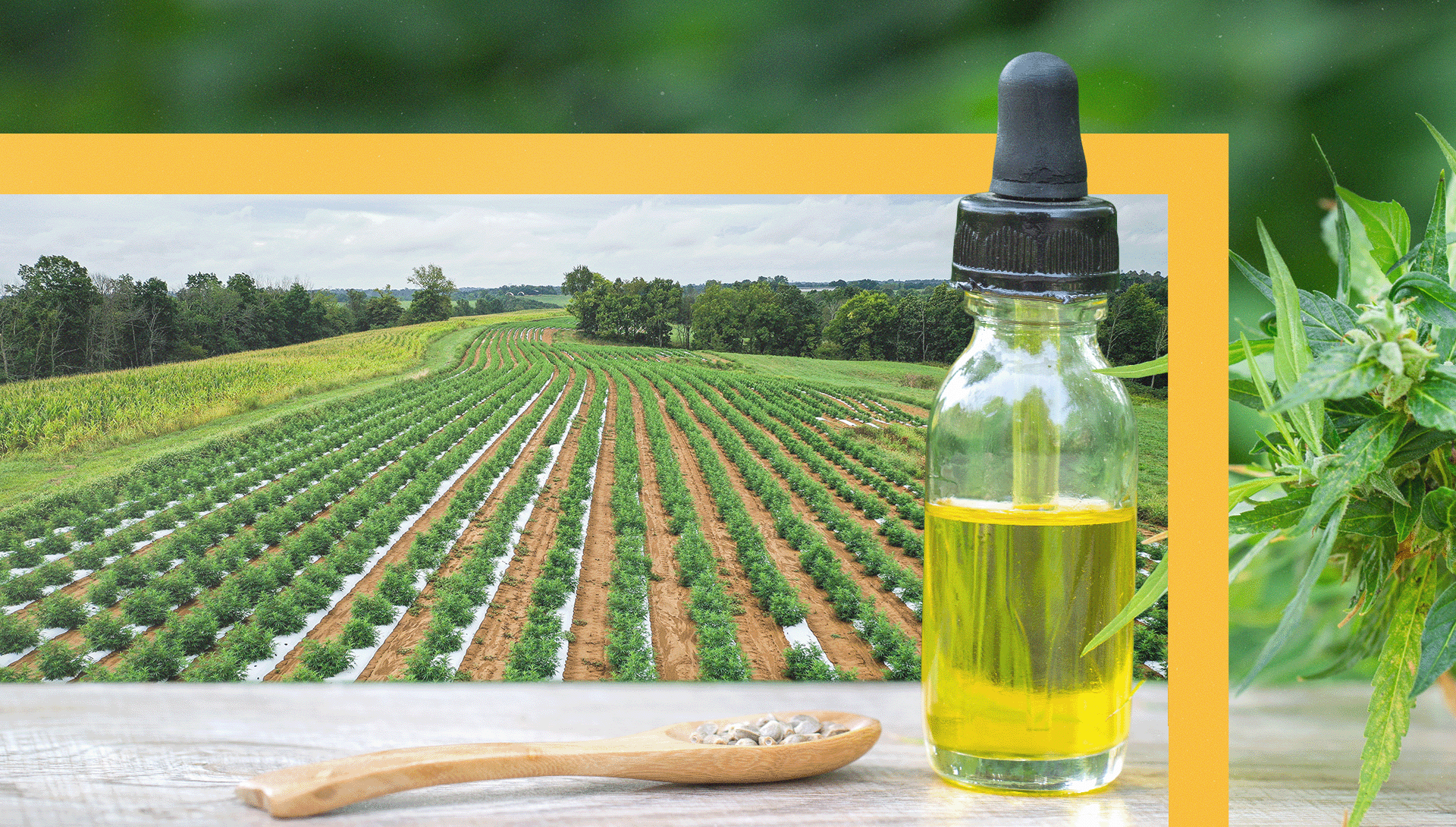
New state and federal restrictions on hemp are reshaping a once-booming cannabis-adjacent industry and putting growers, manufacturers and retailers under renewed pressure. The clearest category fit for this story is Business, because the core focus is the economic fallout of regulation: shuttered companies, lost jobs, declining licenses and uncertainty across the supply chain.
Hemp crackdown deepens pressure on an already fragile market
Across the United States, hemp businesses are confronting a more restrictive legal environment just as many were trying to stabilize after years of oversupply, falling prices and shifting consumer demand. Straight Arrow News reports that new limits in states including Ohio, Texas and New Jersey, alongside tighter federal standards in a late-2025 budget bill, are threatening the viability of hemp-derived products that became popular after the 2018 Farm Bill opened the door to broader cultivation and sales. The report highlights business closures, layoffs and a sharp decline in cultivation and processing licenses as evidence that the sector is entering another painful reset. Source
The new rules aim to crack down on intoxicating hemp products such as delta-8 and other THC variants often sold outside licensed marijuana dispensaries. Supporters of tighter rules argue these products have been too accessible, sometimes marketed in ways that appeal to minors, and sold with inconsistent oversight. Critics in the industry counter that lawmakers are responding with broad prohibitions instead of targeted regulation, potentially wiping out legitimate hemp operators along with questionable sellers.
What the latest reporting shows
The broader national picture supports the sense of strain in the hemp market. The U.S. Department of Agriculture has documented volatility in hemp acreage and production value since the crop’s legalization expansion, reflecting both initial enthusiasm and the steep corrections that followed. USDA data has shown major swings in planted area and farm-gate value as the market struggled to match production with durable demand. USDA NASS
Meanwhile, state governments and federal lawmakers have continued debating how hemp-derived cannabinoids should be regulated. On the federal side, hemp policy remains entangled with Farm Bill negotiations and appropriations language, creating uncertainty for producers and retailers trying to plan inventory, investment and hiring. Congressional materials and bill summaries show that definitions around total THC and intoxicating derivatives have become central to the policy fight. Congress.gov
Public health agencies have also fueled calls for stricter controls. The U.S. Food and Drug Administration has repeatedly warned that many CBD and hemp-derived cannabinoid products have not been evaluated for safe use, and the agency has raised concerns about manufacturing standards, contamination and misleading marketing. FDA Those warnings have strengthened the political case for crackdowns, especially where intoxicating hemp products are sold in convenience stores, smoke shops and gas stations rather than tightly regulated dispensaries.
Why this is a business story first
Although the debate touches politics and public health, the real engine of this story is commercial disruption. The hemp sector is dealing with a familiar but brutal combination: regulatory whiplash, price compression and shrinking access to mainstream retail channels. That is why Business is the strongest category choice.
In practical terms, the consequences are immediate. Businesses that invested in processing, beverages, wellness products and farm operations under one set of assumptions are now being forced to adapt to another. Some may pivot toward non-intoxicating industrial hemp uses such as fiber, textiles, paper, bioplastics or construction materials. Others may not survive long enough to reinvent themselves.
There is also a competitive subtext. In several states, licensed marijuana operators have backed stronger hemp restrictions, arguing they protect consumers and minors. Hemp advocates see that as market protectionism dressed up as safety policy. Both claims can be true at once: some products likely did need clearer oversight, and some incumbents also stand to benefit when loosely regulated competitors disappear.
The latest business angle: regulated cannabis keeps expanding while hemp operators get squeezed
One of the most important recent developments in the wider cannabis economy is that regulated marijuana markets continue to mature even as hemp businesses face heavier restrictions. That split matters. In states with licensed adult-use or medical cannabis systems, capital, shelf space and political attention are increasingly flowing toward regulated dispensary channels instead of gray-area hemp sellers.
For example, state-regulated cannabis sales remain a major economic force in large markets such as California, Michigan and Illinois, despite pricing pressure and taxation concerns. Industry trackers including MJBizDaily have reported that operators are focusing on compliance, scale and brand durability while lawmakers revisit how intoxicating hemp products fit into the competitive landscape. At the same time, policy specialists at institutions such as Rice University’s Baker Institute have noted that hemp-derived intoxicants emerged partly because federal and state law left a gap between hemp legalization and marijuana prohibition frameworks. Baker Institute
The result is a two-speed cannabis economy. One lane is highly regulated, taxed and politically entrenched. The other is fragmented, entrepreneurial and vulnerable to abrupt legal changes. Small hemp farmers and independent retailers are disproportionately exposed because they often lack the legal budgets, lobbying infrastructure and capital reserves of larger cannabis companies.
What happens next
The next chapter will likely be determined by three forces. First, Congress could still revise or delay parts of federal hemp restrictions through future legislative negotiations. Second, states will continue acting on their own, meaning the hemp map may become even more inconsistent from one jurisdiction to another. Third, consumer demand will keep shifting toward whatever products remain both legal and easy to access.
That means the surviving hemp businesses may increasingly concentrate in lower-THC wellness products, industrial applications and tightly tested formulations that can withstand scrutiny. The era of fast-growth, loosely defined intoxicating hemp commerce appears to be ending. What replaces it will depend on whether policymakers choose durable regulation or continue governing the market through piecemeal bans.
For small operators, that distinction is everything. A stable rulebook can be expensive, but it is still easier to build around than uncertainty. Right now, uncertainty is the most powerful force in the hemp business.
Sources
Straight Arrow News – Small farmers face a new era of hemp prohibition
USDA National Agricultural Statistics Service – Hemp Production and Disposition
Congress.gov – Federal legislative materials on hemp and Farm Bill policy
FDA – Consumer update on cannabis and cannabis-derived products
MJBizDaily – Cannabis business reporting
Rice University Baker Institute – Policy research on cannabis and hemp