



Researchers have captured a little-seen phenomenon in which trees appear to emit faint electrical flashes as thunderstorms build overhead, offering a striking new view of how plants interact with the atmosphere.
Storm-charged skies reveal a hidden glow
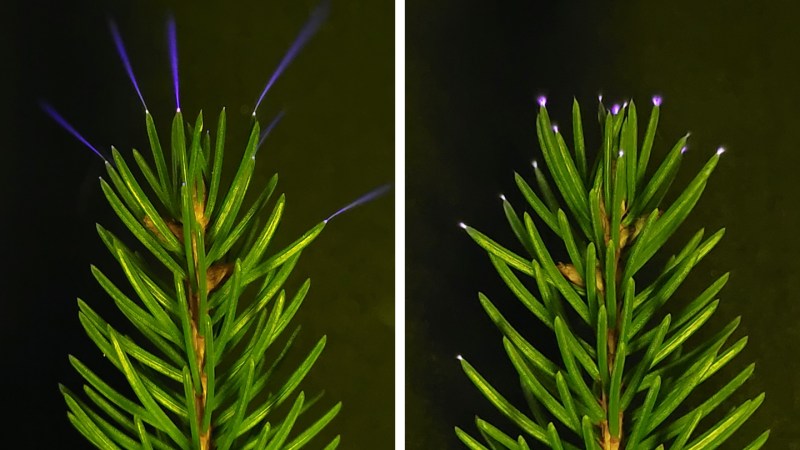
A new report from Science News describes how ultraviolet-sensitive cameras recorded subtle flashes from leaves and branches as electrical charge accumulated in the air before and during thunderstorms. The observations suggest that tree canopies may briefly glow with corona discharges — small releases of electricity caused by strong electric fields in the atmosphere.
These flashes are not the same as lightning. Instead, they appear to be localized electrical discharges from pointed plant surfaces such as leaf tips, needles, or branches when the surrounding electric field becomes intense enough. Scientists have long known that sharp objects can concentrate electric charge, but the imaging offers an unusually direct glimpse of that process happening in living trees under natural storm conditions.
Why the finding matters
The discovery could improve scientific understanding of how electricity moves between the atmosphere and the biosphere. Thunderstorms create powerful electric fields, and objects on the ground — including trees — can respond in ways that are still not fully understood. Studying these interactions may help researchers refine models of storm electrification, forest-atmosphere exchanges, and even lightning risk.
The work also adds to a growing body of research showing that plants are more dynamically connected to their environments than they may appear. Trees are not just passive features in stormy landscapes; their structure and shape may influence how electric charge accumulates and dissipates near the ground.
Broader context in science news
The report lands amid continued scientific interest in extreme weather, atmospheric physics, and ecosystem responses to changing environmental conditions. As researchers deploy more sensitive sensors and imaging systems in the field, hidden phenomena — from electrical activity in plants to microscopic airborne interactions — are becoming easier to document in real time.
Recent coverage across science outlets has increasingly emphasized the importance of observing nature directly with advanced tools. High-speed cameras, ultraviolet imaging, and remote sensing technologies are helping scientists detect processes that would otherwise remain invisible to the human eye. In this case, that means turning thunderstorms into a natural laboratory for understanding the electrical behavior of trees.
What comes next
Further study will likely focus on whether different species produce different discharge patterns, how humidity and storm intensity affect the flashes, and whether these electrical signatures could someday be used in storm monitoring or lightning prediction research. Scientists may also investigate whether similar effects occur in crops, shrubs, and other vegetation in electrically active weather.
For now, the images offer a reminder that even familiar landscapes can behave in extraordinary ways under the right conditions. During a thunderstorm, the tops of trees may do more than sway in the wind — they may briefly sparkle with electricity.
Sources: