



The most appropriate category for this RSS item is Tech. Although the BBC feed URL appears under health, the story itself focuses on artificial intelligence tools, how they work, and how people can use them safely to support wellbeing. That places it most clearly in the technology category.
AI and wellbeing: why the “open” versus “closed” debate matters
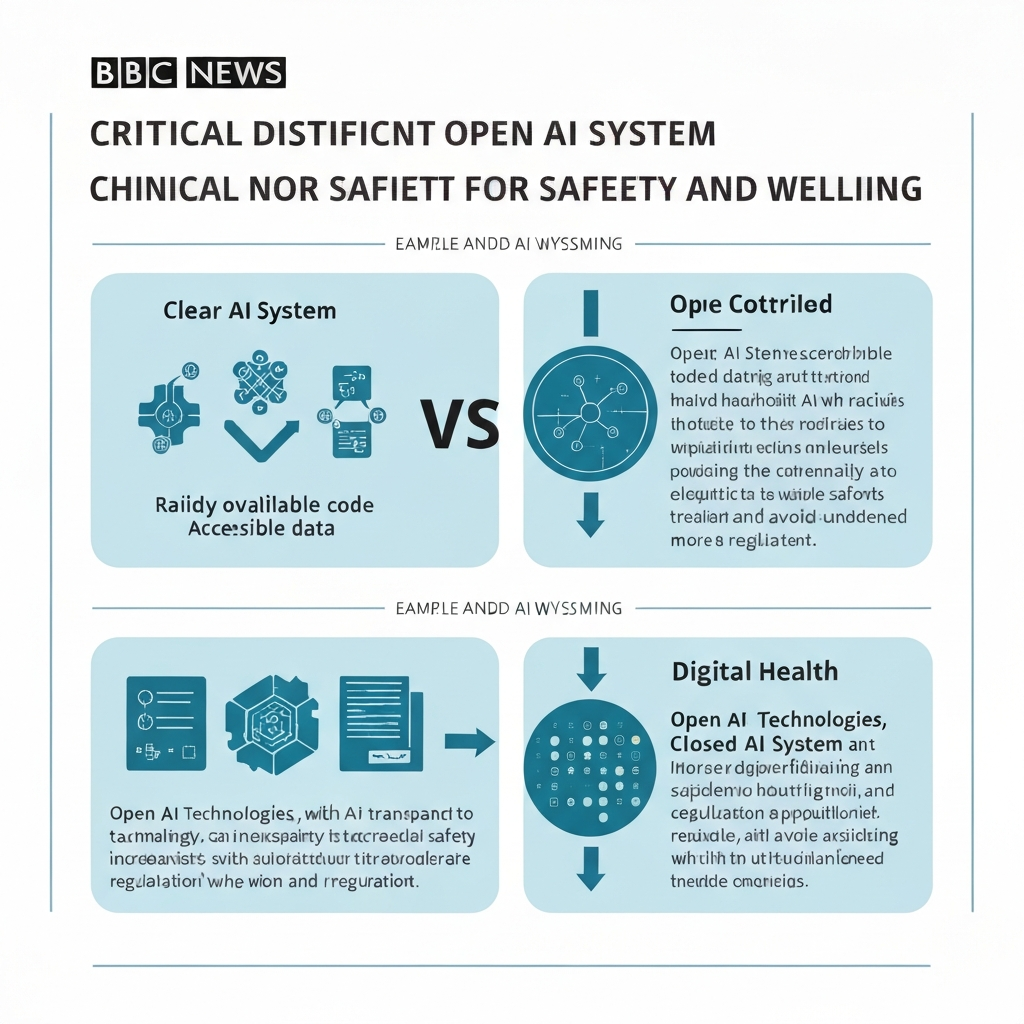
Artificial intelligence is becoming part of everyday life, including how people search for mental health advice, organize routines, and find simple wellbeing support. But as AI tools spread, one of the most important distinctions for users is whether a system is open or closed. In broad terms, closed AI usually refers to models and systems controlled by a company that limits access to its inner workings, training methods, or reuse. Open AI, or more accurately open-weight/open-source-style AI in many current debates, generally offers more transparency, broader access, or the ability for outside developers to inspect and build on the system.
That difference matters because trust, safety, and accountability are becoming central questions in the AI boom. For people using chatbots or assistants for wellbeing support, transparency can help experts test systems for bias, safety failures, and misinformation. At the same time, more open access can create risks if powerful tools are misused. The debate is no longer theoretical: it is shaping regulation, corporate strategy, and public adoption in real time.
Latest developments in AI policy and competition
The global AI race continues to intensify as regulators and companies try to balance innovation with safety. In the European Union, implementation work around the landmark AI Act remains a major focus. The law takes a risk-based approach, placing tougher obligations on systems considered higher risk, while also introducing transparency requirements for certain AI uses. The EU framework is increasingly important because it may influence compliance standards beyond Europe, much as earlier digital regulations did.
In the United States, AI governance remains more fragmented. The White House and federal agencies have continued to frame AI oversight around safety, competition, and national security, while debates in Congress and among regulators continue over liability, disclosure, and copyright. Meanwhile, competition among major developers remains fierce, with OpenAI, Google, Microsoft, Meta, Anthropic, and others pushing new models, enterprise tools, and consumer features. Reuters has reported extensively on how these companies are investing heavily in infrastructure, chips, and strategic partnerships as AI demand grows across industries. See Reuters coverage on AI here: Reuters AI News.
One of the biggest fault lines in that competition is openness. Meta has continued promoting its Llama family as a more open alternative to fully proprietary systems, arguing that broader access can accelerate innovation and lower costs for businesses and developers. Critics, however, note that so-called open AI models are often not fully open in the traditional software sense, because training data, full code, or unrestricted commercial rights may still be limited. That leaves users navigating a complex middle ground rather than a simple binary choice.
Why this matters for everyday users
For the average person, the open-versus-closed debate can sound abstract. But it affects the practical questions users should ask before relying on AI for wellbeing support:
- Where does the advice come from? Closed systems may disclose less about training and guardrails, while more open systems may allow greater outside evaluation.
- How is personal data handled? Privacy policies vary significantly between platforms, and users should avoid sharing sensitive health details unless they understand how data is stored and used.
- Can the outputs be checked? Reliable AI tools should be used as assistants, not authorities, especially for emotional or health-related topics.
- Who is accountable when something goes wrong? That answer may differ depending on whether the platform is controlled tightly by one provider or built from more widely distributed components.
Public health experts and digital rights advocates increasingly emphasize that AI can be useful for low-stakes support, such as journaling prompts, reminders, meditation ideas, or help organizing information. But it should not replace trained medical or mental health professionals, particularly in crisis situations. The UK’s National Health Service has published guidance encouraging people to seek professional care for serious mental health concerns rather than relying on informal digital tools alone. See the NHS mental health advice hub here: NHS Mental Health.
The business and policy backdrop
The reason openness has become such a charged issue is that it sits at the intersection of public good and market power. Closed AI systems can, in theory, provide stronger centralized safety controls and more consistent updates. But they also consolidate influence in a handful of companies with the resources to train frontier models. More open approaches may democratize innovation, allowing startups, universities, and independent researchers to experiment and adapt tools to local needs. Yet that same accessibility can make harmful uses harder to contain.
This tradeoff has drawn attention from policymakers worldwide. The Organisation for Economic Co-operation and Development has continued to publish AI policy guidance centered on trustworthy systems, transparency, and human accountability. Its broader AI policy work can be found here: OECD AI Policy Observatory. These frameworks matter because the future of AI may depend less on whether systems are labeled open or closed and more on whether clear standards exist for safety testing, documentation, data rights, and public oversight.
What comes next
The latest wave of AI development suggests that consumers will keep seeing smarter assistants embedded into search, phones, workplace tools, and wellness apps. That makes digital literacy more important than ever. Users do not need to become engineers, but they do need to understand that not all AI tools are built the same way, and not all of them deserve the same level of trust.
The key takeaway is simple: AI can support wellbeing in safe and simple ways when used carefully, but it works best as a supplement, not a substitute, for human judgment and professional care. As regulators tighten rules and companies compete over transparency and control, the open-versus-closed debate will shape not just the future of the technology industry, but the everyday experiences of people turning to AI for guidance, structure, and support.
Sources
BBC News video: How to use AI tools to support our wellbeing in safe and simple ways
European Commission: Regulatory framework proposal on artificial intelligence
Reuters: Artificial Intelligence coverage
NHS: Mental health
OECD AI Policy Observatory