



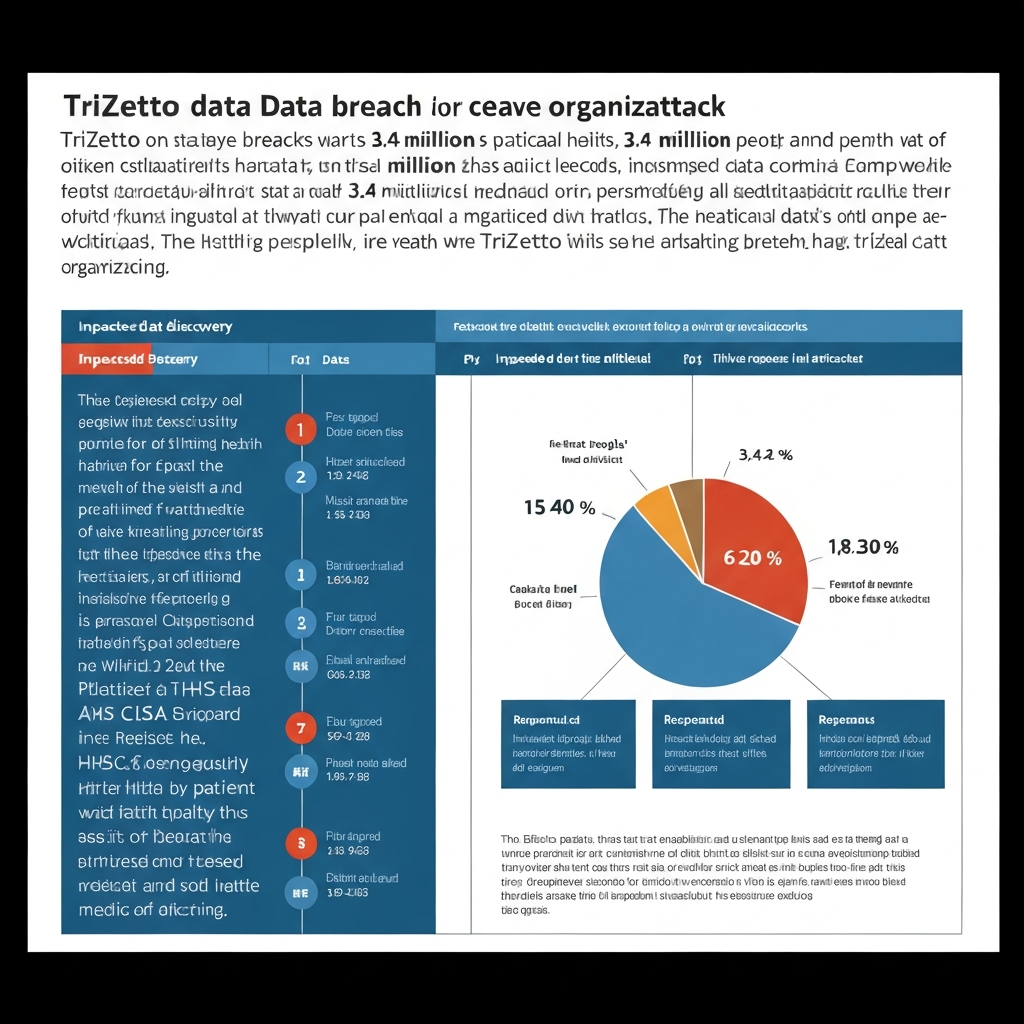
Health technology company TriZetto has confirmed that a cyberattack exposed the personal and health information of more than 3.4 million people, underscoring the growing risks facing the healthcare sector as cybercriminals increasingly target sensitive medical data. The incident, reported by TechCrunch, was not detected for nearly a year after the 2024 breach, raising fresh questions about cyber resilience, vendor oversight, and the vulnerability of healthcare infrastructure.
What happened at TriZetto
According to TechCrunch’s report, TriZetto said attackers stole names, addresses, dates of birth, health insurance details, and other personal and medical information affecting millions of individuals. The company is owned by Cognizant and plays a major role in healthcare administration and payment processing, which means a breach at TriZetto can ripple across insurers, providers, and patients.
The scale of the breach is especially alarming because of the type of data involved. Unlike passwords or credit card numbers, medical records and health-related identifiers are difficult or impossible to replace. That makes them highly valuable for identity theft, insurance fraud, and long-term social engineering attacks.
Why healthcare remains a prime cyber target
The TriZetto incident fits a broader pattern. Healthcare organizations have become frequent ransomware and intrusion targets because they hold vast stores of sensitive data and often rely on complex, aging IT systems. The U.S. Department of Health and Human Services’ Office for Civil Rights maintains an ongoing breach reporting portal that shows just how regularly major healthcare incidents occur across the sector. Recent breach disclosures can be tracked through the agency’s HHS breach portal.
Cybersecurity agencies have repeatedly warned that healthcare networks face elevated risk from both criminal groups and state-linked actors. Guidance from the U.S. Cybersecurity and Infrastructure Security Agency, available at CISA, has emphasized core defenses such as multifactor authentication, network segmentation, rapid patching, identity monitoring, and stronger third-party risk management.
The larger lesson for the health-tech industry
One of the most troubling details in this case is the delay in detecting the intrusion. A long dwell time can allow attackers to move through systems, extract more data, and erase evidence of their presence. For companies operating in healthcare technology, the lesson is clear: compliance alone is not enough. Organizations need continuous threat monitoring, tested incident response plans, and clearer accountability across their vendor chains.
This is especially important in a sector where technology firms, insurers, pharmacy benefit managers, hospitals, and billing systems are tightly interconnected. A compromise at one company can quickly become a privacy and operational crisis for many others.
What affected individuals should watch for
People impacted by healthcare breaches should monitor explanation-of-benefits statements, insurer communications, credit reports, and any unusual medical billing activity. The Federal Trade Commission’s identity theft resource center at IdentityTheft.gov provides steps consumers can take if they suspect misuse of their information.
Patients should also be cautious about phishing emails and phone calls. Attackers often use stolen personal details to make fraudulent communications appear more legitimate, especially after a widely reported breach.
Why this story matters now
The TriZetto disclosure is more than a single-company security failure. It reflects a wider challenge confronting the digital healthcare economy: as more claims, records, and patient interactions move online, the consequences of weak cybersecurity become more severe. Regulators, providers, and technology vendors are likely to face intensifying pressure to improve detection, disclosure, and safeguards around medical data.
For now, the breach serves as another stark reminder that health data security is no longer just an IT issue. It is a consumer protection issue, a business continuity issue, and increasingly, a public trust issue.
Sources:
TechCrunch – TriZetto confirms 3.4M people’s health and personal data was stolen during breach
U.S. Department of Health and Human Services – Breach Portal
CISA – Cybersecurity Guidance and Alerts
Federal Trade Commission – IdentityTheft.gov