




Category selected: World
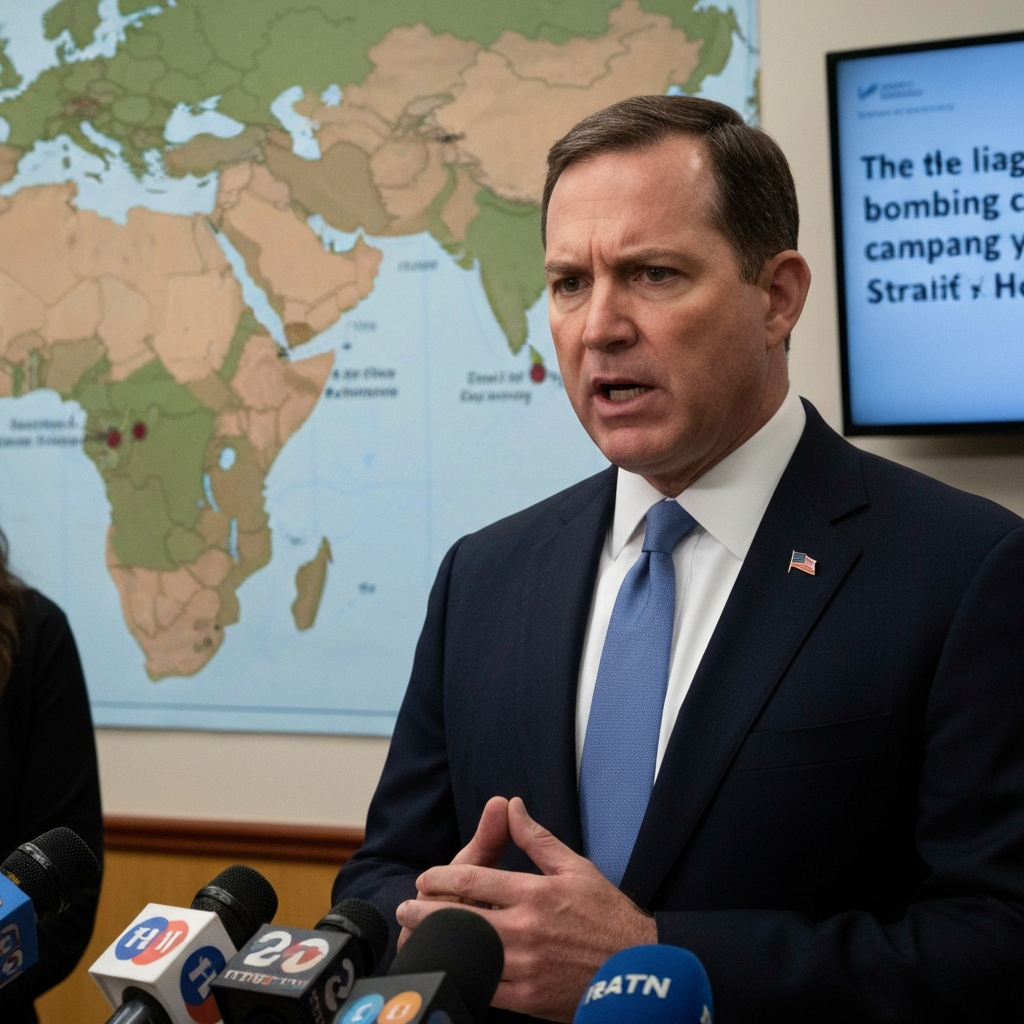
U.S.-Iran tensions escalated sharply after Treasury Secretary Scott Bessent said the United States was preparing its largest bombing campaign yet against Iranian missile infrastructure while also moving to stabilize commercial shipping through the Strait of Hormuz. The development matters far beyond the battlefield: the strait is one of the world’s most important energy chokepoints, and any sustained disruption could hit oil flows, insurance markets, shipping costs, and broader geopolitical stability.
Why this story belongs in World news
Although Bessent’s remarks touched on economics, the core of the story is an international security crisis involving Iran, U.S. military operations, maritime transit, and possible spillover effects across the Middle East and global energy markets. That makes World the best fit rather than Business or Politics.
What happened
According to the RSS item provided, Bessent said Iran was under pressure on both military and economic fronts. He said the U.S. planned an intensified bombing campaign targeting missile launchers and missile-production facilities, while also accusing Iran of trying to create economic disruption after failing to gain advantage militarily. He further pointed to the administration’s efforts to support insured commercial passage through the Strait of Hormuz and said naval escorts could be used if necessary.
The reported policy response is significant because roughly a fifth of global petroleum liquids consumption typically moves through the Strait of Hormuz, according to the U.S. Energy Information Administration. When insurers pull back and shippers hesitate, even without a formal closure, the market impact can be immediate.
The latest broader picture
The Strait of Hormuz has long been one of the world’s most sensitive maritime corridors, linking Gulf producers to global markets. The Encyclopaedia Britannica notes that the waterway is strategically indispensable because it connects the Persian Gulf with the Gulf of Oman and the Arabian Sea. In recent years, analysts at the Center for Strategic and International Studies and the Reuters Middle East desk have repeatedly warned that military escalation involving Iran can rapidly translate into shipping disruptions, tanker rerouting, and heightened risk premiums.
That helps explain why maritime insurance has become central to the latest phase of the crisis. Even before an actual blockade, underwriters can raise rates or withdraw coverage entirely if they judge the threat environment too dangerous. In practical terms, that means energy exporters, commodity traders, and shipping firms face much higher operating costs. Those costs can eventually ripple outward into fuel prices and supply-chain inflation.
Why shipping insurance suddenly matters so much
Bessent’s comments about insurance line up with a familiar wartime dynamic: markets react not only to physical damage, but to uncertainty. The Lloyd’s List shipping publication has frequently documented how conflict-zone insurance premiums can surge when naval threats intensify. If insurers retreat, governments often face pressure to backstop maritime trade directly or indirectly, whether through guarantees, reinsurance mechanisms, or naval protection.
The RSS item references a plan by the U.S. International Development Finance Corporation to provide up to $20 billion in insurance support for vessels transiting the Gulf. If fully implemented, such a move would represent an effort to keep commercial traffic moving by replacing private-sector confidence with public-sector guarantees. That would not eliminate military risk, but it could reduce panic in trade lanes that are essential for global energy security.
Potential consequences for oil and gas markets
The market significance of Hormuz is difficult to overstate. The International Energy Agency and the Organization of the Petroleum Exporting Countries both track how dependent global supply remains on Gulf exports. If shippers believe the route is unsafe, the result may not be a total shutdown, but even partial disruption can tighten supply expectations and raise prices. Liquefied natural gas cargoes are also at risk, particularly for Asian importers that depend on Gulf-linked shipments.
For governments already managing inflation concerns, that is a dangerous scenario. Higher shipping and insurance costs can feed into energy prices, industrial input costs, and consumer fuel bills. In other words, a regional military crisis can quickly become a worldwide economic problem.
What to watch next
There are four immediate indicators to monitor:
- U.S. and allied naval posture: Any visible escort operations or expanded deployments would signal concern that commercial shipping needs active military protection.
- Insurance and freight rates: Sudden jumps would suggest the private market sees prolonged danger even if officials insist the route remains open.
- Iranian signaling: Tehran may avoid a formal closure while still applying selective pressure to vessels linked to U.S. or Israeli interests.
- Energy market reaction: Oil and LNG benchmarks will show whether traders believe the disruption is temporary or structural.
Analysis: the military and economic fronts are now inseparable
The most important takeaway from this story is that modern conflict in the Gulf no longer unfolds only through missiles, aircraft, and naval maneuvers. It also runs through insurers, shipping registries, commodity desks, and global expectations. Bessent’s remarks reflect that dual-track reality: military pressure is being paired with an attempt to reassure markets that the flow of trade can continue.
Whether that strategy works depends on credibility. If the U.S. can protect shipping and restore confidence, the economic shock may remain contained. If not, the consequences will likely spread far beyond Iran and the United States, affecting Europe, Asia, and energy-importing countries worldwide. That is why this is not just another Washington statement or another market story. It is a test of whether a regional confrontation can be prevented from becoming a broader global economic crisis.
Sources
- Fox Business: Treasury Secretary Bessent forecasts largest bombing campaign yet, says Iran attempting ‘economic chaos’
- U.S. Energy Information Administration: World Oil Transit Chokepoints
- Britannica: Strait of Hormuz
- CSIS: Strait of Hormuz and the Geopolitics of Oil
- Reuters Middle East coverage
- International Energy Agency: Oil 2024
- OPEC official site
- Lloyd’s List