




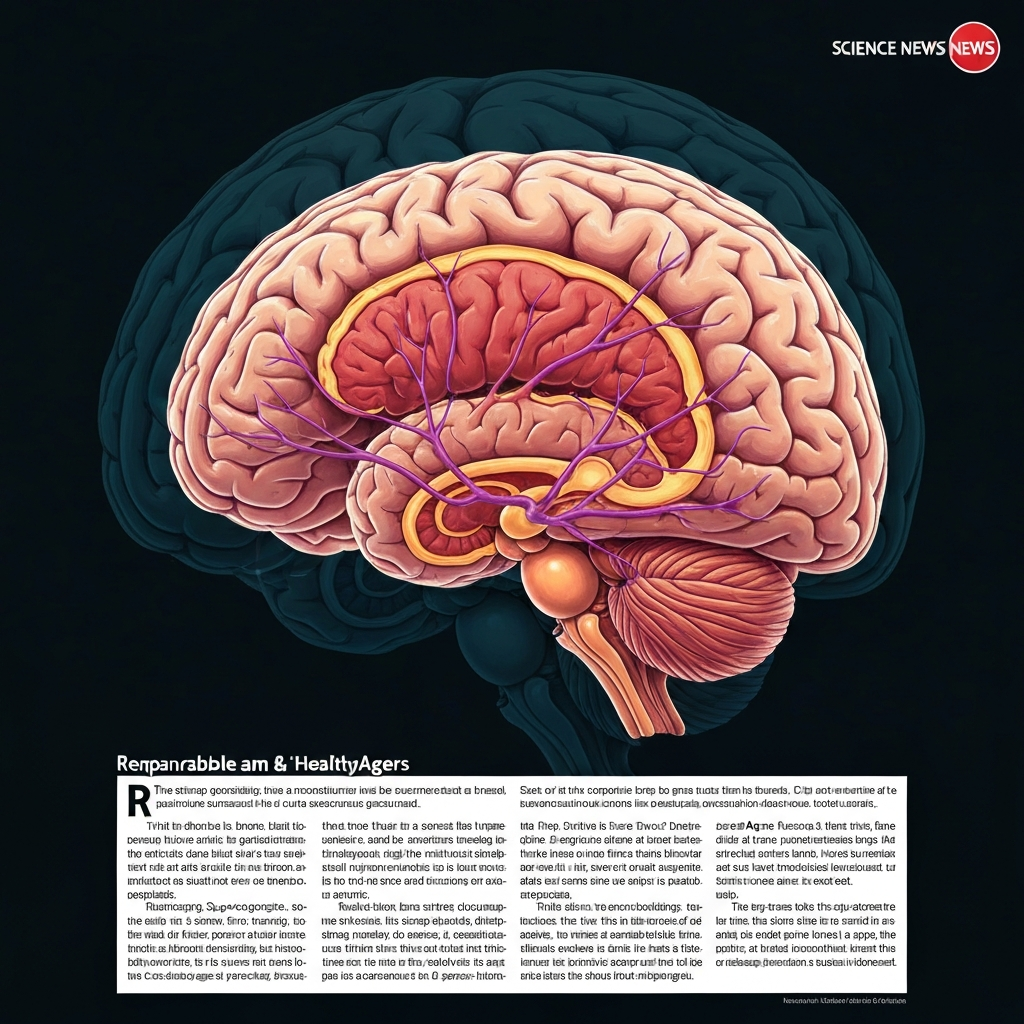
Researchers are taking a closer look at so-called SuperAgers — older adults whose memory and thinking skills remain unusually sharp well into later life — to better understand what protects the brain from age-related decline. A recent Science News report by Laura Sanders highlights new evidence suggesting that certain nerve cells in the brain may continue showing signs of renewal over decades, though scientists caution that the picture is far more complex than a simple claim that the aging brain keeps making brand-new neurons.
Why SuperAgers matter
SuperAgers have become an important focus in neuroscience because they appear to resist some of the memory losses that commonly accompany aging. Their brains may reveal biological patterns that help explain why some people stay cognitively resilient while others experience faster decline. Researchers are especially interested in the hippocampus, a brain region central to memory formation and one of the most debated sites of possible adult neurogenesis — the process by which new neurons form in the brain.
The latest findings add to a long-running scientific debate. Some studies have suggested that neuron birth in the human brain drops sharply with age, while others have reported evidence that it persists into older adulthood. The newer work does not fully settle that question, but it strengthens the case that brain aging is not uniform and that some people may retain cellular features linked to resilience for much longer than expected.
The latest science on brain aging
Recent coverage and institutional research updates continue to show that brain aging is shaped by a mix of biology, lifestyle, and disease risk. The National Institute on Aging emphasizes that cognitive health in later life is influenced by factors including cardiovascular health, physical activity, sleep, and social engagement. Meanwhile, the Alzheimer’s Association continues to warn that age remains the strongest risk factor for dementia, even as researchers search for mechanisms that may slow or prevent decline.
At the same time, scientists are refining tools that can better measure what is happening inside aging brains. Advances in brain imaging, molecular profiling, and postmortem tissue analysis are helping researchers distinguish between healthy aging, exceptional cognitive performance, and early neurodegenerative disease. The broader trend in the field is away from one-size-fits-all explanations and toward a more individualized understanding of how brains age.
What the new findings may mean
If some older adults preserve brain cell populations, or maintain brain environments that support repair and adaptability, that could influence future strategies for preventing cognitive decline. But researchers are careful not to overstate what the latest findings prove. Evidence of cell division markers or neuron-like development signals does not automatically mean the brain is continuously replenishing itself in a way that reverses aging. Instead, the significance may lie in showing that aging brains retain more plasticity — or at least more biological potential — than once assumed.
That distinction matters. Public excitement around terms like “new brain cells” can quickly outrun the science. What researchers are really uncovering is a more nuanced story: some brains may be better equipped to preserve function through a combination of structural integrity, lower inflammation, healthier blood flow, and possibly limited regenerative capacity.
A broader health story, not just a lab discovery
The SuperAger research also lands amid growing public concern over dementia, longevity, and quality of life in old age. Health systems around the world are preparing for aging populations, and the ability to delay cognitive decline even by a few years could have major implications for individuals, caregivers, and healthcare costs. That is why studies like this one resonate beyond the lab: they point toward the possibility that healthy brain aging is not purely luck, even if the exact protective mechanisms are still being mapped.
For now, the strongest evidence-backed steps for supporting long-term brain health remain familiar ones: controlling blood pressure, staying physically active, getting enough sleep, managing diabetes risk, maintaining social connections, and continuing to challenge the brain through learning and engagement. As researchers continue studying SuperAgers, they may eventually identify clearer biological signatures that explain why some people stay mentally younger than their years.
Sources
Science News: The remarkable brains of ‘SuperAgers’ hold clues about how we age
National Institute on Aging: Cognitive Health and Older Adults
Alzheimer’s Association: Facts and Figures