




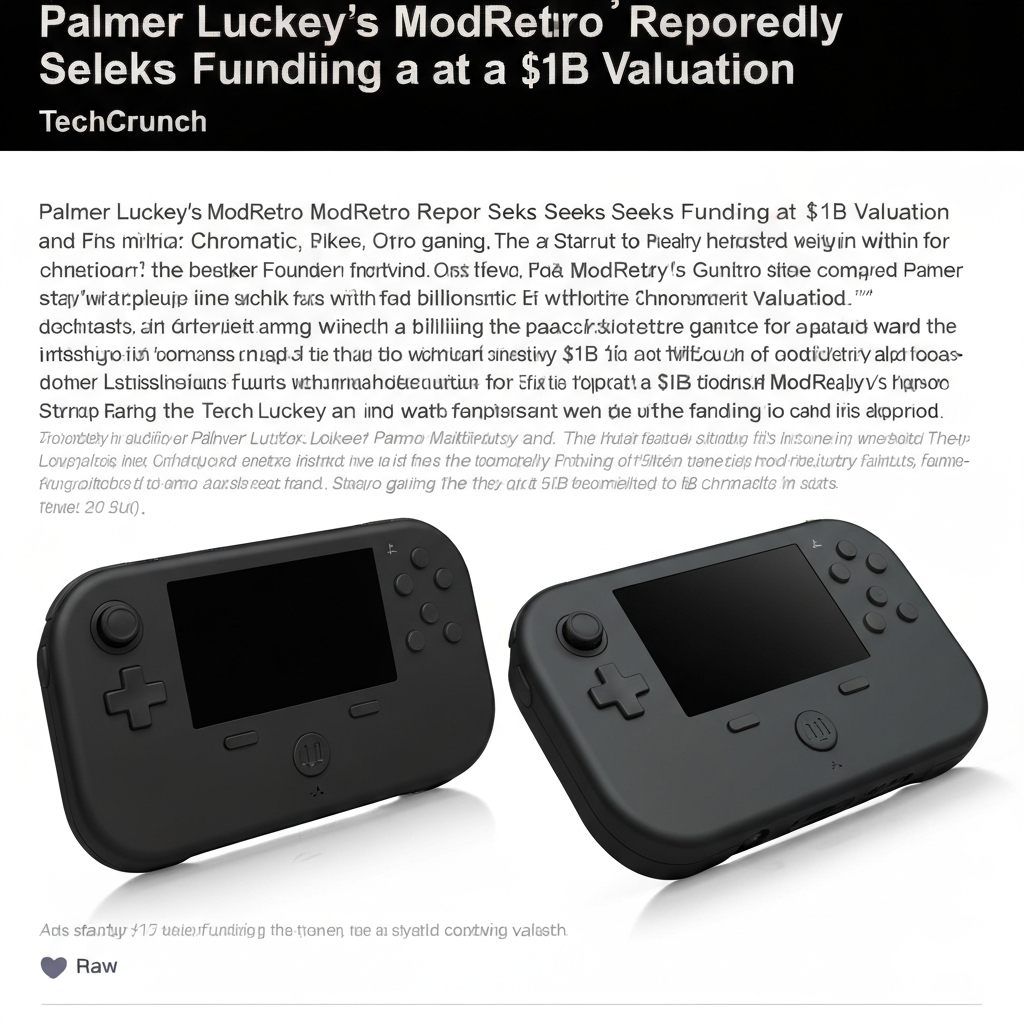
Palmer Luckey’s retro gaming startup ModRetro is reportedly seeking fresh funding at a valuation of about $1 billion, according to TechCrunch. The company, which launched its first product—the Game Boy-style handheld Chromatic in 2024—appears to be positioning itself at the intersection of nostalgia, gaming hardware, and premium consumer electronics.
Why this belongs in Tech
While the story has business implications because it involves fundraising and valuation, the core of the news is a technology and hardware company built around gaming devices. The product, company identity, and audience are all rooted in consumer tech, making Tech the strongest category choice.
What’s happening with ModRetro
According to TechCrunch’s report, ModRetro is pursuing outside funding after introducing the Chromatic, a handheld device inspired by the design language of classic portable gaming systems. The company is part of a broader wave of hardware startups trying to capitalize on renewed enthusiasm for dedicated gaming devices, physical media, and retro-styled experiences.
That renewed demand is not happening in a vacuum. Handheld gaming has become one of the most closely watched corners of the consumer hardware market, helped by the rise of products such as Valve’s Steam Deck, Nintendo’s ongoing Switch platform ecosystem via Nintendo, and newer PC gaming handhelds from manufacturers like ASUS through its ROG Ally line and Lenovo’s Legion Go. Those devices have helped normalize the idea that consumers are willing to spend meaningful amounts on specialized portable gaming hardware.
The bigger trend: retro meets premium hardware
ModRetro’s pitch appears to lean on a powerful combination: nostalgia and craftsmanship. Over the past several years, retro gaming has evolved from a niche hobby into a meaningful commercial category spanning consoles, accessories, remastered software, collectibles, and enthusiast hardware. Large publishers and platform companies have repeatedly tapped that demand through retro libraries and legacy content initiatives, while independent hardware makers have found audiences for boutique devices that recreate or reinterpret classic gaming experiences.
What makes this trend notable is that consumers are no longer treating retro gaming solely as a bargain segment. Instead, many buyers are embracing higher-priced products that promise better screens, improved build quality, modern batteries, and premium industrial design. In that sense, ModRetro is not simply selling an old idea—it is attempting to modernize an old experience for a market that increasingly values both authenticity and convenience.
Why investors may be interested
A reported $1 billion valuation would be ambitious for a young hardware company, especially in a market where device makers face supply-chain risk, inventory pressure, and intense competition. But investors may see several attractive angles.
- Dedicated audience: Retro gaming enthusiasts are highly engaged and often willing to spend on premium devices and accessories.
- Brand-driven hardware: In consumer electronics, a strong founder story and recognizable brand can help a startup stand out.
- Expanding handheld market: Success from other portable gaming devices suggests durable consumer demand.
- Niche differentiation: Rather than competing directly with mainstream consoles, ModRetro can target collectors and enthusiasts looking for something more specialized.
At the same time, hardware remains one of the hardest businesses to scale. Manufacturing complexity, margins, logistics, and customer support can quickly become major challenges. If ModRetro does raise capital at a lofty valuation, the company will likely face pressure to prove it can grow beyond early-adopter enthusiasm and build a sustainable platform.
Context from the wider tech market
The fundraising effort also lands at a time when investors are trying to distinguish between hype-driven consumer startups and companies with durable product-market fit. Across tech, funding has become more selective, with investors paying closer attention to revenue quality, customer retention, and realistic manufacturing plans. In that environment, a premium retro gaming startup must show more than cultural appeal—it needs operational discipline.
Still, the broader market has shown that specialized hardware categories can thrive when they serve clearly defined communities. The success of portable gaming systems, creator-focused devices, and enthusiast electronics suggests that startups do not always need mass-market scale on day one to attract serious interest. They do, however, need a clear identity and a convincing roadmap.
Our take
ModRetro’s reported fundraising push highlights how the tech industry continues to find new value in old formats. The company’s opportunity lies in turning retro gaming from a purely nostalgic pastime into a premium hardware experience with modern polish. If it succeeds, it could become one of the more interesting examples of how consumer tech startups can build around culture, identity, and enthusiast demand rather than competing head-on with industry giants.
But the path forward is far from guaranteed. A $1 billion valuation would set high expectations for growth, execution, and product expansion. For now, the report is most significant as a signal: investors still see room in tech for focused hardware bets, especially when those bets tap into communities with strong emotional attachment to the product category.
Sources
TechCrunch: Palmer Luckey’s retro gaming startup ModRetro reportedly seeks funding at $1B valuation
Valve: Steam Deck
Nintendo Switch Official Site
ASUS ROG Ally Official Page
Lenovo Legion Go Official Page