


Category selection
Selected category: Business
The RSS item is best categorized as Business because it centers on Unclaimed Baggage, a retail business built around unreturned airline luggage, and discusses consumer trends, resale value, luxury goods, and the economics of baggage recovery.
Travel retail meets consumer behavior in Unclaimed Baggage’s latest report
A new report from Unclaimed Baggage offers a revealing look at what travelers left behind in 2025 — and, more importantly, what those abandoned items say about consumer behavior, aviation logistics, and the booming secondary retail market.
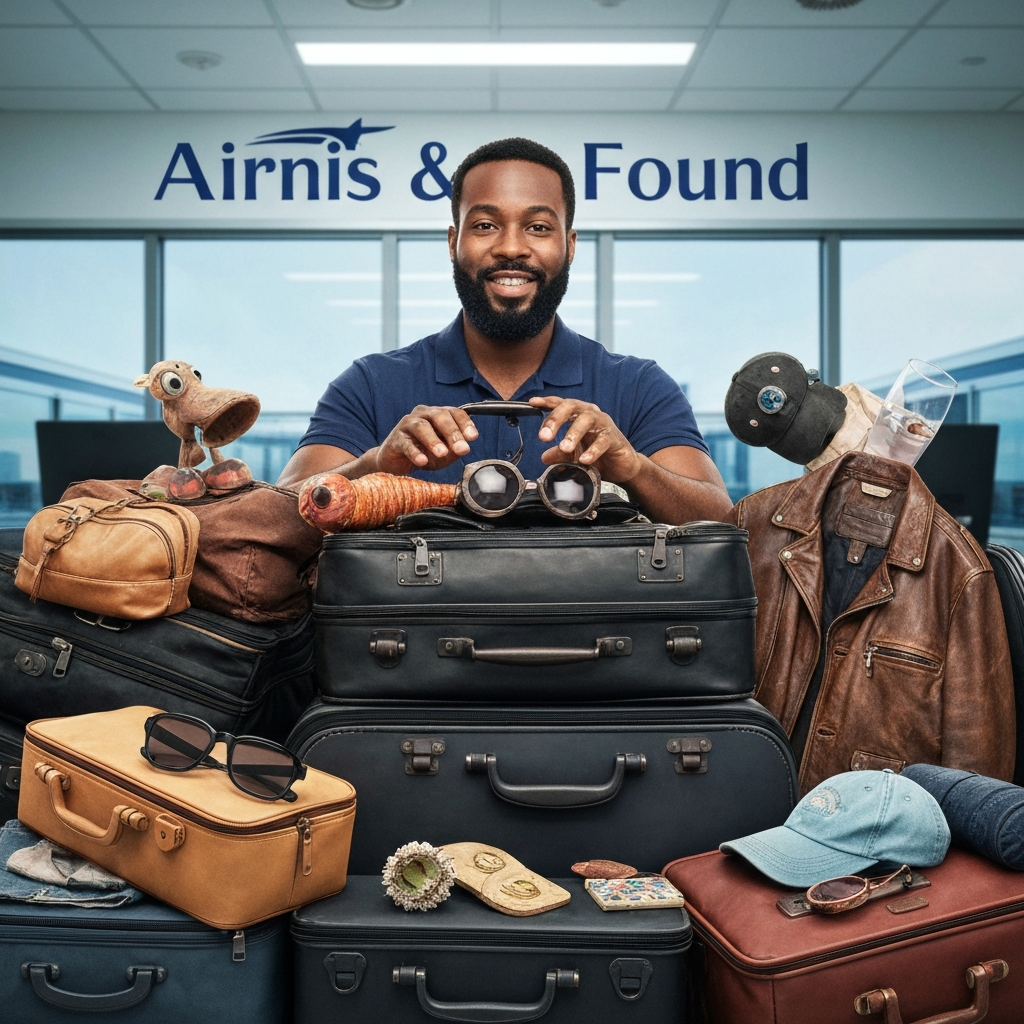
According to the company’s annual “Found Report,” unusual items recovered from unclaimed luggage included samurai swords, a meteorite, a World War II-era flight jacket, a fully assembled robot, gold-plated golf clubs, and luxury accessories worth tens of thousands of dollars. The original Fox Business report notes that while 99.9% of checked bags are ultimately reunited with their owners, a small fraction ends up flowing into a highly specialized resale channel: unclaimed baggage retail.
That niche channel may sound quirky, but it sits at the intersection of several major business trends shaping 2026: recommerce, value-oriented luxury buying, circular retail, and the continued normalization of secondhand goods.
Why this matters beyond the novelty factor
At first glance, lists of forgotten valuables and bizarre suitcase contents read like light lifestyle content. But beneath the curiosity factor is a much larger business story. Unclaimed Baggage’s model depends on a little-known part of the travel economy: after airlines exhaust efforts to return lost items, some baggage is sold in bulk, sorted, authenticated, and resold through retail channels.
That process reflects a broader shift in consumer spending. Shoppers remain interested in premium brands, but many are increasingly hunting for value rather than paying full price. In its report, Unclaimed Baggage pointed to a “shift toward attainable luxury,” a phrase that aligns with wider resale-market momentum documented by major industry researchers.
For example, thredUP’s resale market research has repeatedly shown that secondhand retail continues to outpace parts of the broader apparel sector, driven by cost-conscious consumers, younger buyers, and sustainability concerns. Likewise, luxury resale platforms such as The RealReal and market trackers including McKinsey’s State of Fashion coverage have noted growing consumer comfort with pre-owned fashion, accessories, and collectibles.
What the latest business news says about consumer demand
The timing is notable. Recent business coverage has emphasized a consumer environment still defined by selectivity. Shoppers are spending, but they are weighing purchases carefully, favoring discounted channels, off-price retailers, recommerce platforms, and products that hold value over time.
That trend has also appeared in reporting from the U.S. Census Bureau’s retail data releases, which continue to be closely watched for signs of changing discretionary demand, and in inflation reporting from the U.S. Bureau of Labor Statistics Consumer Price Index, where persistent price sensitivity has remained a central issue for households. In that environment, businesses positioned around resale, liquidation, and recovered goods can benefit from both bargain hunting and treasure-hunting psychology.
Unclaimed Baggage is an especially interesting case because its inventory is not merely secondhand — it is unpredictable. That gives it a hybrid identity: part resale outlet, part collectibles marketplace, part content engine. In today’s retail landscape, that matters. Unique inventory generates social media attention, earned media coverage, and repeat visits from customers who are motivated by discovery as much as by price.
The hidden economics of lost luggage
The original Fox Business piece also touches on an important operational detail: airlines have every incentive to return luggage rather than lose it into downstream channels. Industry groups including IATA have long highlighted improvements in baggage tracking and handling as airlines invest in logistics systems, scanning technology, and digital tracing. Better baggage performance is good for customer satisfaction, cost control, and brand reputation.
That means businesses like Unclaimed Baggage operate on the margins of a much larger transportation system — one in which failure rates are relatively low, but not zero. Even a tiny percentage of mishandled luggage can produce meaningful volume when applied to global passenger traffic.
According to the latest air travel outlooks from organizations such as IATA’s press and forecast updates, demand for air travel remains strong, which suggests baggage volumes will remain elevated as well. More travelers mean more checked bags, and even extremely low loss rates can translate into a substantial secondary inventory stream.
Luxury, collectibles, and the resale premium
One of the clearest takeaways from the Found Report is that travelers are carrying significant value in their luggage. Diamond earrings estimated above $43,000, a Rolex watch worth around $35,000, and other premium goods demonstrate how blurred the line has become between personal effects and portable wealth.
This mirrors broader business news around alternative assets and collectible retail. From luxury watches to vintage fashion to rare memorabilia, consumers increasingly view certain goods not just as purchases, but as stores of value. Analysts at firms like Bain & Company have tracked this dynamic in the luxury sector, where scarcity, brand prestige, and resale demand reinforce pricing power.
In that context, the strange assortment of items found in abandoned suitcases becomes more than a curiosity list. It serves as a snapshot of modern consumer priorities: status goods, collectible objects, travel convenience, and a willingness to move expensive personal property across long distances.
A circular business model with growing relevance
Another angle worth watching is sustainability. Unclaimed Baggage has said in prior reporting that it recycles some items and donates others to charity. That places the business within the larger circular economy movement, where goods are reused, repaired, resold, or diverted from landfills rather than discarded.
Retailers, brands, and marketplaces are increasingly embracing circularity both as a revenue opportunity and as a response to environmental pressure. Research and industry commentary from organizations such as the Ellen MacArthur Foundation has helped push the concept of circular retail into mainstream business strategy. For consumers, buying secondhand is no longer viewed as fringe behavior; for many, it is practical, fashionable, and financially smart.
The bigger takeaway for business watchers
The most important business lesson from the Unclaimed Baggage report is not that travelers leave odd things behind. It is that even the leftovers of the travel economy can become a viable retail ecosystem when paired with smart sorting, pricing, storytelling, and brand positioning.
In a market where consumers want value, uniqueness, and sustainability all at once, businesses that can transform irregular supply into compelling demand have a real advantage. Unclaimed Baggage’s annual report works because it does more than showcase lost property — it turns inventory into narrative, and narrative into traffic, attention, and sales.
That makes this story a useful lens on several of the biggest themes in retail right now: recommerce growth, cautious discretionary spending, luxury value-seeking, and the increasing monetization of secondhand goods.
Sources
- Fox Business: Samurai swords, WWII flight jacket, meteorite among items left behind by travelers
- Unclaimed Baggage
- thredUP Resale Market Research
- McKinsey: State of Fashion / Retail insights
- U.S. Census Bureau Retail Trade
- U.S. Bureau of Labor Statistics Consumer Price Index
- International Air Transport Association
- Bain & Company Luxury Goods Worldwide Market Study
- Ellen MacArthur Foundation