




Gas Prices Rise as Middle East Tensions Shake Energy Markets
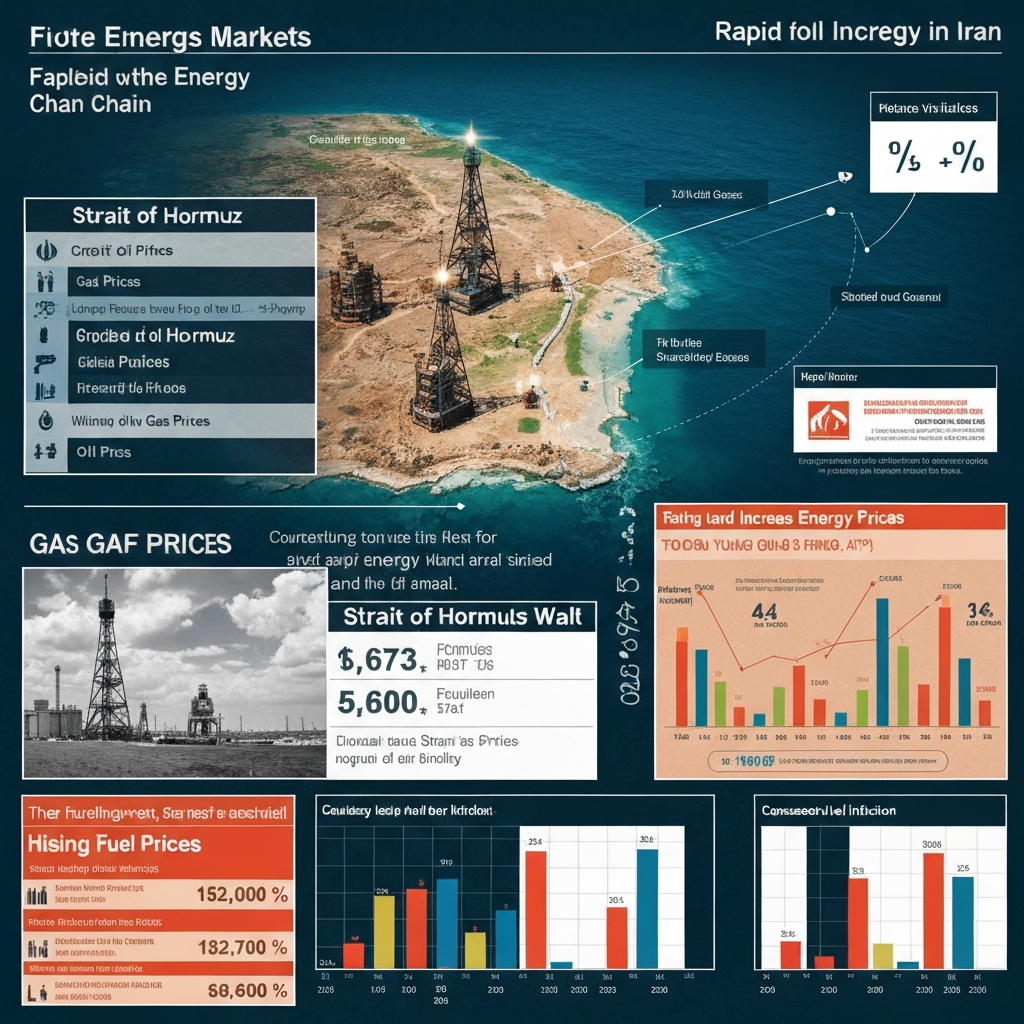
U.S. drivers are seeing a sharp increase at the pump as oil markets react to escalating conflict involving Iran and disruptions in the Strait of Hormuz, one of the world’s most important energy chokepoints. The national average for regular gasoline climbed to $3.32 per gallon, up from $2.98 a week earlier, as crude prices surged above $90 per barrel.
The immediate trigger has been heightened geopolitical instability in the Middle East, which has rattled traders and raised fears over supply interruptions. According to AAA, retail gasoline prices have moved quickly higher alongside crude. Reuters and market analysts have pointed to tanker disruptions and refinery pressure across the region as key factors behind the spike.
Why the Strait of Hormuz Matters
The Strait of Hormuz is a narrow waterway between the Persian Gulf and the Gulf of Oman, but its importance to the global economy is enormous. Roughly a fifth of the world’s oil supply passes through it. Any threat to shipping there can rapidly lift global benchmark crude prices, which in turn affects gasoline, diesel, aviation fuel, and transportation costs worldwide.
Recent reports indicate that tanker traffic has been affected and that energy infrastructure concerns are spreading beyond shipping lanes to refining operations. That combination is especially significant because it limits both crude movement and the production of finished fuels.
What Analysts Are Watching Next
Energy analysts say gasoline prices may continue climbing in the short term if the conflict intensifies or if shipping disruptions persist. The outlook depends heavily on whether oil transit resumes normally and whether major producers in the region can maintain exports.
At the same time, markets remain highly sensitive to official statements from the United States, Iran, Israel, and major oil-producing states. Traders are also watching whether strategic reserves, production adjustments, or diplomatic interventions could calm the market.
Broader Economic Impact
Higher gas prices can ripple across the broader economy. Transportation and shipping costs tend to rise first, followed by pressure on consumer goods, food distribution, and airline fares. If the increase proves temporary, the impact may be limited. But if oil remains elevated for weeks, inflation concerns could return more forcefully.
This is why the latest price jump matters beyond the gas station. Energy costs influence household budgets, business expenses, and investor confidence, making this not just a geopolitical story but a major business and economic development.
Latest Business Context
The gas-price surge comes at a time when investors are already navigating uncertainty around inflation, interest rates, and global trade. Energy shocks have historically complicated central bank planning because they can slow growth while also pushing prices higher. If crude stays elevated, markets may begin reassessing expectations for consumer spending, corporate margins, and transportation-heavy sectors.
Recent market coverage from CNBC, Bloomberg, and The Wall Street Journal has similarly emphasized that commodity volatility is once again becoming a central business story. Investors are watching oil not just as an energy issue, but as a signal for inflation, logistics, and geopolitical risk.
Takeaway
The latest jump in gasoline prices is fundamentally a business story driven by global energy supply fears. While the immediate cause is geopolitical conflict, the real-world consequence is being felt in consumer wallets, transportation markets, and corporate planning. If tensions ease, prices could retreat quickly. If not, energy may become one of the defining economic stories of the coming weeks.
Sources: Fox Business, AAA Gas Prices, Reuters Commodities, CNBC Energy, Bloomberg Markets, The Wall Street Journal Business