


Newly released body camera footage is intensifying scrutiny over the fatal shooting of Ruben Ray Martinez, a U.S. citizen killed by a federal immigration agent on South Padre Island, Texas. The videos appear to undercut a previous Department of Homeland Security account that Martinez had run over an agent before shots were fired, adding fresh fuel to a politically charged debate over immigration enforcement, federal accountability, and use-of-force standards.
Why this belongs in Politics
This story sits squarely in the politics category because it centers on actions taken by federal law enforcement under the Department of Homeland Security, public claims by a presidential administration, grand jury oversight, and broader questions about government transparency and accountability. It also touches immigration enforcement, which remains one of the most contested issues in U.S. politics.
What the newly released footage shows
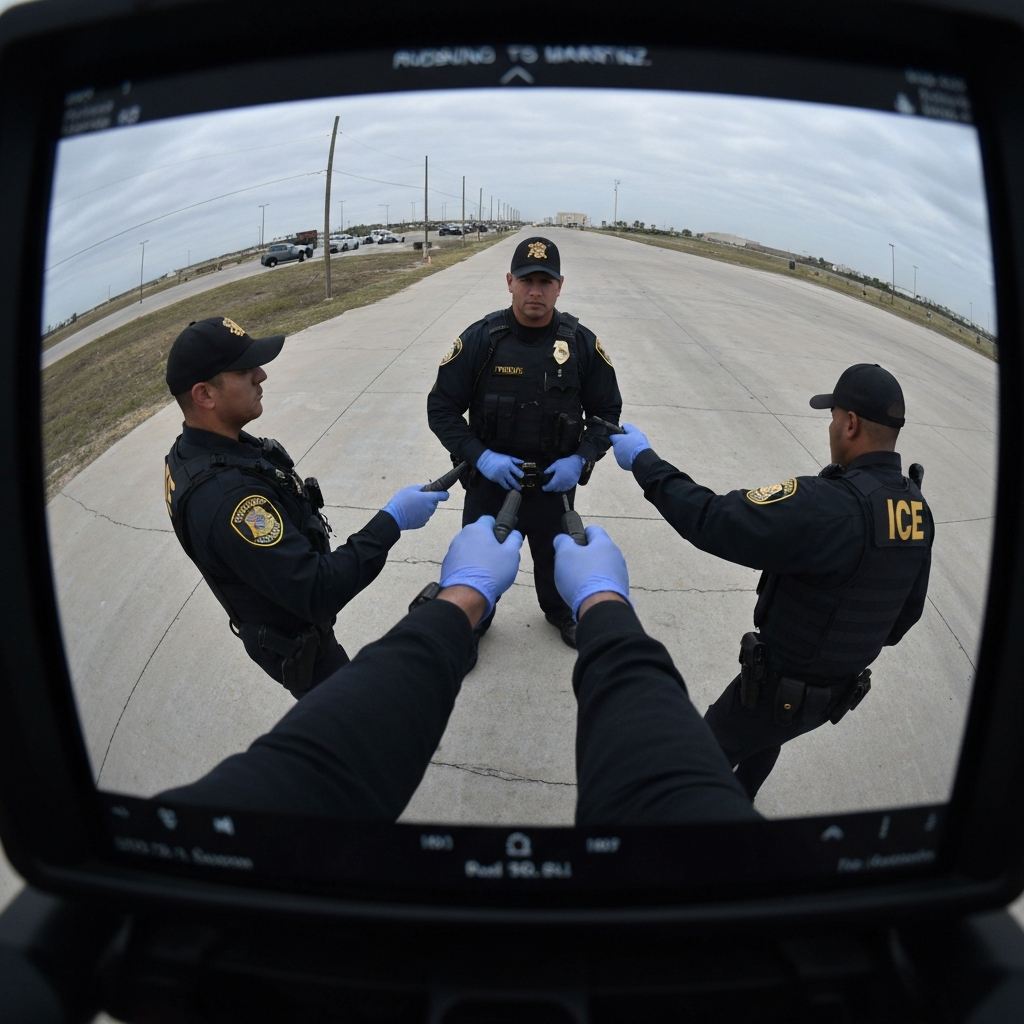
According to reporting from Straight Arrow News and the Texas Tribune, video released by the Texas Department of Public Safety does not appear to show Martinez striking an agent with his vehicle. In the footage, Martinez’s car moves slowly near an accident scene as officers and federal agents are present. Moments later, an agent can be heard shouting commands before opening fire.
The case has drawn even more attention because DHS had previously said Martinez intentionally drove into an agent, placing him on the hood of the vehicle. That account now faces serious questions in light of the footage and witness statements cited in recent coverage.
Where the case stands legally
A Texas grand jury declined to charge Homeland Security Investigations Supervisory Special Agent Jack Stevens, the officer who shot Martinez, according to Straight Arrow News. Immigration and Customs Enforcement has since defended the outcome, saying the matter was reviewed and that the officer was cleared. ICE also reiterated its position publicly in a statement posted online, as referenced in SAN’s reporting.
But attorneys for Martinez’s family argue that the footage does not justify the shooting and say the public still has not seen all relevant evidence. That tension between official statements and newly released video is often what transforms a local law-enforcement incident into a national political story.
The wider political backdrop
The latest developments arrive as immigration enforcement remains a defining issue in national politics. The Department of Homeland Security and its component agencies, including ICE and Homeland Security Investigations, have faced years of criticism from civil liberties groups, immigrant advocates, and some Democratic lawmakers over transparency, detention practices, and the use of force.
At the same time, Republican leaders and many border-security advocates continue to argue that federal agents operate in dangerous environments and require latitude to respond quickly to uncertain threats. That divide has helped make nearly every high-profile immigration enforcement case politically resonant far beyond the local jurisdiction where it occurred.
Latest related developments in immigration politics
Recent reporting from major national outlets shows immigration enforcement and DHS oversight remain at the center of U.S. political debate. The New York Times politics desk, The Washington Post Politics, and Reuters U.S. news coverage have all continued to track disputes involving border policy, asylum rules, federal enforcement powers, and legal challenges tied to executive authority. Meanwhile, congressional attention on immigration agencies has remained high, particularly around oversight, funding, and operational accountability.
In that environment, the Martinez case is likely to be viewed not only as a question of what happened in one confrontation, but also as a test of whether federal agencies can credibly explain use-of-force incidents when video evidence emerges later and appears to conflict with initial public statements.
Why the footage matters beyond one case
Body camera video has repeatedly reshaped public understanding of controversial police and law-enforcement encounters. In politically sensitive cases, the release of footage often becomes a second flashpoint: first there is the incident itself, then there is the battle over the narrative. When official descriptions and video records do not align, the fallout can extend from local prosecutors to federal policymakers.
That is especially true here because Martinez was an American citizen, the shooting involved a federal immigration agent rather than local police, and the event took place in a border region where local, state, and federal law enforcement frequently overlap. Those details make accountability more complex and politically consequential.
What comes next
The central questions now are whether additional evidence will be released, whether lawmakers or watchdogs will press for deeper review, and whether DHS will revise or further explain its original account. Martinez’s family has continued to push for answers, and renewed media attention may increase pressure for broader disclosure.
For now, the body camera footage has done something significant: it has reopened a case that officials appeared ready to close. In Washington as much as in Texas, that makes this not just a law-enforcement controversy, but a political one.
Sources: Straight Arrow News; Texas Tribune; Straight Arrow News follow-up; CBS News; Reuters; The Washington Post; The New York Times.