


AI Wearables Keep Attracting Investor Interest
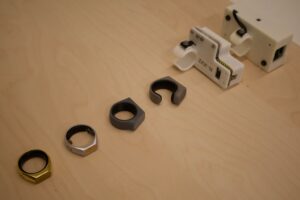
Sandbar’s new funding round squarely places this story in the tech space. The startup has raised $23 million in Series A financing for its AI note-taking ring, called the Stream, a wearable device designed for note capture, AI-assisted chat, and media playback. According to TechCrunch, Sandbar plans to begin shipping the device this summer, highlighting how hardware startups are again trying to make AI more ambient, portable, and continuously available.
What Sandbar’s Funding Signals
The raise reflects continued investor confidence in AI-native hardware, even after mixed results from earlier generations of smart wearables. Sandbar’s pitch appears to center on a lightweight, always-available interface: a ring that can capture ideas, interact with an AI assistant, and handle media tasks without requiring users to constantly pull out a phone or laptop. That ambition aligns with a wider industry movement toward “ambient computing,” where technology fades into the background while still remaining responsive.
Recent reporting from The Verge’s AI coverage and Wired’s artificial intelligence coverage shows that companies across the sector are racing to build practical consumer AI products that go beyond chatbots on screens. The challenge, however, is turning that vision into a product people will wear every day.
The Broader State of AI Hardware
Sandbar enters a market that is both promising and risky. Consumer appetite for AI remains high, but AI hardware has faced scrutiny over usability, privacy, battery life, and whether such devices solve real problems better than smartphones. Coverage from Reuters Technology has repeatedly noted that investors are still backing AI infrastructure and applications at a strong pace, even as the market becomes more selective about consumer devices.
The note-taking angle may give Sandbar a clearer use case than some previous AI gadget launches. Productivity remains one of the strongest near-term applications for generative AI, especially for professionals, students, and creators who want quick capture tools and automated summarization. If Sandbar can make the Stream accurate, discreet, and easy to use, it could tap into a niche that is more practical than novelty-driven.
Why This Matters for the Tech Industry
Sandbar’s funding is also part of a larger pattern: venture capital continues to seek out startups building AI-first interfaces. While much of the AI boom has centered on models, chips, and cloud infrastructure, there is growing pressure to find the hardware layer that brings those capabilities directly to consumers. As reported by TechCrunch, Sandbar’s device is positioned not just as another gadget, but as a possible new computing form factor.
That makes the company’s summer launch especially important. Investors and rivals alike will be watching whether users actually embrace an AI ring as part of daily life. Success could encourage more funding for wearable AI devices. Failure would reinforce the idea that consumers still prefer AI as a feature inside existing products rather than as a standalone category.
Analysis: The Real Test Is Everyday Use
The biggest question is not whether AI wearables sound futuristic, but whether they become habit-forming. Consumers have shown they will adopt new hardware when the utility is obvious, as seen with wireless earbuds and smartwatches. But they have also rejected products that feel awkward, intrusive, or redundant. Sandbar’s Stream may stand a better chance if it remains focused on a narrow, valuable set of functions: frictionless note capture, useful AI interaction, and convenient playback.
In that sense, the company’s $23 million raise is less a verdict on proven demand than a bet that the next stage of AI will be shaped by devices that are smaller, more personal, and more context-aware. Whether Sandbar can turn that bet into a sustainable business will depend on execution, trust, and whether users decide the ring meaningfully improves how they work and communicate.
Sources: TechCrunch; Reuters Technology; The Verge AI; Wired AI.