


Quantum mechanics may be edging from theory into practical security. A new line of research highlighted by Science News explores how quantum entanglement could be used to verify that a person or device is physically where it claims to be. In a digital world where GPS signals can be spoofed and location data can be manipulated, that possibility points to a striking new frontier for both cybersecurity and communications.
Why this belongs in Science
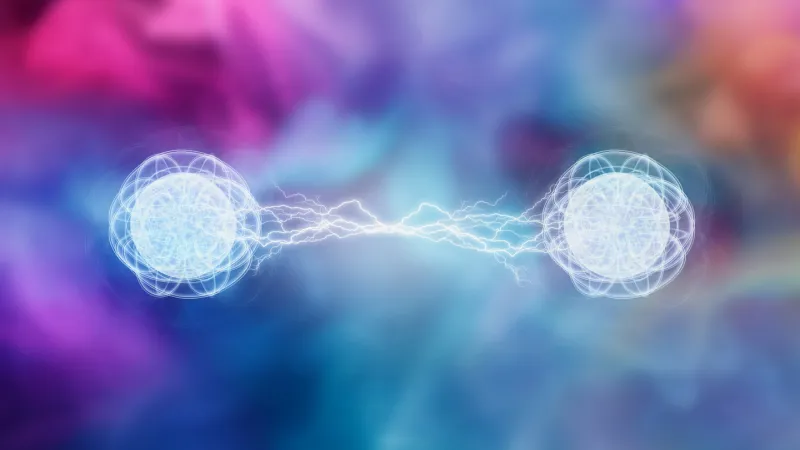
This story is fundamentally about physics: specifically, the strange quantum phenomenon known as entanglement, in which particles share linked properties across distance. Researchers are investigating whether those quantum relationships can serve as proof of location in ways that classical systems cannot easily fake. While the implications may eventually stretch into technology and security, the core advance is scientific, making Science the strongest category fit.
The latest development
According to Science News, scientists are studying protocols that use entanglement to confirm location claims. The idea is that quantum information can create forms of verification tied to physical constraints, potentially offering stronger guarantees than traditional digital authentication methods. If these concepts can be scaled beyond the lab, they could reshape secure communications, military verification systems, and fraud-resistant identity checks.
The broader backdrop is a period of rapid progress in quantum research. IBM has continued outlining its roadmap for scaling quantum systems and improving error correction, a critical hurdle for real-world applications, through updates on its quantum program at IBM Quantum. Meanwhile, governments are investing heavily in quantum technologies as strategic infrastructure. The United States has continued to support quantum research through the Department of Energy’s Quantum Information Science initiatives, while the European Union has been advancing long-term research through the EU quantum strategy.
Why location verification matters now
The promise of quantum location verification arrives at a moment when trust in digital systems is under pressure. Location data underpins everything from financial fraud detection to military logistics to access control for sensitive infrastructure. Existing tools, including GPS and network-based authentication, can often be jammed, spoofed, or relayed. A quantum-based alternative would not be a simple upgrade. It would represent a different security model built on the laws of physics rather than assumptions about software integrity alone.
That is why this research matters beyond academic curiosity. If successful, quantum verification systems could help secure autonomous vehicles, battlefield communications, and high-value digital transactions. The long-term significance is not just that quantum systems are faster or more advanced, but that they may be able to prove something classical systems struggle to prove: where an entity actually is in real time.
A cautious path from lab to reality
Still, researchers and policymakers alike are likely to proceed carefully. Quantum technologies remain difficult and expensive to implement. Building systems that can operate reliably outside controlled experimental settings is a major challenge. The same is true across the sector, where practical deployment continues to lag behind scientific excitement. Reporting from Nature’s quantum information coverage and updates from industry groups such as Quantum Computing Report have consistently shown that the field is progressing, but often in incremental steps rather than sudden leaps.
That context makes the new location-verification concept especially compelling. It shows that quantum science is not only about chasing powerful computers. It is also opening up entirely new categories of security tools that were previously impossible to imagine.
The bigger picture
For now, the latest headline is less about a finished product and more about a glimpse of what could come next. Quantum entanglement has long been one of the most fascinating ideas in modern physics. Now it may also become one of the most useful. If future experiments confirm that entanglement can reliably verify physical location, the impact could stretch far beyond research laboratories and into everyday systems that depend on trust, identity, and secure access.
That is what makes this story one to watch. It captures a broader truth about science in 2026: some of the most important breakthroughs are not just expanding our understanding of the universe, but changing the foundations of how we protect information in the real world.
Sources:
Science News: Quantum physics can confirm where someone is located
IBM Quantum
U.S. Department of Energy — Quantum Information Science
European Commission — Quantum Technologies
Nature — Quantum Information
Quantum Computing Report