
The appropriate category for this RSS item is Pop Culture. The story centers on a television crossover, actor interviews, entertainment marketing, and audience appeal around ABC’s 9-1-1 franchise.
ABC’s ‘9-1-1’ Universe Shows How Franchise TV Is Built
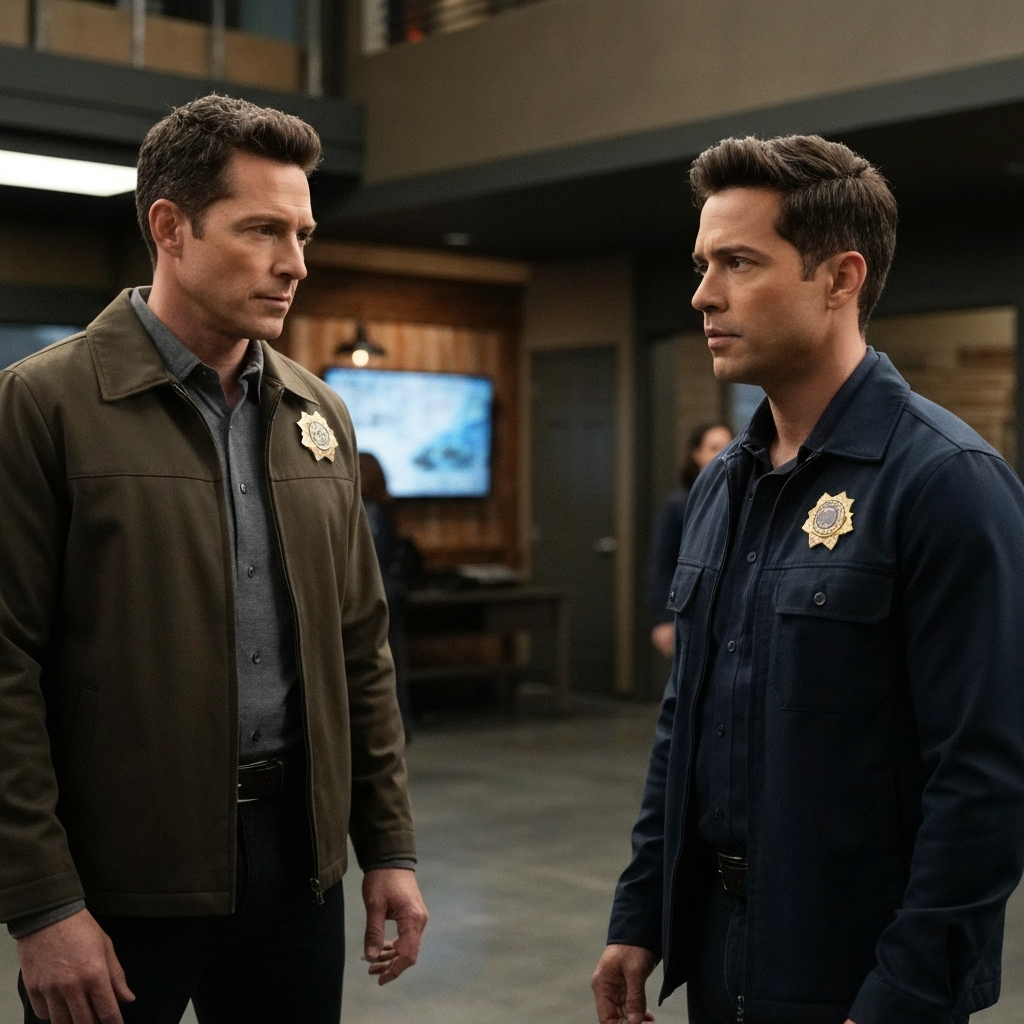
ABC’s expanding 9-1-1 franchise is offering a clear example of how broadcast television is leaning on recognizable brands, crossover events, and highly shareable character moments to keep audiences engaged. The latest Entertainment Weekly report focuses on a crossover involving 9-1-1 and 9-1-1: Nashville, with stars Oliver Stark, Ryan Guzman, and Hunter McVey discussing the filming of a deliberately attention-grabbing “hydration break” scene during the Firefighter Games.[1]
On its face, the anecdote is light and playful: actors joking about the awkward timing of shirtless scenes after Thanksgiving and the physical demands of filming. But underneath that humor is a revealing look at how modern entertainment franchises are engineered. According to the report, the network explicitly wanted shirtless shots, and the production team wrote that request into the episode in a way that would feel organic to the competition storyline.[1] That kind of strategy reflects a broader industry reality: pop culture franchises increasingly rely on moments designed not just for the episode itself, but for clips, social sharing, fan commentary, and week-to-week cultural conversation.
Why Crossovers Matter More Than Ever
Crossover episodes have long been a television staple, but they carry added value in today’s fragmented media environment. As legacy broadcasters compete with streaming platforms, they need programming events that can create urgency and communal viewing. A crossover helps accomplish that by merging fan bases, boosting tune-in, and reinforcing the sense that each individual show is part of a larger entertainment universe.
ABC has openly leaned into franchise-building as part of its programming strategy. The network’s entertainment slate has emphasized established brands and extensions that can travel across platforms and demographics.[2] In that context, 9-1-1: Nashville is not just a spinoff; it is a test of whether the larger 9-1-1 identity can sustain long-term expansion in the same way procedural universes have for other networks.
The use of crossover storytelling also mirrors strategies seen across the wider entertainment business. Media companies increasingly prioritize IP that can produce repeat engagement through interconnected stories, recurring characters, and fan communities. Industry coverage from outlets such as Variety and The Hollywood Reporter has repeatedly noted that franchises remain central to scheduling and development decisions because they offer more predictable audience recognition in a crowded market.[3][4]
Fan Service as a Business Tool
The “hydration break” detail also highlights how fan service functions as a practical business tool. In entertainment, fan service does not simply mean giving viewers what they want; it means creating moments that reward loyal audiences while drawing in casual viewers through buzz. A scene that sparks online conversation can become free marketing for a show, especially when stars amplify the moment in interviews and entertainment outlets package it into easily shareable headlines.
That approach is especially valuable for broadcast series trying to maintain relevance in a social media ecosystem that favors instant, visual, emotionally legible content. A crossover competition, attractive leads, behind-the-scenes humor, and an interview framing the scene as “diabolical” all fit that model perfectly. The result is a story that works both as television and as promotional material.
Entertainment Weekly’s coverage underscores this dynamic by focusing not only on the plot mechanics of the crossover, but also on cast chemistry, physical preparation, and the network’s thinking.[1] In other words, the production story becomes part of the product itself.
The Bigger Pop Culture Context
More broadly, this moment arrives as entertainment companies continue to recalibrate around franchises that can cut through audience fragmentation. Streaming competition has changed viewing habits, but it has also increased the premium on titles that already have devoted followings. That has pushed both networks and platforms toward spinoffs, reboots, connected universes, and event programming.
Within pop culture, the most successful brands now operate on multiple levels at once: they tell stories, create fandoms, generate memes, and sustain a constant cycle of ancillary coverage. The 9-1-1 franchise’s latest crossover demonstrates how even a relatively small scene can serve all of those purposes. It advances the shared universe, gives fans character interaction, generates headlines, and reinforces ABC’s broader investment in franchise television.
There is also a cultural layer here. Procedural dramas have remained durable partly because they blend comfort-viewing structure with enough serialized character material to keep fandoms active. The emotional and relational investment viewers have in characters like Buck and Eddie, for example, makes crossover appearances feel bigger than standard guest spots. That attachment is what turns a simple competition sequence into a piece of pop culture discourse.
What This Means for the Industry
The takeaway is that the latest 9-1-1 crossover is not just a fun entertainment-news item. It is a case study in how television is marketed in 2026: through franchise logic, fan-aware writing, promotional synergy, and behind-the-scenes storytelling that extends the life of a single episode beyond airtime. As networks search for reliable audience engagement, expect more crossovers, more deliberate “viral” moments, and more interviews that blur the line between production insight and promotional rollout.
For viewers, that can be a mixed blessing. On one hand, these strategies can create entertaining event television and deepen investment in favorite characters. On the other, they can make shows feel increasingly optimized for discourse rather than purely for storytelling. The balance between authentic narrative and calculated fan service is becoming one of the defining tensions of contemporary pop culture.
In this case, though, ABC appears to have gotten what it wanted: a crossover with built-in buzz, plenty of cast banter, and another reminder that in modern television, even a “hydration break” can be part of a much larger franchise strategy.
Sources
[1] Entertainment Weekly, “’9-1-1’s Oliver Stark and Ryan Guzman on ‘diabolical’ timing of shirtless ‘Nashville’ scene with Hunter McVey” — https://ew.com/911-oliver-stark-ryan-guzman-diabolical-timing-shirtless-scene-11921461
[2] ABC Insider / ABC programming news — https://abc.com/news/insider
[3] Variety, TV industry coverage — https://variety.com/
[4] The Hollywood Reporter, television business coverage — https://www.hollywoodreporter.com/